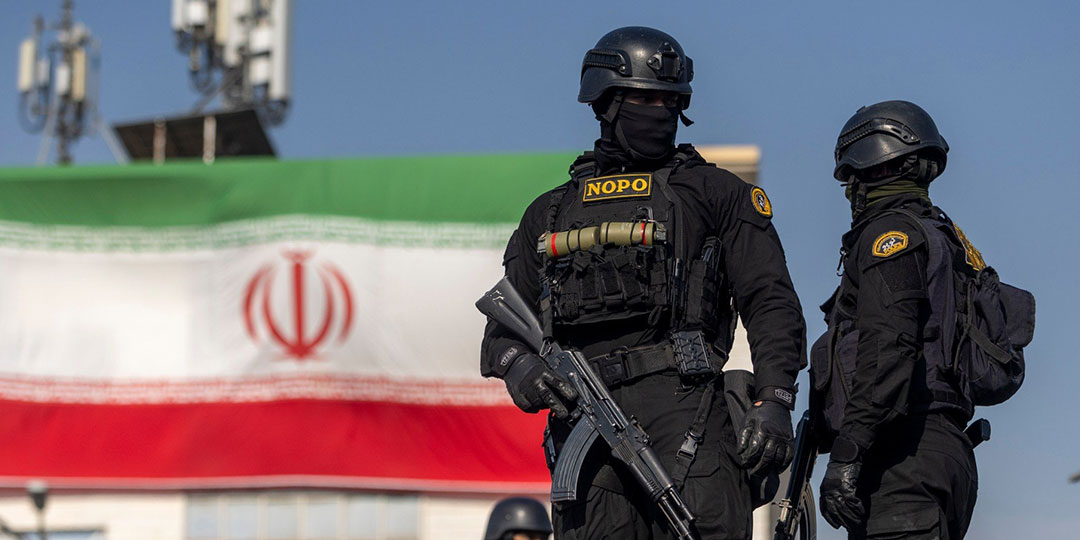

Iran’s Islamic Revolutionary Guard Corps (IRGC) said on Sunday that it had arrested an armed cell of eight people linked to the monarchist movement in southern Iran’s Fars province, and seized a shipment of weapons and ammunition in northwestern West Azerbaijan province. The announcement came as the IRGC also reported a series of military actions at sea, including an attack on a U.S. drone boat in the Strait of Hormuz and separate claims that it struck a U.S. aircraft carrier and destroyer with ballistic missiles.
The developments come amid a sharp escalation between Tehran and Washington, with both sides trading strikes and accusations over maritime security in the Strait of Hormuz, one of the world’s most sensitive shipping routes.
Armed Cell Arrested and Weapons Seized in Iran
Eight-Member Cell Linked to the Monarchist Movement
In a statement cited by the Iraqi News Agency, the IRGC said it had arrested an armed cell linked to the monarchist movement, made up of eight members, in Fars province in southern Iran. The statement did not provide further details on the cell’s alleged activities or when the arrests took place.
The announcement is part of a series of security statements issued by Tehran at a time of heightened internal and external tensions, with Iranian authorities frequently linking such incidents to attempts to destabilize the country.
Weapons Shipment Seized in West Azerbaijan
The same statement said a shipment of weapons and ammunition was also seized in West Azerbaijan province in northwestern Iran. The IRGC did not provide additional details about who was behind the shipment or how it was intercepted.
IRGC Says It Targeted a U.S. Drone Boat in the Strait of Hormuz
U.S. Vessel Allegedly Entered a Protected Zone
In a separate military development, the IRGC said it targeted a U.S. unmanned naval boat that was trying to enter the Strait of Hormuz. According to the statement broadcast by Iranian state television, the IRGC naval forces struck the U.S. military boat while it was attempting to enter what Iran described as a protected area in the strait.
The announcement comes amid rising tension over the Strait of Hormuz, which Tehran sees as a highly sensitive area under strict security measures during its confrontation with the United States.
IRGC Claims Missile Strike on U.S. Carrier and Destroyer
Ballistic Missiles and an Alleged Retreat
Early on Sunday, the IRGC said its aerospace force had fired ballistic missiles at a U.S. aircraft carrier and destroyer, accusing them of harassing Iranian ships and taking part in a naval blockade. According to Tasnim News Agency, the warships were forced to leave the area of engagement after sustaining damage and fearing further attacks.
The IRGC warned that if hostile U.S. actions continue, Washington should expect “harsh and crushing” responses from the Iranian armed forces.
Earlier Attacks on Tankers and U.S. Ships
The IRGC had earlier said, on Saturday, that its naval forces targeted three oil tankers it claimed were traveling on an unauthorized route in the Strait of Hormuz, as well as three U.S. ships. The claims reflect the growing maritime escalation between the two sides and its direct link to freedom of navigation in one of the world’s most important sea lanes.
A Multi-Front Escalation
Internal Security and External Pressure
The latest developments show the IRGC dealing with both internal security and external military confrontation at the same time, through the reported arrest of an armed cell and weapons seizure inside Iran, alongside attacks on U.S. naval targets abroad. The situation is part of a broader regional standoff involving influence, maritime security, and strategic waterways.
The Strait of Hormuz Remains a Flashpoint
The Strait of Hormuz remains at the center of the escalation because of its strategic role in global trade and energy flows. Any military action there could quickly affect world shipping, energy markets, and the risk of a broader confrontation between Iran and the United States.
Conclusion:
The IRGC’s latest announcements coincide with a continuing military and security escalation, from the arrest of an armed cell and seizure of weapons inside Iran to strikes on U.S. naval targets in the Strait of Hormuz. As Tehran and Washington exchange accusations and attacks, the situation remains highly volatile in one of the region’s most sensitive flashpoints.