
Iraq’s Deputy Commander of Joint Operations held a comprehensive security meeting to address overall security conditions and support the safe passage of Iraqi pilgrims, as a Popular Mobilization fighter was killed by a roadside bomb on the hajj route in Karbala.
The twin developments underscore ongoing efforts to secure pilgrimage routes while countering persistent security threats targeting protection forces during the annual hajj season.
Comprehensive Security Meeting Held
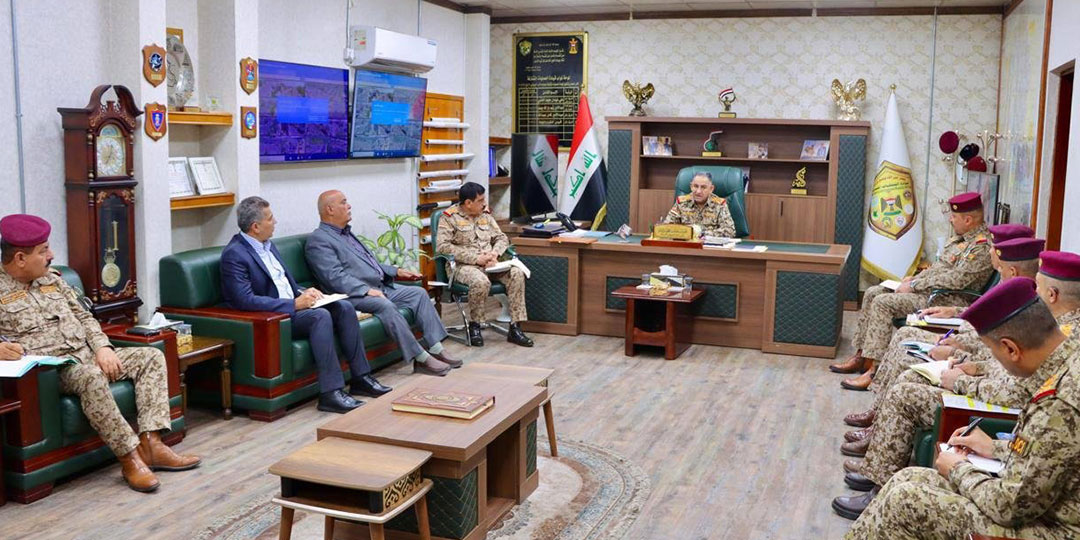
Deputy Commander of Joint Operations Lieutenant General Dr. Qais al-Mohammadawi convened an expanded security meeting with command staff to assess security conditions nationwide and reinforce national stability and social peace.
The meeting focused on evaluating implemented security plans and emphasizing the importance of high-level coordination among security ministries, field commands, and intelligence institutions. Officials stressed the need for integrated efforts to ensure operational precision and seamless execution of duties according to established professional standards.
Key topics addressed in the meeting:
Assessment of security plans implemented nationwide
High-level coordination between security agencies and intelligence institutions
Integration of efforts to ensure operational accuracy
Reinforcement of stability and social peace
Measures to Support Pilgrim Movement
The security meeting included specific discussion of administrative procedures designed to support smooth movement of Iraqi hajj pilgrims. These measures involved coordination with the Higher Security Commission for Pilgrim Convoys and the Supreme Commission for Hajj and Umrah.
Plans emphasized ensuring pilgrim safety and facilitating smooth transit across land routes and border crossings, with full activation of available security resources.
Pilgrim protection measures include:
Coordination with the Higher Security Commission for Pilgrim Convoys
Cooperation with the Supreme Commission for Hajj and Umrah
Ensuring safety of pilgrim convoys on land routes
Smooth transit through border crossing points
Enhanced Border Surveillance Operations
The security meeting also focused on measures to maintain control of Iraqi borders with neighboring countries. These efforts involve activation of technical and human monitoring resources at major border crossing points.
This emphasis aims to prevent infiltration, smuggling, and terrorist operations that could threaten pilgrim safety and road security.
Popular Mobilization Fighter Killed on Hajj Route
The Popular Mobilization Forces announced the death of fighter Safaa Saleh Alawi, a member of the 37th Brigade, who was killed while performing his sacred duty protecting holy pilgrimage convoys on the land hajj route in Karbala Province.
He was killed when a roadside bomb targeted Popular Mobilization forces assigned to protect the convoys. The same blast wounded two additional fighters.
The incident reflects the ongoing security dangers faced by security personnel and Popular Mobilization members tasked with protecting pilgrims on land routes.
Persistent Security Threats on Hajj Routes
Roadside bombing incidents on the land hajj route indicate continued security threats in border areas and on land routes. These terrorist operations specifically target security forces and Popular Mobilization units responsible for protecting pilgrim convoys.
This level of threat demonstrates the ongoing need to strengthen security measures and increase resources dedicated to protecting land routes during the hajj season.
Upper-Level Security Directives
Deputy Commander al-Mohammadawi emphasized during the meeting the necessity of adhering to directives from senior command and working as a unified force to strengthen security and stability.
He stressed that this commitment reflects the institutional performance level of security agencies and contributes to achieving strategic security objectives.
Conclusion:
Iraqi security efforts demonstrate strong commitment to protecting pilgrims and securing land routes during the hajj season. However, the persistence of threats and terrorist operations underscores the continued need to strengthen security measures and enhance coordination among all security and military agencies.