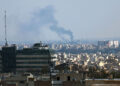
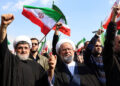
Iran issued a direct warning Sunday against any international action that could expand the scope of the Middle East conflict, while the critical Strait of Hormuz remains nearly completely closed due to Iranian threats. Foreign Minister Abbas Araghchi called on the world to “refrain from any action that could lead to escalation and expansion of the conflict” during a call with French counterpart Jean-Noël Barrot, according to Iranian Foreign Ministry statements.
The Iranian warning came in response to President Donald Trump’s call for nations worldwide to send naval vessels to protect global oil supplies transiting the strait. Trump specifically mentioned France, China, Japan, the United Kingdom, and South Korea as potential partners, yet no nation formally accepted the invitation. Simultaneously, residents of Tehran gradually returned to normal daily activities, with cafes and restaurants reopening and traffic congestion increasing as the war entered its third week.
Iran’s Direct Warning Against Conflict Expansion
Foreign Minister Araghchi issued an unambiguous appeal during his conversation with French Foreign Minister Barrot for nations to “refrain from any action that could lead to escalation and expansion of the conflict,” according to Iranian Foreign Ministry statement. The warning appeared directly aimed at American efforts to mobilize an international coalition supporting maritime protection operations in the Strait of Hormuz.
Araghchi emphasized in an interview with Al-Arabi Al-Jadeed that the war “will not end unless Tehran ensures it will not repeat,” suggesting Iran’s demands may exceed conventional ceasefire arrangements to encompass comprehensive strategic conditions.
Iran’s Comprehensive Demands for War Termination
Araghchi’s condition regarding preventing war recurrence indicates Iranian strategic ambitions extending beyond traditional ceasefire mechanisms to potentially include:
American and Israeli commitments to permanently cease military operations
Dismantling military bases threatening the Islamic Republic
Lifting international economic sanctions on Iran
International recognition of Iran’s regional position
Long-term regional security guarantees protecting Iranian interests
Trump Categorically Rejects Negotiations and Threatens Additional Strikes
President Donald Trump rejected the possibility of reaching any agreement with Iran ending the war in Sunday statements. Speaking to NBC News, Trump said: “Iran wants to make a deal and I don’t want to make one because the terms are not good enough yet.”
Trump threatened that American forces would intensify strikes on Iranian coastal areas north of the strait to “pave the way for resuming oil supplies,” expressing willingness to expand military operations until achieving American objectives. The president used dismissive language in his threats, stating US forces might strike targets on Kharg Island “just for entertainment,” language apparently designed to undermine the credibility of Iranian leadership and minimize perceived Iranian response capacity.
Trump’s Dismissive Rhetoric Toward Iranian Leadership
Trump directly questioned whether new Supreme Leader Majid Khamenei was even alive, stating: “I don’t know if he’s alive. So far, no one has been able to show him.” Trump’s piercing of Iranian claims regarding stability and effective leadership raised questions about the regime’s actual capacity to exercise control during protracted conflict.
Iran responded Saturday that the new Supreme Leader “has no problems” despite public absence, yet American skepticism fueled international doubts regarding effective Iranian command and control during ongoing military operations.
American Failure to Mobilize International Naval Coalition
No nation formally accepted Trump’s invitation to deploy naval assets protecting maritime traffic through the Strait of Hormuz. International responses came with evident caution:
South Korea announced it was “studying the request carefully”
Britain stated it was “discussing options” but prioritized de-escalation
Japan said legal restrictions made naval deployment “very difficult”
France issued no public statement regarding participation
China did not respond to the American invitation
Reasons for Allied Hesitation
International allies’ reluctance to respond reflected multiple factors:
Concern regarding escalation risks from increased maritime presence
Constitutional and legal restrictions on military deployment
Preference for diplomatic solutions over military escalation
Anticipated Iranian countermeasures potentially endangering deployed vessels
Economic calculations that costs might exceed benefits
Gradual Return to Normal Life in Tehran
Despite continuing intense warfare and threatening rhetoric from all parties, Tehran residents gradually returned to daily activities in conditions that appeared “most normal since war began February 28, when American-Israeli strikes killed former Supreme Leader Ali Khamenei.”
Traffic congestion increased compared to the previous week, reflecting increased citizen movement. Some cafes and restaurants reopened after remaining closed. One resident rode an electric skateboard through streets, signaling return of recreational activity. More than one-third of shops in Tajrish Bazaar, a major shopping center north of the capital, reopened as Nowruz (Persian New Year) approached within five days.
Commercial Vitality Approaching Nowruz Holiday
Shoppers lined up before automated teller machines for withdrawals. Passengers returned to bus stations previously abandoned since conflict’s beginning. Banking operations experienced disruptions, with electronic operations in Bank Melli, one of Iran’s largest banks, experiencing outages in recent days, possibly reflecting effects of military operations on sensitive infrastructure.
The resumption of commercial activity reflected Iranians’ gradual psychological adaptation to protracted conflict, attempting to maintain economic normalcy despite ongoing security concerns and military operations.
Continued Military Operations and New Strike Waves
The Israeli military announced a new wave of strikes against targets in western Iran Sunday, following the Islamic Revolutionary Guard Corps’ threat to “pursue and kill” Israeli Prime Minister Benjamin Netanyahu, stating: “If this child-killer criminal is alive, we will continue working to pursue and kill him with full force.”
Bahrain and Saudi Arabia separately announced Sunday interception of new salvos of projectiles after an AFP journalist heard alarm sirens in Manama. Dubai authorities announced additional air defense interceptions Saturday evening following Iranian military warnings to Emirati civilians to avoid port areas.
Pattern of Systematic Iranian Operations Against Gulf States
The recurring interception operations across multiple Gulf states reflected a systematic Iranian campaign targeting Gulf infrastructure and maritime traffic. The pattern suggested Iranian strategy of sustained pressure against Gulf states supporting American operations while threatening commercial shipping through international waterways.
Iranian Allegations of Foreign Military Base Usage
Foreign Minister Araghchi claimed Tehran possessed “substantial evidence” that American military bases in the Middle East had been used to target the Islamic Republic. He stated that “missiles were launched from the UAE to target Kharg Island’s oil facilities in Iran.”
American forces had bombed Kharg Island Friday, through which virtually all Iranian oil exports flow. Both sides claimed the strikes targeted only military defenses without damaging the island’s oil infrastructure. Iranian allegations suggested concern that regional allies supported American operations despite official denials.
Human Toll and Massive Internal Displacement
Iran’s Health Ministry reported over 1,200 deaths from American and Israeli strikes, figures lacking independent verification. The UN Refugee Agency estimated up to 3.2 million persons internally displaced within Iran, most fleeing the capital and other cities seeking safety.
These displacement figures represented catastrophic internal population movement, with approximately 10% of Iran’s population displaced within merely two weeks of conflict.
American Military Reinforcements Continue
American media reported the Pentagon deployed amphibious landing ship USS Tripoli and approximately 2,500 Marine personnel to the region. Additional military deployment indicated American preparation for potentially expanded operations or anticipated Iranian escalation response.
War Expansion to Lebanon Accelerates
In Lebanon, where conflict expanded after Hezbollah launched rockets against Israel March 2, at least four persons were killed in Israeli airstrikes on southern Lebanon Saturday night, including strikes near Sidon. Israeli Defense Forces announced strikes against “Hezbollah rocket launch sites and affiliated positions.”
Hezbollah announced “direct clashes” with Israeli military forces in the border town of Khiyam in southern Lebanon Saturday evening, indicating ground-level combat alongside aerial bombardment. Israeli Foreign Minister Gideon Sa’ar affirmed Sunday that Israel “does not intend” to conduct direct negotiations with Lebanon to end the war that began March 2.
Britain Emphasizes De-escalation in Contrast to American Approach
In contrast to American positioning, Britain’s Energy Security Minister Ed Miliband emphasized the necessity of “reducing temperatures in the Middle East.” Speaking to the BBC, Miliband stated: “The plan now should be to de-escalate the conflict.”
Miliband revealed discussions with allies regarding “different means for making maritime shipping possible,” yet emphasized that “reopening the strait is essential,” reflecting British balance between practical maritime protection needs and preference for tension reduction.
Economic Imperatives and Global Energy Markets
The Strait of Hormuz carries approximately 20% of globally traded oil, making even brief disruptions capable of producing sharp commodity price increases affecting worldwide economies. Continued closure threatens:
Disruption of global oil supplies and price volatility
Economic impacts on energy-dependent economies
Disrupted shipping industry and increased insurance costs
Potential recession in economies dependent on energy imports
Long-term geopolitical realignment as nations seek alternative energy sources
Diplomatic Prospects Remain Bleak
Despite Trump’s claims that Iran seeks negotiations, substantive diplomatic engagement remains absent. Iran demands comprehensive strategic concessions. America demands Iranian concessions regarding military capabilities and regional positioning. Mutual demands appear incompatible, suggesting protracted conflict likely without external mediation.
Broader Strategic Context
Iran’s warnings against actions expanding conflict emerged within context of:
Escalating Middle East warfare threatening global stability
Maritime crisis in the critical Strait of Hormuz
Global inflation driven by rising energy prices
Disagreements among Western nations regarding security strategy
Concern regarding potential Middle East conflict expansion involving additional nations
Conclusion:
Iran’s warnings against actions expanding the conflict and Trump’s rejection of negotiations reflect continuing military and diplomatic stalemate. As human casualties surpass 1,200 deaths and internal displacement reaches 3.2 million persons, diplomatic solutions remain distant from reality. In Tehran, residents gradually returned to normal life while military operations continued and attacks persisted against Gulf states. American failure to mobilize a global naval coalition suggests the problem may not be purely military but rather reflects deeper diplomatic and strategic impasse. The widening of conflict to Lebanon with accelerating operations indicates the regional warfare continues expanding despite absence of dramatic breakthroughs in international diplomatic efforts or Iranian strategic reassessment.