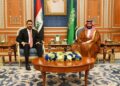
Iran’s Parliament Speaker Mohammad Baqer Qalibaf declared Tuesday that Iran will not accept negotiations conducted under threat or coercion, directly challenging American negotiating approach and conditions. Qalibaf stated that Trump seeks to convert the negotiating table into a “surrender table” by imposing blockade and violating the ceasefire agreement to justify renewed hostilities. He emphasized that Iran has not accepted negotiations under threat and has spent the previous two weeks preparing “to reveal new cards on the battlefield,” language suggesting military preparations parallel to diplomatic engagement. The statement reflects deepening skepticism within Iranian leadership regarding American commitment to genuine diplomatic resolution, occurring simultaneously with Lebanese Parliament Speaker Nabih Berri’s affirmation of support for indirect negotiations while categorically rejecting Israeli-imposed “yellow line” restrictions in southern Lebanon.
The competing statements from Iranian and Lebanese leadership illustrate the complex diplomatic landscape where military preparations, ceasefire violations, and negotiating positions remain fundamentally at odds, threatening the viability of diplomatic progress.
Iranian Parliamentary Rejection of Coercive Negotiations
Conversion of Negotiations to Surrender Framework
Qalibaf accused Trump of seeking to transform the negotiating table into a “surrender table” through imposition of naval blockade and violations of ceasefire terms. The characterization suggests that Iranian leadership perceives American negotiating demands as designed to achieve capitulation rather than genuine compromise. The accusation that Trump intends to justify renewal of hostilities through artificial ceasefire violations indicates Iranian belief that military escalation remains part of American strategy.
Two-Week Military Preparation Assertion
The parliament speaker stated that Iran has spent the previous two weeks preparing “to reveal new cards on the battlefield,” language that explicitly links military preparations to diplomatic engagement. The statement suggests that Iranian leadership views military capability development as necessary negotiating leverage and that diplomatic process remains intertwined with military readiness rather than representing genuine shift toward peaceful resolution.
Fundamental Rejection of Threat-Based Negotiations
Qalibaf emphasized explicitly: “We do not accept negotiations under the weight of threats,” establishing a red line that Iranian leadership considers non-negotiable regarding the environment and conditions under which discussions can proceed. This categorical rejection suggests that further American threats or military actions will be regarded as justification for breaking off negotiations and resuming military operations.
Lebanese Parliament Speaker’s Indirect Negotiation Position
Support for Indirect Negotiation Framework
Lebanese Parliament Speaker Nabih Berri reaffirmed support for “indirect negotiations,” citing previous success in similar frameworks. He referenced extensive experience conducting indirect talks with American diplomats including Amos Hochstein regarding maritime boundary demarcation and quoted unnamed other periods involving David Welch regarding UN Resolution 1701 preparations. Berri asserted that indirect negotiation mechanisms remain viable frameworks for continued diplomatic engagement despite current military escalation and ceasefire violations.
Rejection of Israeli-Imposed “Yellow Line” Restrictions
Berri categorically rejected Israeli-imposed restrictions on Lebanese civilian movement and military operations in southern Lebanon, declaring: “No yellow lines, no red lines, no green lines, no lines of any color concern us.” He asserted that Lebanese territory cannot be diminished by a single meter and that Israeli occupation of southern territories must end completely. The statement constitutes direct challenge to Israeli military control and conditions imposed through occupation force presence.
Commitment to Resistance Against Continued Occupation
Berri emphasized that Lebanon will maintain resistance against Israeli occupation if Israel refuses to withdraw from southern territories, stating: “If they stay, they will be met with resistance… this is Lebanese land, Lebanon cannot tolerate even one meter being taken from it.” He asserted that historical precedent demonstrates Lebanese commitment to resistance against occupation and that conditions have not changed regarding this fundamental position.
Oil Market Response to Diplomatic Developments
Price Declines on Negotiation Hopes
Oil prices declined Tuesday, surrendering previous gains, as markets interpreted approaching US-Iran negotiations as potentially improving prospects for restoration of oil supplies from the Middle East. Brent crude futures fell 95 cents or 1 percent to $94.53 per barrel, while US West Texas Intermediate May contracts declined $1.54 or 1.72 percent to $88.07 per barrel. June contracts, the most actively traded, fell $1.09 or 1.3 percent to $86.37 per barrel.
Monday’s Price Spike from Iran’s Hormuz Closure
The Tuesday decline followed Monday’s price increases when both Brent and West Texas Intermediate surged following Iran’s re-closure of Hormuz Strait. Brent crude had risen 5.6 percent while West Texas Intermediate increased 6.9 percent Monday, reflecting market concern about renewed supply disruption. The Tuesday reversal suggests that markets are distinguishing between immediate military risks and longer-term diplomatic prospects.
Market Volatility and Negotiation Uncertainty
Oil market volatility reflects uncertainty regarding whether approaching negotiations will succeed in stabilizing regional conditions and restoring normal shipping through Hormuz Strait. Traders remain sensitive to any statements suggesting either diplomatic progress or renewed military escalation, with immediate price reactions to news developments indicating high market sensitivity to Middle East developments.
Iranian Leadership Warnings Regarding Military Escalation Risks
Iranian Judiciary Chief’s Escalation Warning
Head of Iran’s Judiciary Gholamhossein Mohseni Ejehi warned Tuesday that the likelihood of the United States resuming military operations against Iran is “not insignificant,” particularly as the ceasefire expiration date approaches. He emphasized necessity for complete preparation for potential renewed American military action and implied that Iranian leadership does not trust American commitment to maintaining ceasefire terms.
Presidential Office Warning to American Leadership
Mehdi Tabtabai, media affairs official for the Iranian Presidential Office, warned the United States against attempting to renew the conflict, stating: “The enemy has tested Iran and would be wrong if it tested her again.” The statement constitutes direct warning that any renewed American military action would encounter Iranian response and that American previous military actions have demonstrated Iranian willingness and capability to respond to attacks.
Iranian Foreign Ministry Statement on Naval Seizure
The Iranian Foreign Ministry denounced the seizure of the cargo ship “Tosca” and detention of its crew in Hormuz Strait as “maritime piracy, terrorism, and ceasefire violation.” The ministry warned of “serious consequences” for ship detention and demanded immediate release of the vessel and crew. It asserted that Iran will employ all capabilities to defend national security and held Washington responsible for deterioration of regional conditions.
Contradiction Between American Negotiating Approach and Stated Objectives
Trump’s Call for Negotiations Amid Continued Escalation
Trump urged Iran on Tuesday to proceed with Pakistan negotiations while simultaneously warning that rejection of dialogue would expose Iran to “unprecedented problems.” He paired this negotiation call with assertions that the “Midnight Hammer” operation successfully targeted vital Iranian facilities. The contradiction between negotiation demands and threats demonstrates the dissonance in American approach where diplomatic engagement and military pressure proceed simultaneously.
Ceasefire Violations as Negotiating Tactic
The pattern of American military actions including naval seizure of Iranian vessels, continued blockade, and military threats during supposed ceasefire and negotiation period suggests that American leadership views ceasefire and military pressure as compatible rather than contradictory approaches. This approach directly contradicts Iranian position that genuine negotiations require cessation of threats and military operations.
Divergent Definitions of Negotiating Framework
The contradiction reflects fundamentally different understandings of what constitutes genuine negotiation framework. Iranian leadership understands negotiations as requiring cessation of military coercion and threats, while American approach appears to combine negotiation with sustained military pressure designed to maximize American leverage and constrain Iranian options.
Broader Context of Ceasefire Fragility
Escalation Amid Diplomatic Process
The occurrence of multiple military incidents including vessel seizure, drone attacks, and re-closure of Hormuz Strait concurrent with negotiations demonstrates that military operations and diplomatic engagement are proceeding in parallel without functional separation. This pattern suggests that either or both parties may view ceasefire as tactical pause rather than genuine de-escalation.
Time Pressure and Military Preparation
The approaching Wednesday deadline for US-Iran agreement that Trump previously announced creates time pressure that may encourage military action perceived as strengthening negotiating position. Iranian statement about two weeks of military preparation combined with warnings about American resumption of operations suggests both sides are hedging against negotiation failure through military preparations.
International Implications and Broader Conflict Dynamics
Oil Market Sensitivity to Diplomatic Progress
The responsiveness of oil markets to negotiation developments indicates that restoration of stable energy supply remains sensitive to diplomatic progress and ceasefire durability. Oil price volatility reflects market recognition that negotiation success or failure will determine whether Hormuz Strait remains closed or reopens for sustained shipping.
Regional Stability Dependence on Negotiation Outcomes
Lebanon’s Berri’s continued affirmation of indirect negotiation support occurs alongside categorical rejection of Israeli restrictions, illustrating the delicate balance where regional actors support diplomatic processes while preparing for military resistance if negotiations fail to achieve acceptable outcomes. The Lebanese position suggests that indirect negotiations remain viable only if they produce outcomes acceptable to Lebanese interests including complete Israeli withdrawal from occupied territories.
Conclusion:
Iran’s Parliament Speaker declared Tuesday that Iran will not accept negotiations under threat or coercion, rejecting American approach that combines negotiation demands with military blockade and ceasefire violations. The statement reflects Iranian belief that American strategy seeks to convert negotiations into capitulation framework rather than genuine compromise. Simultaneously, Lebanese Parliament Speaker Berri reaffirmed support for indirect negotiations while categorically rejecting Israeli-imposed restrictions on Lebanese sovereignty and military operations. Oil prices declined on hopes for negotiation success, though Iranian leadership warnings about military escalation risks and American continuing military operations suggest that diplomatic process remains fragile and vulnerable to breakdown. The approaching Wednesday deadline for agreement combined with continued military incidents creates environment where diplomatic progress and military escalation proceed simultaneously, with fundamental contradictions between American strategy of negotiation plus military pressure and Iranian requirement that negotiations proceed without threats or coercion.