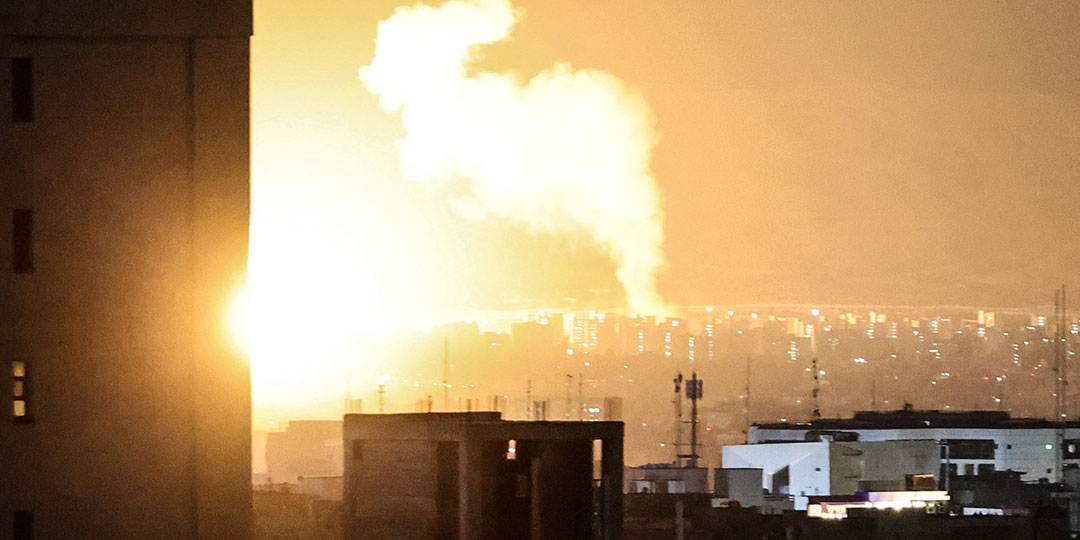

Iran carried out sustained attacks across the Gulf region on Friday, striking targets in Bahrain, Saudi Arabia, and Qatar. Bahrain’s interior ministry confirmed that Iranian forces hit a hotel and two residential buildings in the capital Manama, with a fire erupting in one residential structure before being brought under control. The attacks marked the sixth consecutive day of Iranian military operations following the death of its supreme leader.
The Iranian strikes extended beyond Bahrain’s civilian infrastructure. Saudi Arabia reported intercepting three ballistic missiles aimed at Prince Sultan Air Base, while Qatar’s defense forces thwarted a drone attack on Al-Udeid Air Base, home to the largest US military installation in the Middle East.
Bahrain Faces Direct Iranian Fire
Bahrain’s interior ministry stated on Friday that Iranian aggression directly targeted civilian areas in Manama. The revised announcement corrected an earlier statement, confirming strikes on one hotel and two residential buildings rather than two hotels and one residential structure.
A fire ignited in one of the residential buildings following the strike but was subsequently extinguished. The ministry reported no loss of life from the attacks in the capital.
The escalation came one day after Iranian missiles struck Bahrain’s Bapco Energies refinery on Sitra Island, igniting a fire that was later contained. Bahrain’s government communications center confirmed operations at the facility continued despite the incident.
Oil Infrastructure Under Threat
The refinery strike highlighted Iran’s targeting of critical energy infrastructure across the Gulf. No injuries were reported from the attack on Bapco Energies, yet the incident underscored the vulnerability of the region’s vital oil and gas facilities.
Elsewhere, a tanker in waters off Kuwait was struck by what maritime security officials described as a “large explosion,” resulting in an oil spill. The British maritime security agency UKMTO documented the incident.
Saudi Arabia and Qatar Report Intercepted Attacks
Saudi Arabia’s defense ministry announced Friday that it had intercepted and destroyed three ballistic missiles targeting Prince Sultan Air Base. The ministry also reported destroying three cruise missiles and multiple drones in separate incidents near the city of Al-Kharj.
Qatar’s defense forces successfully intercepted a drone attack aimed at Al-Udeid Air Base, preventing any damage to the facility. Earlier, Qatar’s ministry had announced the interception of 13 Iranian ballistic missiles on Thursday, with four additional drones shot down and no reported casualties.
Diplomatic Tensions and Evacuations
The expanding Iranian campaign prompted Western nations to adjust their diplomatic presence across the Gulf. Britain announced the temporary withdrawal of some embassy staff and their dependents from Bahrain due to deteriorating security conditions.
In Saudi Arabia’s capital Riyadh, Western embassy personnel were instructed to shelter in place following an earlier drone attack on the US embassy compound. The diplomatic quarter was reportedly closed off as a precautionary measure.
Qatar authorities began evacuating residents living near the US embassy in Doha as a precaution against further Iranian strikes.
Iran’s Position on Regional Conflict
Iran’s ambassador to Saudi Arabia, Alireza Enayati, denied Tehran’s involvement in the drone attack on the US embassy in Riyadh and strikes on Saudi Arabia’s Ras Tanura oil refinery. He stated that when Iran’s military conducts operations, it accepts responsibility for them.
Enayati rejected characterizations of Iran as waging regional war, instead asserting that the escalation “was imposed on the region.” The ambassador did not deny Iran’s responsibility for the confirmed attacks on Friday.
Casualties and Impact Summary
At least 13 people have been killed across the Gulf region since Iran began its campaign on Saturday. Seven were civilians, while the United States reported six of its servicemen killed, including four in Kuwait.
Fresh waves of explosions reverberated through major Gulf cities on Thursday and Friday, with Dubai, Doha, and Manama experiencing repeated blasts from both incoming fire and interception operations. Most of the explosions resulted from active air defense systems engaging incoming threats.
Conclusion:
The Iranian attacks represent a significant escalation in regional tensions, directly threatening civilian populations and critical infrastructure while testing the air defense capabilities of Gulf states and their allies. As the campaign continues into its sixth day, diplomatic evacuations and heightened security measures underscore the severity of the current crisis in the Middle East.