
Hezbollah chief Naim Qassem issued categorical rejection Wednesday of negotiations with Israel while under fire, characterizing any diplomatic discussions during active military operations as “surrender” that would undermine the group’s resistance positioning. Israel’s military operations in southern Lebanon have expanded significantly, with Prime Minister Benjamin Netanyahu announcing that forces have “created a genuine security zone” and are expanding it deeper into Lebanese territory toward the Litani River approximately 30 kilometers from the Israeli border. The escalating military operations combined with Hezbollah’s rejection of diplomacy and reported displacement of over one million Lebanese civilians illustrates the humanitarian catastrophe expanding as military operations intensify without apparent diplomatic pathway toward resolution.
The collision between Hezbollah’s rejection of negotiations and Israeli military expansion indicates both sides have abandoned diplomatic approaches in favor of sustained military escalation, creating conditions for prolonged humanitarian crisis and regional destabilization.
Hezbollah Chief Rejects Truce Talks as Surrender
Hezbollah chief Naim Qassem stated Wednesday that “when negotiations with the Israeli enemy are proposed under fire, this is an imposition of surrender,” explicitly rejecting Lebanese President Joseph Aoun’s proposal for direct negotiations with Israel. Qassem’s characterization of negotiations during active conflict as surrender reflects Hezbollah assessment that diplomatic engagement would undermine the group’s resistance positioning and alienate supporters.
The rejection comes despite significant human costs of continued military operations, with Lebanese authorities reporting over 1,000 killed and more than one million displaced in three weeks of Israeli strikes. Qassem’s position suggests Hezbollah prioritizes maintaining hardline resistance stance over humanitarian considerations.
Political Costs of Negotiation
Qassem’s framing of negotiations as surrender reflects political calculation that Hezbollah’s constituency would view diplomatic engagement as betrayal of resistance principles. The rejection illustrates how internal group politics and need to maintain hardline credentials constrain diplomatic options even as humanitarian costs mount.
Israel Expands Military Operations Inside Lebanon
Prime Minister Netanyahu announced that Israeli forces have “created a genuine security zone” in southern Lebanon and are expanding it deeper into Lebanese territory. Netanyahu stated in video: “We are simply creating a larger buffer zone” designed to prevent ground invasion of Israel and missile attacks from Lebanese territory.
Israeli ground forces have established positions extending to the Litani River, approximately 30 kilometers from the Israeli border, establishing physical control of substantial Lebanese territory. The expansion of the buffer zone represents systematic enlargement of Israeli military occupation inside Lebanon.
Buffer Zone Expansion Strategy
The expansion of the buffer zone indicates Israeli strategy of establishing extended security perimeter through sustained military occupation of Lebanese territory. The strategy differs from previous Israeli occupation model of southern Lebanon from 1982-2000 by establishing explicitly temporary security zone rather than long-term occupation infrastructure.
Netanyahu’s language about “creating” security zone suggests Israeli intent to maintain military control of the territory at least through duration of current conflict and possibly beyond.
Hezbollah Launches Largest Daily Attack Wave
Hezbollah issued dozens of statements Wednesday claiming more than 80 attacks on Israeli forces, representing the largest daily number in the current war. The group attacked Israeli forces in nine border towns and claimed to have launched more than 100 rockets at Israeli targets massed in border towns of Naqura and Qawzah.
Hezbollah claimed early Thursday launch of missiles at military sites in central Israel, with Israeli media reporting that six rockets heading for central areas were all intercepted. The scale of Hezbollah attacks demonstrates the group maintains substantial combat capacity despite sustained Israeli air operations.
Rocket Attack Capability Persistence
Despite three weeks of intensive Israeli air strikes claiming to have degraded Hezbollah military infrastructure, the group continues launching over 80 attacks daily, suggesting either Israeli assessments of damage are exaggerated or Hezbollah maintains larger weapons stockpiles than estimated. The persistence of large-scale attacks indicates Hezbollah has not been substantially degraded operationally.
Israeli Ground Operations and Casualties
Israel’s military reported that one soldier was severely wounded by rocket fire in southern Lebanon and another by mortar shell, with an officer lightly injured in earlier combat operations. The reported casualties indicate that Hezbollah maintains capacity to inflict Israeli military casualties despite Israeli air superiority.
Israeli military claimed that ground troops “dismantled a weapons storage facility” and air force killed “several terrorists” in southern Lebanon operations. The language suggests ongoing tactical operations rather than strategic victories indicating progress toward defined military objectives.
Combat Intensity and Sustainability
The continued reporting of Israeli casualties despite claimed military achievements suggests combat operations are more intense and prolonged than initial Israeli assessments anticipated. The pace of operations suggests sustained conflict may exceed Israeli planning assumptions regarding duration and resource requirements.
UN Secretary-General Warns Against Gaza Model
UN Secretary-General Antonio Guterres called on both sides to cease fire and specifically warned Israel against replicating “the Gaza model” in southern Lebanon as some Israeli officials have suggested. The warning reflects international concern that Israeli military operations in Lebanon could result in mass displacement comparable to humanitarian crisis in Gaza.
Guterres’s warning indicates that international community views Israeli military operations in Lebanon as potentially following pattern of operation in Gaza, which has resulted in massive civilian displacement and humanitarian crisis.
Humanitarian Crisis Expansion
The UN Secretary-General’s specific warning about Gaza model replication indicates that Israeli military operations are creating humanitarian consequences comparable to Gaza conflict. The warning reflects assessment that Israeli operations in Lebanon threaten mass displacement of civilian population.
Humanitarian Costs of Escalating Conflict
Lebanese health ministry reported that at least eight people were killed in Israeli strikes and artillery shelling in southern Lebanon on Wednesday. According to Lebanese authorities, over 1,000 people have been killed in more than three weeks of Israeli strikes, with 42 health workers among the dead.
Lebanese authorities report displacement of over one million people, representing approximately 25 percent of Lebanon’s total population. The scale of displacement represents humanitarian catastrophe affecting substantial portion of Lebanese civilian population.
Health System Collapse
The killing of 42 health workers represents attack on Lebanese medical infrastructure that sustains civilian health services. The deaths of health workers combined with damage to medical facilities create health crisis affecting remaining civilian population.
Israeli Strikes on Beirut Southern Suburbs
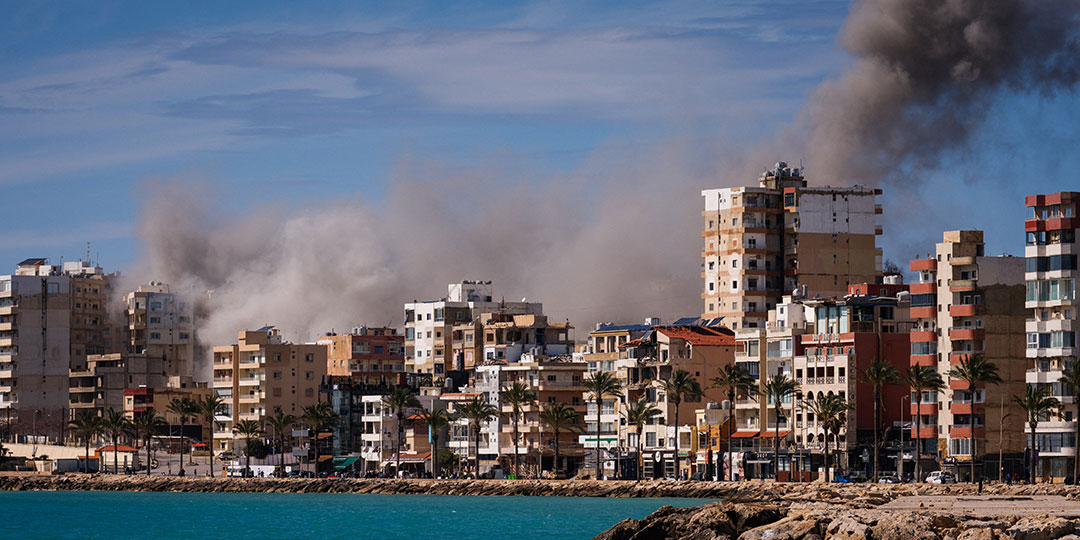
Israeli military struck what it characterized as a “command centre” in Beirut’s southern suburbs, a Hezbollah stronghold, after renewed evacuation warning. AFP correspondent observed street covered in debris including shattered cement and warped metal after early morning strike, with apartment building upper floors appearing damaged.
The area has been targeted multiple times during the conflict and is largely empty of residents who have fled the targeted zone. The repeated strikes on the same area despite civilian evacuation suggest Israeli assessment that Hezbollah command infrastructure is located in residential areas.
Civilian Infrastructure Damage
The damage to apartment buildings in the strike zone indicates that Israeli operations affect civilian residential infrastructure even with evacuation warnings provided. The repeated strikes on the same area despite apparent civilian evacuation suggests Israeli targeting prioritizes military objectives over civilian infrastructure preservation.
Lebanon’s Displacement Crisis
Lebanese authorities report displacement of over one million people, representing unprecedented humanitarian crisis in Lebanon. The displacement includes both those fleeing Israeli strikes and those displaced by Lebanese government evacuation orders in threatened areas.
The scale of displacement represents systematic disruption of Lebanese civilian life across broad geographic areas affected by Israeli military operations.
Refugee Infrastructure Strain
The displacement of over one million people creates humanitarian crisis affecting shelter, food, water, and medical services for displaced population. The scale of displacement exceeds capacity of humanitarian infrastructure to provide adequate assistance.
Kuwait Arrests Hezbollah Members Planning Assassinations
Kuwait announced arrest of six people linked to Hezbollah who were planning “assassinations targeting symbols and leaders of the state.” Five of the six arrested were Kuwaiti nationals, according to interior ministry statement.
The arrests represent third set of Hezbollah-linked arrests in Kuwait in recent weeks, following arrest of 10 alleged Hezbollah members on March 19 and arrest of 16 people on March 16. The pattern of arrests suggests Hezbollah is attempting to conduct assassination operations against Gulf state leadership.
Hezbollah’s Regional Threat Expansion
The Hezbollah assassination plot arrests indicate the group is attempting to expand operations beyond Israel and Lebanon to include attacks on regional allies of the United States. The pattern of arrests across multiple Gulf states suggests coordinated campaign of Hezbollah operations.
Regional Security Implications
The arrests of Hezbollah operatives planning attacks in Kuwait demonstrate that conflict in Lebanon is not contained regionally but extends to broader Middle East security issues. The expansion of Hezbollah operations to include assassination planning in Gulf states indicates escalation beyond current military conflict.
Key Developments in Hezbollah-Israel Conflict:
- Hezbollah chief rejects truce talks as surrender
- Israel expands buffer zone deeper into Lebanese territory
- Hezbollah launches 80+ attacks on Wednesday (largest daily number)
- More than 100 rockets claimed fired at Israeli targets
- Israeli soldier severely wounded in southern Lebanon
- Over 1,000 people killed in Lebanon in three weeks
- More than one million Lebanese displaced
- 42 health workers killed in Israeli operations
- UN warns against Gaza model replication in Lebanon
- Israeli strikes damage residential areas in Beirut suburbs
- Kuwait arrests six Hezbollah members planning assassinations
- Third set of Hezbollah arrests in Kuwait in recent weeks