
Hezbollah’s Secretary-General Nayim Qassem rejected on Wednesday any proposal for direct negotiations with Israel under the pressure of ongoing warfare, calling it “surrender and the stripping of Lebanon’s capabilities.” His firm stance directly contradicts repeated appeals from Lebanon’s presidency to pursue direct talks aimed at ending the conflict. The rejection comes as Israel continues intensive air operations against southern Lebanon and Beirut’s southern suburbs, while Hezbollah announces new defensive operations against Israeli forces.
The war erupted on March 2 after Hezbollah launched rocket attacks on Israel in response to the assassination of Iranian Supreme Leader Ayatollah Khamenei during an initial U.S.-Israeli operation. Israel responded with intensive airstrikes and ground incursions into southern Lebanon.
Hezbollah’s Official Stance: Complete Rejection of Negotiations
Nayim Qassem stated in an official statement that “presenting negotiations with the Israeli enemy under fire is imposing surrender and stripping all of Lebanon’s capabilities.” He further emphasized that negotiations themselves are “rejected with an enemy that occupies land and commits daily aggression.”
Qassem’s rejection directly addresses repeated initiatives from Lebanon’s presidency calling for direct talks with Tel Aviv to end the war. The Hezbollah leader characterized these moves as contradictory to the positions of all parties engaged in the conflict, calling instead for “national unity” in Lebanon.
Demands for Government to Reverse Militant Activity Restrictions
Qassem called on the Lebanese government to “reverse its decision criminalizing resistance activities and resistance fighters,” referring to security measures the authorities have taken against Hezbollah since the war began. Lebanese authorities have announced bans on the party’s security and military activities, measures the organization characterizes as undermining unified defensive efforts.
The Secretary-General emphasized that national unity can only be achieved by lifting these restrictions and having the Lebanese state support armed resistance.
Government Escalation Against Hezbollah and Iranian Influence
Lebanese authorities have taken additional steps against Hezbollah and Iranian influence. On Tuesday, the Foreign Ministry declared the newly appointed Iranian ambassador “persona non grata” and demanded his departure within a deadline no later than Sunday.
Hezbollah labeled this decision a “sin” and urged authorities to reverse it. The government’s stance reflects escalating tension between the Lebanese state and the Iran-backed organization, particularly as authorities hold Hezbollah directly responsible for drawing the country into a devastating war.
Israeli Air Campaign Continues Against Lebanon
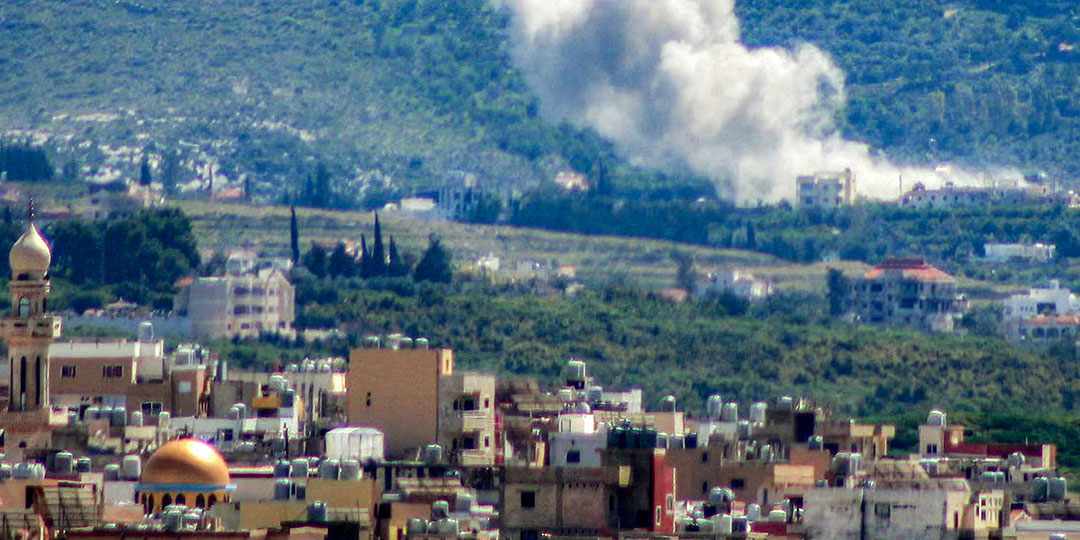
Israel launched new airstrikes Wednesday against scattered positions in southern Lebanon and Beirut’s southern suburbs. Warplanes targeted the southern suburb of Beirut in pre-dawn strikes, amid Israeli efforts to enforce evacuation orders across several neighborhoods.
Eyewitness accounts from strike sites in Beirut’s southern suburb describe complete destruction of upper floors of buildings and debris scattered across roadways. Israeli forces stated they targeted a “command center” belonging to Hezbollah in the suburb.
Scale of Destruction and Forced Displacement
Beirut’s southern suburb has endured dozens of strikes since the war began, resulting in displacement of over one million people from various areas. The suburb has been largely emptied of its original residents, who now represent only a small fraction of the area’s population.
Hezbollah’s Defensive Response to Israeli Attacks
Hezbollah announced a series of defensive operations in response to Israeli strikes. The organization stated its fighters targeted Israeli force concentrations in the border towns of Naqoura and Qusaiya and northern Israeli territory, launching ten rocket barrages totaling over 100 rockets.
Hezbollah also announced a series of operations against Israeli forces in southern Lebanon, with no reported Israeli casualties disclosed so far.
Israeli Objectives on the Ground
Israel revealed intentions to establish a “security zone” in southern Lebanon extending to the Litani River, approximately 30 kilometers into Lebanese territory. Occupation forces destroyed several bridges spanning the river and issued evacuation orders covering an area exceeding 40 kilometers in depth.
Human Toll and Humanitarian Crisis
Lebanon’s Health Ministry reported nine deaths from Israeli airstrikes on Tuesday alone. Two paramedics were killed in Nabatieh while performing rescue operations, bringing the total number of medical personnel killed by Israeli fire since the war began to 42.
According to the latest Health Ministry figures, at least 1,094 people have been killed in Israeli airstrikes and 3,119 others wounded since the conflict began.
Israeli Side Casualties
An Israeli woman was killed Tuesday by shrapnel from a rocket launched from Lebanon in northern Israel, as residents took shelter following air raid sirens.
Sidon Under Siege: Residents Refuse to Leave
Despite continued airstrikes and threats of imminent invasion, approximately 20,000 people remain in the coastal city of Sidon, including 15,000 internally displaced from neighboring villages. These residents defiantly ignore Israeli evacuation orders, refusing to abandon their land.
Khalil, a resident who took shelter in a theater in the old town after his house was struck, said: “We don’t want to leave our land. Our souls are attached to our city and our land. We will not abandon it. If they want to take us from here, let them take us by force.”
Fears of Blockade and Starvation
The deputy mayor of Sidon warned of an imminent complete blockade of the city. Alwan Sharif Addin stated: “If the only bridge connecting Sidon to Beirut is targeted, we will face a complete humanitarian catastrophe. The city’s supplies are beginning to run out.”
He pointed to acute shortages of food, fuel, and medicine, with warnings of impending loss of electricity and generator power. The city now relies on a single bridge connecting it to the capital via the old coastal road.
Testimonies from Affected Residents
Nada Abu Sari, an 82-year-old woman, sleeps on a mattress on the floor of a classroom where she has taken refuge with her family. She speaks with deep sorrow: “I am sick and I cannot afford medicine or food. We don’t sleep at night. Every time we hear an explosion we wake up. We die a hundred times each day.”
Abu Sari has not seen her home in the border village of Dhahira for over two years, as it has been completely flattened. She adds: “We have no houses, no land, no orchards left. Destruction and ruins everywhere.”
Mustafa Ibrahim al-Sayed, originally from a border village, fled with his large family and ten children to a school after evacuating their home. He said: “I don’t want to be displaced to a new place. I don’t want to go somewhere my children don’t know anyone.”
He added: “Since 1978, I have been displaced five times from my village. I have spent my entire life being displaced.”
Hezbollah Elements Deployed Across Cities Warning Civilians
Hezbollah fighters are visibly present throughout Sidon, identifiable by their black clothing, deployed densely at city entrances, roundabouts, and on motorcycles through empty streets. With each Israeli warning of incoming strikes, they fire their automatic weapons to alert civilians of imminent danger.
The dense deployment reflects the organization’s security and military control over southern and coastal regions.
Military Operations Statistics and Losses
Israeli forces announced their ground units “destroyed a weapons cache” in southern Lebanon, with air force operations “killing a number of terrorists” who fled targeted positions. The statement referred to destruction of “Hezbollah headquarters where large quantities of combat materiel were found,” without specifying exact locations.
Municipality officials and relief operations told AFP they received calls from Israeli military personnel demanding civilian evacuations, though most residents refused to leave, reflecting popular determination to remain despite blockade and potential death.
Conclusion:
Recent developments reveal a widening crisis across multiple levels. On one hand, Hezbollah’s stance reflects absolute rejection of compromise and determination to continue confrontation despite government and military pressure. On the other hand, Lebanese civilians face escalating humanitarian suffering amid continuous airstrikes, economic blockade, and threats of expanded Israeli ground invasion. To date, no clear indicators point toward imminent de-escalation or political solution.