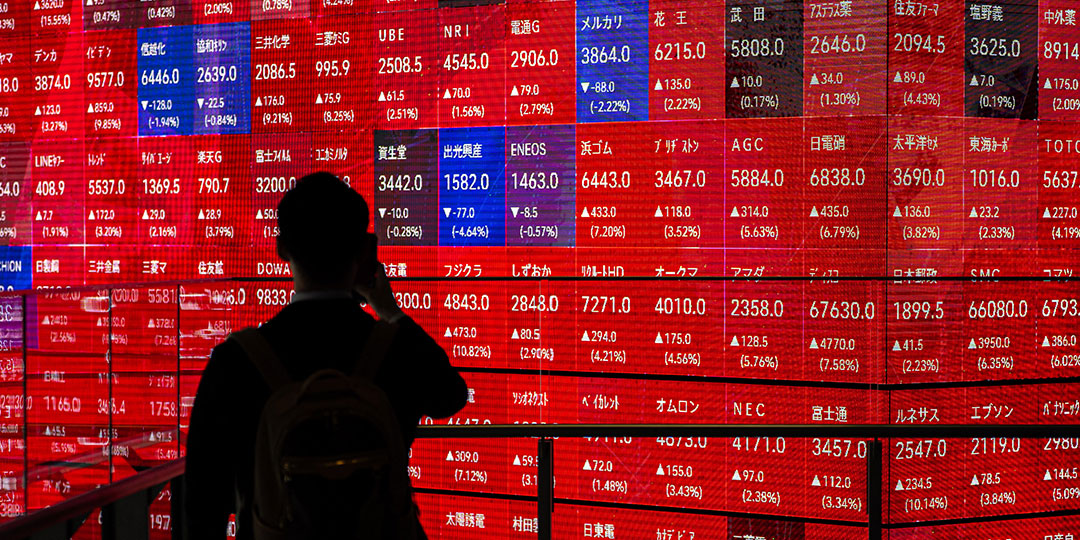

Global financial markets staged a dramatic rally Wednesday following the announcement of a two-week ceasefire between the United States and Iran, with investors celebrating the end of month-long conflict-driven market turbulence and returning to risk-seeking investment strategies. European stock markets soared at the start of trading, with Frankfurt’s DAX index surging five percent, Paris’s CAC 40 rallying 3.5 percent, and London’s FTSE 100 jumping three percent in initial deals as investors shed safe-haven positions and returned to equity investments. Asian markets followed suit Wednesday, with Japan’s Nikkei 225 closing up 5.39 percent at 56,308.42 and South Korea’s Kospi rising 6.87 percent to 5,872.34 points, while Hong Kong’s Hang Seng Index climbed 3.1 percent to 25,893.02 on hopes for peace in the Middle East. Energy markets experienced dramatic reversals, with European natural gas prices plunging 20 percent at the start of trading to 42.5 euros per unit as investors celebrated the prospect of resumed Strait of Hormuz transits and reduced supply disruption fears. Oil prices collapsed from conflict-driven highs, with airlines among the biggest gainers as fuel costs fell dramatically. Currency markets reflected the shift away from risk-averse positioning, with the dollar falling approximately one percent against both the euro and pound sterling as investors abandoned safe-haven currency positions in favor of riskier assets and emerging market exposure.
The coordinated global market surge reflects investor confidence that the ceasefire represents a genuine de-escalation opportunity and signals market readiness to price in recovery scenarios despite lingering uncertainties regarding ceasefire enforceability.
European Stock Markets Soar on Ceasefire News
European stock markets experienced dramatic gains Wednesday following ceasefire announcement, with major indices recording their strongest performance in weeks. Frankfurt’s DAX index led the rally, surging five percent in early trading as investors embraced the prospect of reduced geopolitical risk and stabilized energy markets.
Paris’s CAC 40 rallied 3.5 percent while London’s FTSE 100 jumped three percent in initial deals, with investors shifting capital from defensive safe-haven positions into cyclical stocks and risk assets expected to benefit from market stabilization and economic recovery.
Airline Sector Gains
Airlines emerged among the biggest gainers across European exchanges, with stock prices surging as investors priced in dramatic fuel cost reductions resulting from collapsing oil prices. The airline sector, which had suffered significantly during month-long conflict-driven oil price spikes, rebounded sharply as investors anticipated restoration of more normal operating margins and reduced fuel surcharges.
The dramatic airline rally reflected investor belief that energy cost normalization would substantially improve profitability in the transport and tourism sectors.
Sectoral Rotation from Defensive to Cyclical
The market rally demonstrated clear sectoral rotation from defensive stocks favored during uncertainty toward cyclical stocks benefiting from economic growth and normalized energy costs. The pattern reflected investor confidence that the ceasefire would enable transition from crisis management to growth-oriented positioning.
Asian Markets Follow European Lead
Asian stock markets recorded substantial gains Wednesday, building on European market momentum and reflecting investor optimism regarding ceasefire-enabled market stabilization. Japan’s Nikkei 225 closed up 5.39 percent at 56,308.42, representing one of the index’s strongest days in recent weeks as Japanese investors joined global market rally.
South Korea’s Kospi demonstrated even stronger performance, rising 6.87 percent to 5,872.34 points, with Korean exporters particularly buoyed by prospects of stabilized energy costs and reduced geopolitical risk to regional trade and manufacturing.
Hong Kong’s Hang Seng Rally
Hong Kong’s Hang Seng Index climbed 3.1 percent to 25,893.02, reflecting investor optimism regarding Middle East stability and prospects for normalized energy markets benefiting Hong Kong’s role as regional trading and financial hub. The Hong Kong rally reflected broader Asian investor confidence in ceasefire-enabled market recovery scenarios.
Regional Economic Impacts
Asian markets’ strong performance reflected regional dependence on Middle East energy supplies and vulnerability to Strait of Hormuz disruption. The prospect of resumed Strait transit and energy supply normalization directly benefited Asian economies, particularly energy-import-dependent nations including Japan, South Korea, and Hong Kong’s regional trade partners.
Energy Market Collapse: Natural Gas Plunges 20 Percent
European natural gas prices experienced the most dramatic market movement Wednesday, plunging 20 percent at the start of trading as investors embraced the prospect of resumed Strait of Hormuz transits and reduced supply disruption fears. The Dutch TTF natural gas contract, considered the European benchmark, collapsed to 42.5 euros per unit, retreating from highs reached during conflict-driven supply disruption panic.
Supply Disruption Fears Evaporate
The dramatic natural gas price collapse reflected investor belief that the ceasefire would enable restoration of normal energy supplies through the Strait of Hormuz. During the month-long conflict, natural gas and oil supply disruption fears had driven prices to historic highs as investors panicked regarding energy scarcity.
The 20 percent decline represents recovery of only a portion of the dramatic price increases experienced during conflict, suggesting that significant price premiums remain embedded in energy markets reflecting ceasefire uncertainty.
Implications for European Consumers and Industries
The natural gas price decline carries significant implications for European households and industries dependent on natural gas for heating, electricity generation, and manufacturing processes. The price reduction provides relief from month-long energy cost inflation while industrial sectors prepare for energy cost normalization.
However, questions remain regarding the durability of lower prices if the ceasefire proves temporary or if renewed conflict disrupts supply once again.
Oil Prices Plunge; Airline Sector Surges
Oil prices experienced dramatic reversals Wednesday as investors celebrated the prospect of resumed Strait of Hormuz transits and normalization of global energy supplies. The price decline from conflict-driven highs benefited energy-intensive industries, particularly the airline sector which had suffered extreme fuel cost spikes during month-long conflict.
Airlines emerged among the biggest gainers across global stock markets as investors priced in dramatic fuel cost reductions improving operational margins and reducing need for fuel surcharges on passenger tickets.
Airline Industry Relief
The airline sector had endured particularly severe pressures during conflict-driven oil price spikes, with fuel costs representing up to 30-40 percent of operating expenses for major carriers. The dramatic oil price decline provided immediate relief to airline profitability and justified aggressive share price increases.
The airline rally reflected investor belief that the ceasefire would enable stable, lower oil prices improving industry fundamentals for years, not just the two-week ceasefire period.
Transportation and Logistics Sector Benefits
Beyond airlines, transportation and logistics sectors benefited from prospects of lower fuel costs improving margins and reducing shipping surcharges. Trucking companies, shipping lines, and delivery services anticipated operational margin improvements from energy cost normalization.
Currency Markets: Dollar Weakens as Risk Appetite Returns
The dollar fell approximately one percent against both the euro and pound sterling Wednesday as investors abandoned safe-haven currency positioning in favor of riskier assets and emerging market exposure. The dollar’s weakness reflected classic risk-off to risk-on transition as investor confidence shifted from crisis management to growth-oriented positioning.
Safe-Haven Currency Reversal
The dollar, typically the world’s ultimate safe-haven currency during market turmoil, experienced selling pressure as investors rotated capital into riskier assets offering higher return potential. The one percent decline against major currencies represented a moderate adjustment from elevated safe-haven premium reached during month-long conflict.
Euro and Sterling Recovery
The euro recovered to approximately 1.17 against the dollar, reflecting improvement in European investor confidence as geopolitical risks diminished and prospects for normalized energy supplies improved European economic outlook. The pound sterling strengthened similarly, recovering from conflict-driven weakness as UK investors shifted from defensive to risk-seeking positioning.
The currency movements reflected investor confidence that the ceasefire would enable transition from crisis-driven volatility to normalized market conditions supporting traditional risk-reward relationships.
Market Dynamics: Risk-Off to Risk-On Transition
The coordinated global market rally reflected classic investor behavior during crisis resolution: dramatic rotation from defensive safe-haven positions toward risk assets expected to benefit from stabilized conditions and economic recovery. The pattern demonstrated that major investor concerns had centered on energy supply disruption risks rather than fundamental economic weakness.
Ceasefire Credibility Premium
The magnitude of market gains reflected investor belief that the ceasefire represents genuine de-escalation opportunity likely to persist for the two-week duration and potentially evolve into durable peace. If investors had assessed ceasefire credibility as low, market gains would have been more muted, with investors maintaining defensive positioning pending confirmation of genuine peace.
Emerging Market Implications
The currency movements and risk-appetite restoration carry significant implications for emerging market investments. Capital typically flows from safe-haven developed market assets into higher-yielding emerging market instruments when investor risk appetite improves. The dollar’s weakness and shift toward riskier positioning suggest potential emerging market capital inflows improving financial conditions in vulnerable economies.
Energy Market Normalization Scenarios
The magnitude of energy price declines reflects investor pricing of scenarios involving rapid normalization of global energy supplies. Natural gas prices 20 percent lower and oil prices dramatically reduced from conflict highs suggest markets are pricing in scenarios with:
- Rapid restoration of normal Strait of Hormuz transits
- Resolution of supply disruption fears
- Return to pre-conflict pricing relationships
- Sustained ceasefire enabling long-term supply normalization
Sustainability Questions
Despite dramatic energy price declines, significant questions persist regarding price sustainability if ceasefire enforcement proves incomplete or if renewed conflict disrupts supplies once again. The presence of significant risk premiums in current prices reflects investor uncertainty regarding ceasefire durability.
Market Contradictions with Ground Reality
The dramatic market rally stands in sharp contrast to reports of continued Iranian attacks on Gulf states occurring simultaneously with ceasefire announcement. The disconnect between financial market optimism and military reality raises questions about whether markets are pricing in complete information or whether investor euphoria has overestimated ceasefire durability.
Information Lag and Market Adjustment
Financial markets often respond to major announcements with dramatic initial reactions subsequently adjusted as new information emerges. The attacks on Kuwait, UAE, and Bahrain reported hours after ceasefire announcement could trigger subsequent market corrections if investors conclude ceasefire enforceability is weaker than initially assumed.
Equity Market Valuations and Economic Recovery Expectations
The dramatic equity market gains reflect investor pricing of economic recovery scenarios emerging from ceasefire-enabled energy supply normalization. The stock price increases embed expectations for:
- Reduced inflation from energy cost normalization
- Improved corporate profitability from lower input costs
- Consumer spending recovery from reduced energy cost pressures
- Economic growth resumption absent geopolitical disruption
Duration and Sustainability of Gains
The persistence of market gains beyond the initial ceasefire announcement period will depend on actual developments regarding ceasefire compliance and enforcement. If reports of continued attacks increase or if ceasefire clearly fails, dramatic market reversals could follow initial euphoric rallies.
Global Economic Implications
The energy price declines and market rallies carry significant implications for global economic conditions. Energy cost normalization could enable:
- Reduction of inflation pressures in developed and developing economies
- Improved purchasing power for households and businesses
- Recovery of demand in energy-intensive sectors
- Normalization of supply chains disrupted by month-long conflict
Risks from Euphoria
The dramatic market rally carries risks that investor euphoria has overestimated ceasefire durability and understimated ongoing risks from Iranian attacks and enforcement difficulties. If euphoria proves excessive relative to actual ceasefire sustainability, subsequent market corrections could be severe.
Sectoral Winners and Losers
Wednesday’s market action produced clear sectoral winners and losers beyond airlines. Energy sectors benefited moderately from lower energy cost expectations while airlines and transportation surged most dramatically. Defensive sectors favored during conflict uncertainty could experience profit-taking as capital rotates toward cyclical growth stocks.
Conclusion:
Global financial markets staged a dramatic rally Wednesday following the US-Iran ceasefire announcement, with European stock markets surging 3-5 percent, Asian markets climbing 3-7 percent, natural gas prices plunging 20 percent, and oil prices collapsing from conflict-driven highs. The coordinated global rally reflected investor confidence that the ceasefire represents genuine de-escalation opportunity enabling transition from crisis management to growth-oriented positioning. Energy markets experienced the most dramatic adjustments as investors priced in restoration of normal Strait of Hormuz transits and supply normalization. Currency markets reflected the shift away from safe-haven positioning, with the dollar weakening against the euro and pound as investors abandoned defensive currency strategies. Airlines and transportation sectors emerged among the biggest gainers as investors priced in dramatic fuel cost reductions improving operational margins. However, the dramatic market rally contrasts sharply with reports of continued Iranian attacks on Gulf states occurring simultaneously with ceasefire announcement, raising questions about whether financial markets have properly assessed ceasefire enforceability or whether investor euphoria has overestimated peace durability. The magnitude of market gains embeds expectations for sustained energy supply normalization and economic recovery, positioning subsequent market performance to respond dramatically to evidence confirming or contradicting ceasefire durability. The persistence of gains depends on actual developments confirming genuine ceasefire implementation and compliance, with potential for severe market reversals if ceasefire enforcement proves weaker than current market optimism assumes.