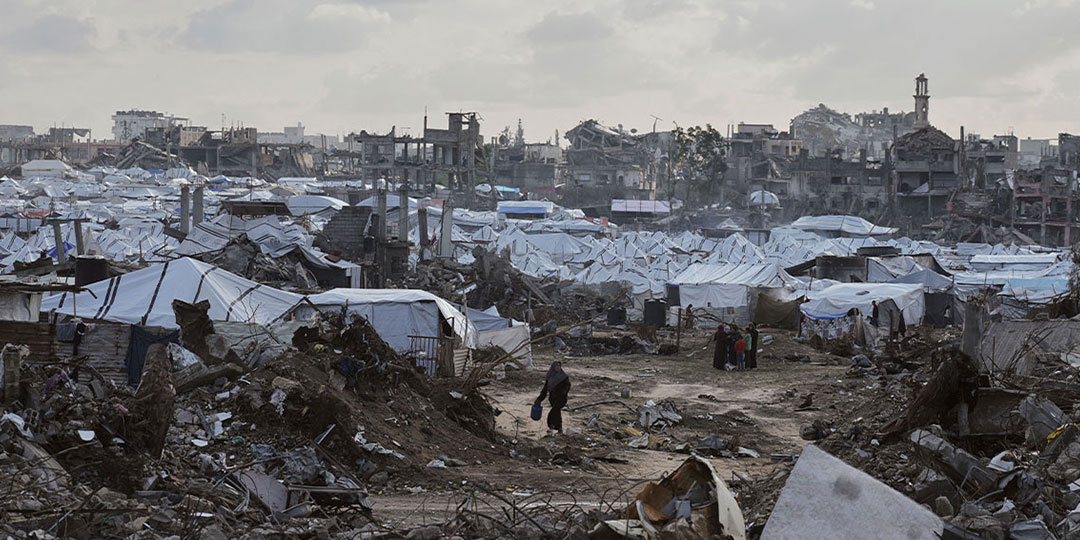

The Gaza humanitarian crisis is worsening amid continued blockade restrictions and limited access to essential supplies. Gaza’s Government Media Office warned of unprecedented escalation in food insecurity as aid deliveries fall significantly below agreed levels. At the same time, Israeli airstrikes in southern and central Gaza have resulted in additional civilian casualties, pushing the total death toll since October 2023 above 72,000.
The situation reflects mounting humanitarian and security pressures across the territory.
Warning of severe food insecurity
The Government Media Office in Gaza stated that the territory faces a sharp and growing shortage of essential food supplies.
Officials said current stock levels fail to meet minimum daily needs for the population.
The collapse of food security is linked to ongoing restrictions on the entry of goods and disruptions in humanitarian and commercial supply chains.
Drivers of the food crisis
Key contributing factors include:
- Restrictions on goods entering Gaza
- Disruption of humanitarian and commercial deliveries
- Rising prices
- Widespread poverty and displacement
Fuel shortages disrupt vital services
Authorities reported that limits on fuel and basic materials have severely disrupted supply chains and reduced operational capacity of bakeries and essential facilities.
Officials warned that conditions may deteriorate further ahead of the upcoming Eid al-Adha holiday.
Impact of fuel shortages
- Reduced bakery operations
- Strain on healthcare facilities
- Transportation disruptions
- Higher distribution costs
Aid trucks below agreed levels
According to the statement, an agreement provides for the entry of 600 trucks per day, including 50 fuel trucks.
However, only 37 percent of the agreed number of trucks have entered Gaza.
Fuel deliveries have reached just 14 percent of agreed levels, indicating a severe shortfall.
Aid gap implications
- Insufficient humanitarian relief
- Worsening shortages
- Pressure on essential services
- Escalating humanitarian distress
Call for urgent international action
The Gaza media office described the situation as collective restriction against civilians and a violation of international humanitarian law.
It urged the United Nations and the international community to intervene and press for the full reopening of border crossings to allow aid and supplies to enter.
Civilian casualties in southern Gaza
Medical sources reported that a six-year-old girl and a woman were killed, and 17 others injured, in an Israeli strike targeting the “Ghaith” displacement camp west of Khan Younis.
Earlier in the day, two Palestinians died from injuries sustained in previous strikes targeting a police site in northern Gaza and the Al-Mawasi area near Khan Younis.
Areas affected by strikes
- Ghaith displacement camp
- Al-Mawasi, Khan Younis
- Al-Maghazi refugee camp
- Northern Gaza areas
Additional fatality in Khan Younis and Al-Maghazi
A young Palestinian man died from wounds sustained two days earlier in a strike on Al-Mawasi.
Another individual was injured after an Israeli strike targeted a residential house in Al-Maghazi refugee camp in central Gaza.
Emergency teams continue to respond amid growing strain on hospitals.
Overall casualty toll since October 2023
Gaza health authorities reported that the cumulative number of fatalities from Israeli operations since October 7, 2023, has reached 72,797 deaths, with 172,821 injured.
Military operations continue despite previous ceasefire agreements, with reports of ongoing airstrikes and artillery shelling.
Humanitarian dimensions
- High civilian death toll
- Severe strain on hospitals
- Infrastructure destruction
- Rising health and food insecurity risks
Ceasefire violations and ongoing hostilities
Despite a ceasefire framework, Israeli operations have reportedly continued in various areas of Gaza.
Officials warn that repeated violations undermine stabilization efforts and increase the risk of broader escalation.
Escalation risks
- Continued civilian harm
- Further infrastructure damage
- Expanded displacement
- Regional instability
Conclusion:
The Gaza humanitarian crisis is intensifying as food and fuel shortages deepen and aid deliveries remain far below agreed thresholds. Concurrent Israeli airstrikes have caused additional civilian casualties in southern and central Gaza, pushing the total death toll above 72,000 since October 2023. Without urgent international intervention to restore aid flows and protect civilians, humanitarian conditions are likely to deteriorate further in the coming weeks.