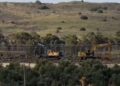
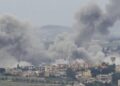
Columns of thick smoke rose from two locations near Tel Aviv on Friday, March 13, 2026, following loud explosions after the Israeli military warned of incoming missiles from Iran, according to AFP correspondents on the ground. The Iranian Revolutionary Guards officially announced responsibility for the operation in coordination with Lebanese Hezbollah, which receives support from Tehran. The strikes represent the latest escalation in a regional conflict that has steadily intensified since February 28, 2026.
Emergency responders with the Magen David Adom ambulance service reported finding no immediate casualties after responding to the targeted sites. An AFP correspondent observed thick black smoke rising from what appeared to be a burning warehouse near a major highway. The explosions followed the activation of air raid sirens across Tel Aviv, indicating the Israeli military had detected incoming threats.
Smoke and Explosions Near Israel’s Largest City
A series of explosions erupted following the activation of air raid sirens in Tel Aviv directly, indicating a coordinated strike against Israel’s largest metropolitan area. AFP reporters in Jerusalem, located approximately 55 kilometers from Tel Aviv, clearly heard the succession of explosions, reflecting the power of the detonations and the proximity of targeted sites to densely populated centers.
The Israeli military announced it had detected missiles launched from Iran and that air defense systems were operating to intercept them. The Israeli military did not initially specify how many missiles it had intercepted or how many evaded its defenses.
Damage Assessment and Initial Casualty Count
Emergency and civil defense teams reported no known immediate human casualties in the initial phase of the operation, though material damage was apparent from the thick smoke and visible fires. This casualty count may change as more precise assessments emerge if additional damage or injuries are discovered.
Revolutionary Guards Announcement and Coordinated Operation
The Iranian Revolutionary Guards formally announced on Friday, March 13, that it had launched missiles and drones against Israel in coordination with Lebanese Hezbollah, which is supported by Tehran. The Revolutionary Guards clarified in an official statement that this operation was carried out in the context of Quds Day celebrations, an annual commemoration observed by Iran on the last Friday of Ramadan.
Quds Day Context and Israeli Morning Strikes
Israel targeted Tehran with airstrikes early Friday morning near the site where celebrations for Quds Day were being organized, attended by senior Iranian officials. This timing reflects an apparent Israeli effort to simultaneously target Iranian symbols and degrade Iranian military capabilities.
Scale of Israeli Military Operations
The Israeli military announced substantial figures on Friday reflecting the scope of its military campaign since the war began on February 28, 2026. The Israeli military stated it has conducted 7,600 strikes on Iran since the joint US-Israeli offensive commenced two weeks prior.
Distribution of Israeli Strikes on Iran
According to the Israeli military statement:
Total strikes on Iran: 7,600 strikes
Strikes on Iranian government military headquarters and facilities: more than 2,000 strikes
Strikes on Iran’s missile program: approximately 4,700 strikes
These figures reflect Israeli focus on destroying Iranian military and missile infrastructure.
Israeli Campaign Against Lebanon
The Israeli military has conducted “more than 1,100 strikes” against Lebanon since the war with Hezbollah began on March 2, 2026. These strikes have been distributed across multiple target categories:
Approximately 190 strikes targeting Quwwat al-Rada (Radwan Force), Hezbollah’s elite commando unit
More than 200 strikes against missile positions or launch platforms
Additional strikes against military installations and fortifications
Israeli Strategy in Lebanon
Israel’s campaign against Lebanon reflects an effort to dismantle Hezbollah’s missile capabilities and strike its elite units. Israel is focusing on reducing the offensive capabilities of the Lebanese organization, particularly its capacity to launch rockets toward Israel.
Continuous Escalation of Military Operations
Since the war erupted on February 28, 2026, following the death of Iran’s Supreme Leader Ayatollah Ali Khamenei, military operations have escalated continuously. The combat has involved alternating strikes between:
Israeli strikes on Iran and Lebanon
Iranian retaliatory operations with missiles and drones
Hezbollah operations against Israel with rockets and unmanned systems
Iranian attacks on targets in Gulf states
Expanding Geographic Scope
The conflict has spread from Iran to Lebanon to the Gulf, reflecting a transformation from a bilateral dispute into a regional war. Multiple Gulf states have experienced Iranian strikes, while Israel has conducted operations deep within Iranian territory.
Air Defense Systems and Interception Operations
The various parties have focused on employing advanced air defense systems to intercept missiles and unmanned aerial vehicles. Israel has announced that its air defense systems intercepted numbers of Iranian missiles, though some rockets succeeded in reaching their intended targets.
Air Defense Effectiveness
Israel has not announced precise interception rates, yet the presence of explosions and material damage indicates that some Iranian missiles bypassed Israeli air defenses. This reality reflects the complex situation regarding the effectiveness of air defense systems in modern warfare environments.
International and Regional Reactions
Regional and international states have continued monitoring developments with concern. Anxieties have intensified regarding the potential spread of the conflict to a wider scope, particularly with multiple Gulf states becoming involved in military operations.
Casualty Toll and Humanitarian Impact
While initial reports indicate no immediate casualties from the Friday strikes near Tel Aviv, the cumulative toll of the war continues to rise. Previous reporting has documented significant casualties across Iran, Lebanon, and surrounding regions since the conflict began.
Broader Human Cost
The war has resulted in thousands of documented deaths and tens of thousands of injuries across multiple countries. Displacement of civilian populations has reached millions, particularly in Iran and Lebanon, with humanitarian organizations warning of a catastrophic situation.
Conclusion:
The explosions near Tel Aviv and coordinated Iranian operations represent a new escalation in the regional war. With Israel announcing 7,600 strikes on Iran and 1,100 on Lebanon, it is clear that the level of military operations has reached unprecedented levels since the conflict commenced weeks ago. The figures and events indicate that the war shows no signs of abating or de-escalating, but instead continues to expand geographically and deepen militarily with each passing day.