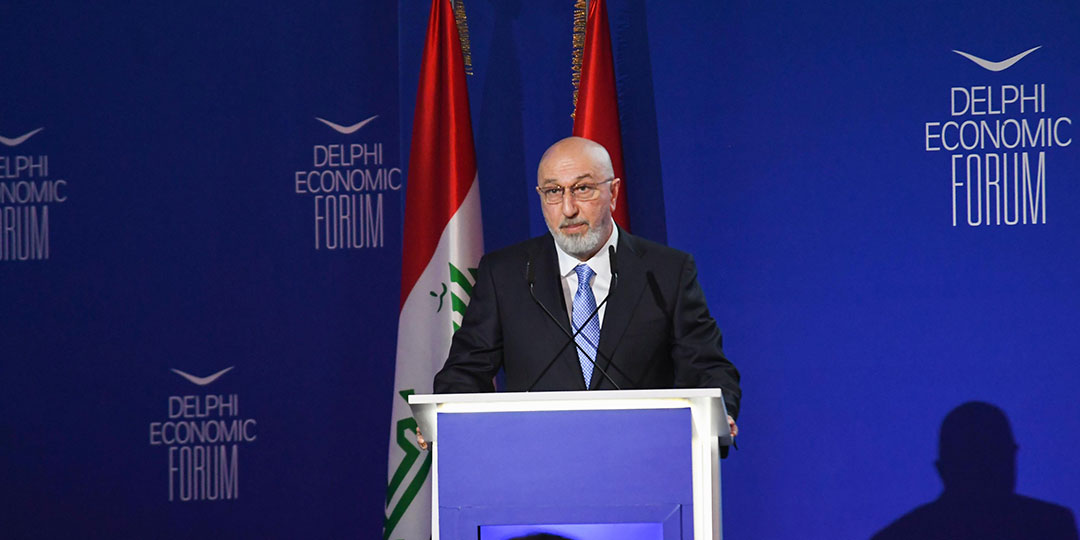

Disarmament in Iraq remains a central government priority, with President Nazar Amidi confirming that ongoing efforts aim to ensure that weapons are restricted to the state in order to strengthen security and stability.
Speaking at the Delphi Forum in Sulaymaniyah, attended by the Iraqi News Agency, the president emphasized that dialogue and cooperation are essential to advancing national stability and supporting long-term development.
President: Stability Is Key to Development
President Amidi said the Delphi Forum has become a platform for dialogue among political and economic leaders from around the world, reflecting growing international recognition of Iraq’s role in promoting understanding and cooperation.
He noted that Iraq is working to enhance its capabilities to become an attractive destination for investment and a safe environment for international companies and capital.
The president praised decisions by certain armed factions to cooperate with the state in ensuring that it alone holds weapons, describing this as a positive step toward strengthening national sovereignty.
He stressed that disarmament in Iraq is not only a domestic security objective but also a prerequisite for local, regional, and international development.
Economic Reform and Anti-Corruption Priorities
Amidi outlined several key challenges facing Iraq, including:
– Diversifying income sources and reducing reliance on a rent-based system.
– Encouraging investment and creating a secure business environment.
– Combating corruption and eliminating its root causes.
He called on the executive, legislative, and judicial authorities to work together to address these challenges and advance reform and development goals.
Defense Ministry Reports Receiving Large Quantities of Weapons
Separately, the Iraqi Ministry of Defense announced that significant quantities of weapons have already been received as part of the disarmament process.
Major General Tahseen Al-Khafaji, Director of Media and Moral Guidance at the ministry, told the Iraqi News Agency that the initiative to restrict weapons to the state was launched following direct orders from the Commander-in-Chief of the Armed Forces, Prime Minister Ali Faleh Al-Zaidi.
He explained that the operation, led by the Deputy Commander of Joint Operations, began in the city of Samarra and has resulted in the transfer of a large number of weapons to state control.
No Fixed Timeline for Completion
Al-Khafaji noted that the transition and integration process is complex and requires legal and administrative frameworks, particularly due to issues involving heavy weapons, equipment, personnel, salaries, and employment entitlements.
The committee overseeing the process includes:
– The personal secretary of the deputy commander.
– The Assistant Chief of Staff for Administration.
– Legal advisers from the Ministries of Defense and Interior.
– Legal directors from various security agencies.
He confirmed that the process is proceeding smoothly under existing laws and mechanisms but stressed that there is no fixed timeline for completing the disarmament file.
Conclusion:
Disarmament in Iraq continues to be framed as a critical pillar of national stability and development. While the presidency highlights ongoing dialogue and cooperation, the Defense Ministry confirms tangible progress on the ground, albeit without a defined timetable for finalizing the process.