
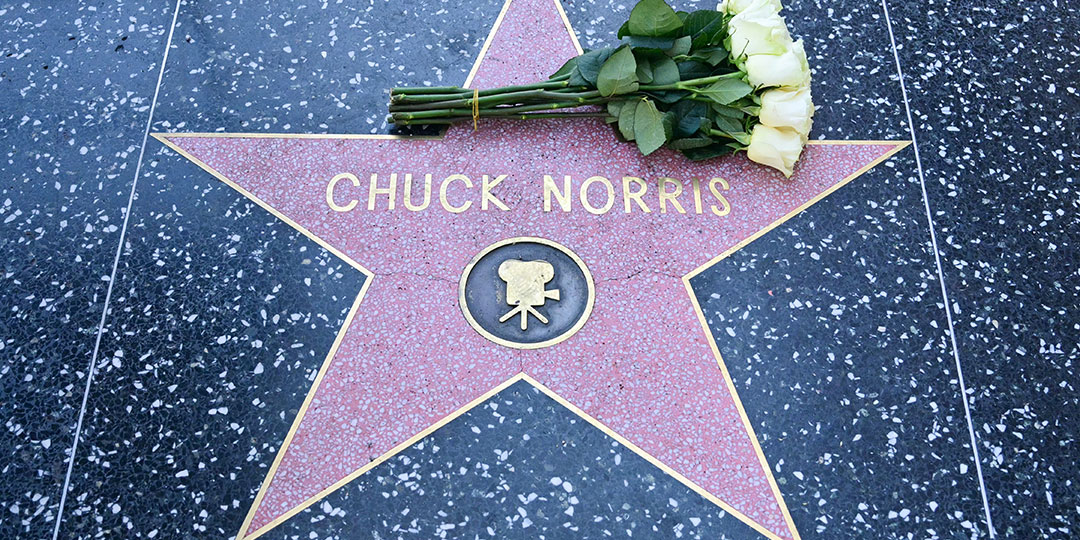

American action film legend Chuck Norris died Friday, March 20, at age 86, his family announced via Instagram. The announcement came hours after US media outlets reported Thursday that Norris had been hospitalized on the island of Kauai with an unspecified health condition. The actor’s family requested privacy regarding the circumstances of his death, stating only that he “was surrounded by his family and passed away peacefully.”
Norris stands as one of the most iconic action film stars in American cinematic history, best known for his role as Walker in the long-running television series “Walker, Texas Ranger.” His life spanned decades of martial arts mastery, Hollywood stardom, and cultural influence that extended far beyond entertainment into political and social commentary. Days before his death, Norris had posted a birthday video celebrating his 86th birthday, showing him practicing boxing with the quip: “I’m not getting older, I’m leveling up”—a statement that would become his final public message to admirers worldwide.
From Martial Arts Master to Hollywood Legend: The Rise of Chuck Norris
Humble Beginnings and Air Force Service
Chuck Norris (full name: Carlos Ray Norris) was born in 1940 into an evangelical Christian family. He was the youngest of four brothers, raised by his mother after she divorced his father, who struggled with alcohol addiction. These modest and challenging circumstances shaped his character and values throughout his entire life, instilling in him discipline and strong moral conviction.
Norris discovered martial arts during his service in the United States Air Force in South Korea. There, he mastered Tang Soo Do, a traditional martial art combining karate and Korean fighting techniques. This period proved transformative, as Norris found in martial arts not merely a practical skill but also a life philosophy and personal discipline that would define his entire career.
Entrepreneurship and Becoming America’s Martial Arts Pioneer
After leaving the Air Force in 1962, Norris took a bold gamble by opening his own martial arts studio in Los Angeles. This decision came at a time when Asian martial arts were virtually unknown in mainstream American culture. Through dedication and genuine skill, Norris succeeded where others might have failed, building a thriving business that attracted Hollywood’s elite.
By 1967, Norris had won the American Karate Championship, earning recognition as an accomplished martial artist. His success in competition attracted celebrity clients and admirers. He became the personal martial arts trainer for Hollywood’s biggest stars, including:
Steve McQueen: A legendary action star of the era
Priscilla Presley: Famous entertainer and public personality
Donny Osmond: Music and entertainment celebrity
This elite clientele elevated Norris’s profile and opened doors to Hollywood’s inner circles, creating opportunities for his eventual transition to acting.
Early Film Appearances and the Bruce Lee Connection
Norris made his film debut in 1968 in “The Reckoning Crew,” appearing in a small role in a production starring comedy legend Dean Martin. The role was limited, but it marked his entry into the film industry.
The breakthrough came in 1972 with “The Way of the Dragon,” the classic film that paired Norris with martial arts legend Bruce Lee. Their fight scene became one of the most famous action sequences in cinema history. Although Lee was the film’s star, Norris delivered an impressive performance that gained him international recognition and established him as a legitimate action film talent rather than merely a martial arts expert acting.
Building an Action Film Dynasty: Career and Cultural Impact
Classic Action Films of the 1970s and 1980s
Following his success with Bruce Lee, Norris enrolled in professional acting classes and appeared in a series of classic martial arts and action films:
“Good Guys Wear Black” (1978): A historically significant action film that many consider a turning point in Norris’s career, where he led the film as the primary star rather than a supporting martial arts expert.
“Silent Rage” (1982): Another action film that solidified his position as a reliable action star capable of carrying films.
Numerous other films: Throughout the 1970s, 1980s, and 1990s, Norris appeared in dozens of action films that achieved varying degrees of critical and commercial success. While many critics dismissed these films, action movie audiences loved them, and Norris became the face of the action film genre.
“Walker, Texas Ranger”: The Defining Role and Cultural Phenomenon
Norris achieved his greatest success when “Walker, Texas Ranger” premiered on television in 1993. He played Walker, a Texas Ranger who combines cowboy sensibility with martial arts mastery to fight crime. Wearing the iconic cowboy hat, the character became Norris’s most recognizable role.
The series ran for eight seasons (1993-2001) and became hugely successful both in the United States and internationally. Walker became a cultural icon, introducing Norris to new generations of viewers. The show transcended mere entertainment, becoming a platform for Norris’s conservative and religious values.
Internet Meme Status and Continued Cultural Relevance
In later years, Norris achieved an unexpected second life through internet culture. Scenes from “Walker, Texas Ranger” became popular internet memes—humorous and affectionate references that kept his image alive in digital culture. This introduced Norris to younger audiences who had never seen the original series, cementing his status as a timeless cultural icon.
Personal Life and Political Activism: Values and Conviction
Family Life and Commitment
Norris married twice during his lifetime. His marriages produced five children total. By all accounts, he was a devoted father and family man, and his public statements consistently emphasized the importance of family and traditional values.
His family’s statement after his death reflected this commitment: “To the world, he was an action star, a martial artist, and a symbol of strength. To us, he was a devoted husband, a loving father and grandfather, a wonderful brother, and the heart of our family.”
Religious Faith and Conservative Values
Raised in an evangelical Christian household, Norris maintained his religious commitments throughout his life. This faith informed his professional choices and political positions. He became an outspoken advocate for traditional and Christian values in a society undergoing significant social transformation.
Political Activism and Conservative Advocacy
Norris was openly committed to conservative Republican politics and used his celebrity platform to advance conservative causes:
2012 Presidential Election: Norris publicly called on American citizens to oppose President Barack Obama’s re-election and support Republican challenger Mitt Romney. He did not hesitate to leverage his fame and influence for political causes he believed in.
Support for Israel (2013): Norris publicly expressed support for Israeli Prime Minister Benjamin Netanyahu through social media videos.
Other Conservative Movements: He participated in various conservative campaigns and appeared on conservative media platforms throughout the last two decades of his life.
Legacy and Cultural Impact: Beyond Entertainment
Action Film Legend and Cultural Pioneer
Chuck Norris stands as one of American action cinema’s greatest legends. While his acting abilities in the traditional sense were sometimes questioned (his dramatic performances were often straightforward and unadorned), his influence on cinema and popular culture proved profound and enduring.
He opened doors for subsequent action stars like Jean-Claude Van Damme and Dolph Lundgren, proving that martial arts experts without traditional acting backgrounds could become legitimate film stars. He demonstrated that action cinema could be a serious career path in Hollywood.
Mainstreaming Asian Martial Arts in America
Before Norris and Bruce Lee, Asian martial arts seemed exotic and foreign to mainstream American culture. Norris played a crucial role in normalizing martial arts and integrating them into popular American culture. Today, karate, kung fu, and other martial arts are woven into the fabric of American society—a transformation to which Norris contributed substantially.
Inspiring Global Generations
Norris inspired millions of people worldwide to practice martial arts. His martial arts studios became influential institutions, and his straightforward, effective teaching methods influenced thousands of instructors globally. Physical fitness, discipline, and martial arts training became aspirational for multiple generations partly because of Norris’s example.
Enduring Cultural Icon
Even in his final days, Norris embodied the positive spirit that defined his public image. Celebrating his 86th birthday by posting a boxing video with the humorous message “I’m not getting older, I’m leveling up” demonstrated his continued vitality and positive outlook. This spirit of optimism and commitment to physical fitness at an advanced age made him an ongoing source of inspiration.
Final Days and Unexpected Passing
Birthday Celebration Days Before Death
Days before his death, Norris celebrated his 86th birthday by posting a video on social media. In the footage, he appears in relatively good health, practicing boxing and martial arts techniques. The message was unmistakable: Norris refused to accept aging and continued engaging in physically demanding activities.
His comment in the video—”I’m not getting older, I’m leveling up”—has now taken on poignant significance as final, noble words from a man who lived a life defined by action, movement, and vitality.
Sudden Hospitalization and Passing
Without clear public explanation, Norris was admitted to a hospital Thursday on the Hawaiian island of Kauai. Within hours, his family announced his death. The family requested that details of his death remain private, stating only: “He was surrounded by his family and passed away peacefully.”
Tributes and Global Response
Expected Tributes from Action Film Community
The action film community and his peers are expected to release statements and tributes. Action film legends who followed in his footsteps, martial arts instructors worldwide who learned from his methods, and Hollywood colleagues who worked with him are likely to share memories of his influence and contributions.
Fan Reactions Across Social Media
Across social media platforms, fans worldwide began sharing memories of Chuck Norris. Many recalled watching his films and drawing inspiration from them. Others remembered “Walker, Texas Ranger” and how it influenced their lives. The outpouring of affection demonstrated the enduring connection between Norris and audiences across generations and continents.
Cultural Significance: The Norris Effect
Influence on Martial Arts and Physical Culture
Beyond film and television, Norris profoundly influenced physical culture and martial arts practice globally. His approach—emphasizing discipline, respect, and practical effectiveness—became a model for martial arts instruction worldwide. Millions of people began practicing martial arts partly because of his example and influence.
Conservative Voice in Hollywood
Norris represented a particular conservative and religious perspective in Hollywood, an industry often associated with liberal politics. His willingness to express political and religious views publicly made him a symbolic figure for conservative Americans who felt underrepresented in entertainment.
Bridging Generations Through Entertainment
Through television, film, and later internet culture, Norris connected with multiple generations. Young people who never saw his original films discovered him through memes, while older audiences remembered his classic action features. Few entertainment figures have maintained such multi-generational relevance.
Conclusion:
The death of Chuck Norris marks the end of an era in American action cinema. He was far more than an actor—he was a cultural symbol who lived a complete life dedicated to physical strength, personal values, religious commitment, and political conviction.
From humble beginnings as a modest martial arts instructor to international film star, from karate champion to internet icon, Norris’s life encompassed multiple roles and personas. He left indelible marks on:
American cinema and action film
Popular culture and entertainment
Global martial arts practice and instruction
Generations of fans and admirers worldwide
Now, as media outlets worldwide publish tributes and retrospectives, Chuck Norris will be remembered as a legend who lived his life completely—with strength, integrity, and commitment to his values. He departed peacefully, surrounded by family, in precisely the manner he would have chosen to conclude his remarkable journey.
His final message—”I’m not getting older, I’m leveling up”—serves as a fitting epitaph for a man who refused to accept limitations and continuously sought to advance, improve, and inspire others throughout his extraordinary life.