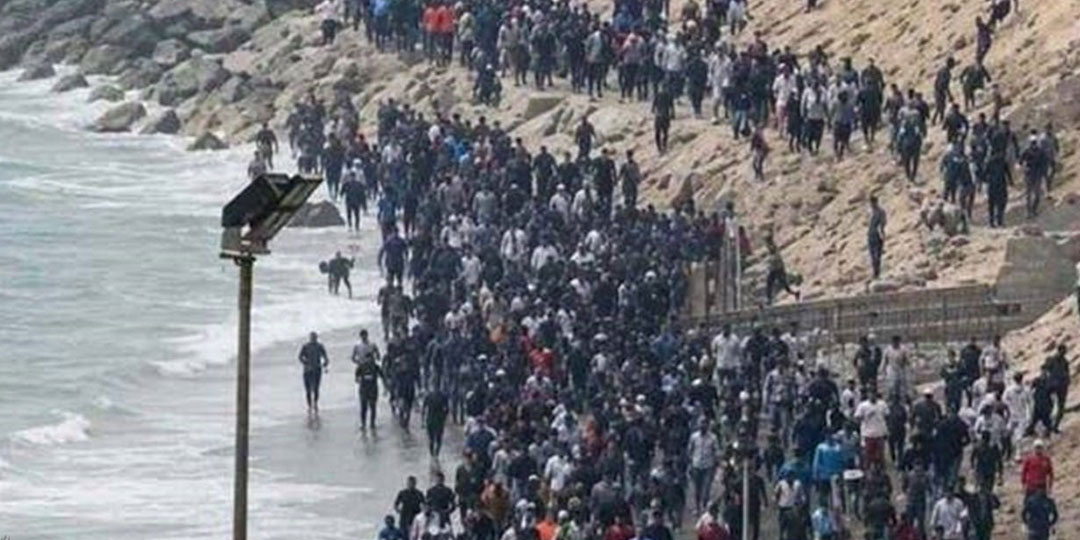

Spain’s North African enclave of Ceuta is facing one of its largest migration surges in recent years after local authorities said approximately 60,000 migrants have attempted to cross into the city. As Madrid accelerates the return of thousands of migrants to Morocco and reinforces security measures, France has tightened border controls over fears that the migration crisis could spread across the European Union.
Spain Faces Unprecedented Migration Pressure
Ceuta regional president Juan Jesús Vivas said around 60,000 migrants have attempted to enter the Spanish enclave, describing the situation as an extraordinary challenge for border security.
Spain’s prime minister said Madrid is working closely with Morocco to combat migrant smuggling networks while expressing regret over the casualties reported during the recent border incidents.
He also described the events in Ceuta as “an attack on national sovereignty” and pledged that Spain would use all available resources to protect its borders.
Morocco Steps Up Security Measures
Moroccan authorities announced the arrest of around 30 people following clashes near the border, saying the operation was part of efforts to prevent irregular crossings and restore order.
More Than 25,000 Migrants Return to Morocco
As authorities worked to ease pressure on Ceuta, Spain’s Interior Ministry announced that more than 25,000 migrants had left the enclave and returned to Morocco by Friday afternoon.
The ministry said departures were continuing at an average rate of 150 people per minute, highlighting the scale of the ongoing repatriation effort.
Madrid Moves to Regain Control
The rapid return of migrants forms part of Spain’s broader strategy to stabilize the situation while maintaining additional police and military deployments throughout Ceuta.
France Responds to Growing European Concerns
The migration surge has prompted reactions beyond Spain, with French authorities announcing enhanced border controls following the unprecedented influx into Ceuta.
Paris said the measures were introduced amid concerns that the migration crisis could spill over into other European Union member states if the pressure on Spain’s southern border continues.
A Wider European Challenge
France’s decision reflects growing concern across Europe that the developments in Ceuta could evolve into a broader regional migration challenge, prompting additional border security measures across the EU.
Conclusion
The migration crisis in Ceuta continues to intensify as approximately 60,000 people attempt to enter the Spanish enclave, while Spain accelerates the return of thousands of migrants to Morocco and strengthens security along its borders. France’s decision to reinforce border controls illustrates how the situation is increasingly being viewed as a European challenge rather than solely a Spanish border issue.