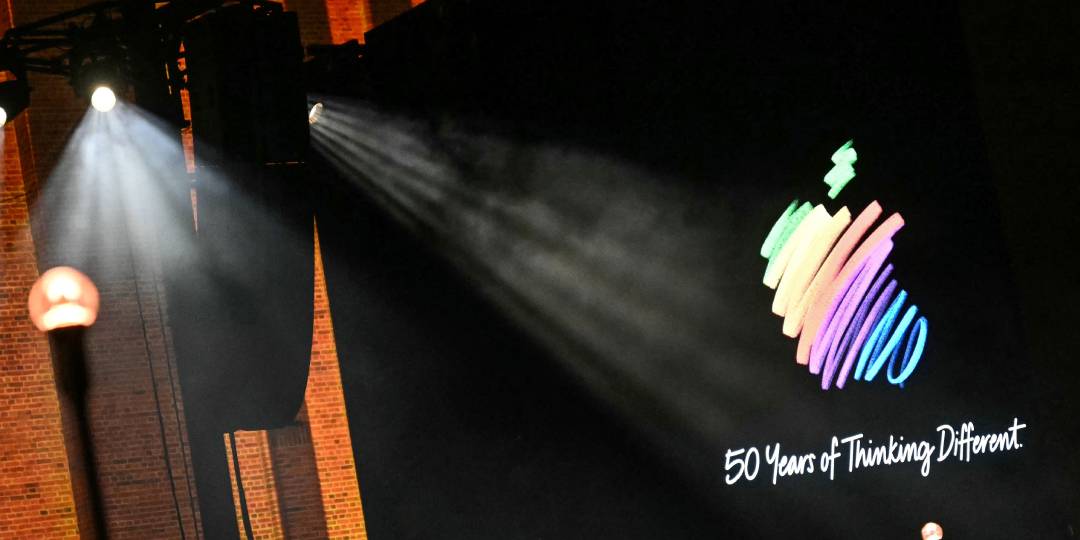

Apple marks its 50th anniversary on April 1, 2026, celebrating five decades of revolutionary products and design philosophy that transformed technology from specialist tools into cultural icons accessible to millions. From the iconic rainbow logo commissioned in 1977 to the game-changing iPhone that reshaped global communication, Apple has consistently delivered innovations that transcended their technical specifications to become lifestyle statements. The company, now valued at more than $3.6 trillion, has sold over 3.1 billion iPhones since 2007, generating approximately $2.3 trillion in revenue according to Counterpoint Research. Yet as Apple celebrates this historic milestone, it confronts its most significant challenge in years: proving it can deliver meaningful innovation in artificial intelligence while competitors like Google, Microsoft, and OpenAI race ahead. The company’s legendary ability to simplify complex technology and create products users “fall in love with” now faces its greatest test in the AI era, where adoption remains sluggish across the industry and success remains unproven.
Five decades of Apple’s history reveal the design philosophy, strategic decisions, and cultural moments that built a technology empire.
The Apple Logo: “Don’t Make It Cute”
When Steve Jobs commissioned a new logo for Apple in January 1977, he gave designer Rob Janoff a single instruction that would become foundational to Apple’s aesthetic: “don’t make it cute.”
Janoff recalled in a 2018 Forbes interview: “I just wanted to make the computer easy and fun to be around.”
The Bite Mark and Its Origins
The distinctive bite mark in the Apple logo served a specific design purpose unrelated to the myths that grew around it. Janoff included the bite to establish scale, setting the apple apart from similar round fruits like cherries.
The homonym connection to “byte,” the fundamental unit of computer memory, was discovered only later. Despite popular urban legends, there was no connection to the Biblical story of Adam and Eve, nor to the death of computing pioneer Alan Turing.
Janoff emphasized the logo’s simplicity and rightness: “The Apple job was the only time in my entire career where I presented only one solution to a client. But it was just so right.”
The Legendary 1984 Super Bowl Advertisement
In January 1984, Apple aired a groundbreaking one-minute advertisement directed by Ridley Scott during the Super Bowl, reaching tens of millions of American viewers with an entirely new approach to product marketing.
The ad depicted a totalitarian sci-fi world where a hammer-wielding young athlete smashes a “Big Brother” figure declaiming propaganda to brainwashed citizens from a massive screen, drawing clear inspiration from George Orwell’s dystopian novel “1984.”
Marketing Philosophy Over Product Display
The advertisement’s revolutionary approach lay not in showcasing the Apple computer directly, but in promising consumers emancipation through the transformative power of home computing technology.
This marketing strategy demonstrated Apple’s understanding that successful products transcend their technical specifications to represent broader lifestyle changes and personal liberation. The ad became a cultural phenomenon, establishing Apple’s reputation for marketing innovation that matched its product innovation.
Bold Colors and Visual Identity
Apple’s devices have consistently used vibrant color and translucent design to distinguish themselves from competitors and transform computers into objects of aesthetic desire.
iMac Transparency and Candy Colors
The first-generation iMacs, released in 1998, offered transparent shells in candy-like colors including blue and green, combining visual interest with glimpses of the high-tech circuitry within. This design philosophy made computing technology appear accessible and demystified rather than intimidating.
iPod Color Spectrum and Rose Gold
The iPod music player, initially available only in metallic grey, quickly expanded into a full spectrum of bright colors, allowing consumers to express personality through device choice.
Years later, the “rose gold” variant of the iPhone 6S in 2015 sparked widespread imitation, spawning a years-long trend dubbed “millennial pink” by design and marketing commentators. This variant demonstrated Apple’s continued ability to set design trends adopted throughout the industry.
The 9:41 AM Coincidence: Steve Jobs’ Keynote Strategy
Anyone watching Apple product announcements or browsing the company’s website will notice a remarkable coincidence: nearly every screen displays the time as 9:41 AM.
Australian game developer Jon Manning discovered the explanation when he encountered Scott Forstall, then-head of Apple’s iOS mobile operating system, in California in 2010.
Keynote Timing and Product Reveals
Forstall revealed that the timing reflected Steve Jobs’ preferred structure for product announcements: “We design the keynotes so that the big reveal of the product happens around 40 minutes into the presentation. When the big image of the product appears on screen, we want the time shown to be close to the actual time on the audience’s watches. But we know we won’t hit 40 minutes exactly.”
The 9:41 AM time became a subtle but consistent element of Apple’s visual identity, reflecting the company’s obsessive attention to detail in creating seamless user experiences.
Apple’s Third Founder: The Man Who Walked Away
While Steve Jobs and Steve Wozniak are remembered as Apple’s co-founders, a third man signed the three-page contract launching the company on April 1, 1976: Ronald Wayne.
According to Walter Isaacson’s biography of Jobs, Wayne, an engineer at the Atari video game company, was charged with hardware engineering and documentation responsibilities in the fledgling business.
The $370 Billion Decision
While Jobs and Wozniak threw themselves into building the company, Wayne feared losing his modest savings if Apple failed. Just 11 days after signing the founding agreement, Wayne relinquished his co-founder status, selling his 10 percent stake for two payments totaling $2,300.
That 10-percent share of Apple would have been valued at approximately $370 billion by 2026, making Wayne’s decision one of history’s most consequential financial gambles.
Revolutionary Products Reshaping Industries
Apple’s half-century has been marked by successive product categories that transformed entire industries and user behaviors.
The Macintosh and Personal Computing
The 1984 Macintosh revolutionized home computing with its icon-based interface and mouse, making computing accessible beyond specialists and sparking a legendary rivalry between Steve Jobs and Microsoft’s Bill Gates.
The iPhone and Mobile Communication
The iPhone, launched in 2007, has become the most successful consumer electronics product in history according to Counterpoint analyst Yang Wang. With over 3.1 billion units sold generating approximately $2.3 trillion in revenue, the iPhone reshaped human communication while becoming a “global fashion and status symbol.”
iPad, Apple Watch, and Market Leadership
The iPad made tablets mainstream and mobile computing viable for mass markets. The Apple Watch, despite entering the smartwatch market later than competitors, quickly seized category leadership through integration with the Apple ecosystem and design excellence.
The App Store and Monopoly Questions
The iPhone’s dominance enabled Apple’s shift toward digital services and content. The App Store became the sole gateway to software on Apple devices, with Apple collecting transaction fees that transformed the company’s revenue model.
However, this strategy drew accusations of monopoly abuse, triggered regulatory scrutiny in Europe, and resulted in court orders in the United States mandating Apple open its platform to alternative distribution methods.
China: Central to Apple’s Rise and Future Challenges
No country has been more central to Apple’s rise than China, with CEO Tim Cook cementing ties through regular store visits and official government engagement.
Cook masterminded the strategy making China the primary manufacturing base for Apple devices, with the vast majority of iPhones assembled by Foxconn and other Chinese contractors.
Manufacturing and Market Challenges
China also became one of Apple’s largest consumer markets, generating tens of billions in annual revenue. However, the company faces mounting pressure on both fronts as trade tensions and tariffs accelerate manufacturing diversification to India and Vietnam, while domestic Chinese competitors like Huawei have eroded market share.
The AI Challenge: Apple’s Next Test
As Apple celebrates its 50th anniversary, investors worry that the company appears to be easing cautiously into generative AI while rivals Google, Microsoft, and OpenAI race ahead with aggressive development and deployment.
Siri Delays and Google Partnership
A promised upgrade to Apple’s Siri digital assistant experienced delays, in what analysts called a rare stumble for the company. Rather than relying exclusively on in-house engineers to overhaul Siri’s capabilities, Apple has turned to Google for AI assistance, marking a departure from its traditional vertical integration strategy.
Privacy-First AI as Potential Advantage
Despite appearing behind on headline AI initiatives, Apple’s obsession with user privacy and premium hardware could position it to drive widespread adoption of personalized AI while making the technology profitable—a goal that has eluded much of the AI industry.
The company’s AirPods are receiving steady improvements with new sensors and smart software, while lessons learned from the Vision Pro could inform development of AI-enabled smart glasses rivaling Meta’s offerings.
Apple’s Ability to Create Beloved Products
Analyst Carolina Milanesi of Creative Strategies observed: “They are the ones that always seem able to create something so simple that users just fall in love with it.”
If Apple can apply this design philosophy to personalized AI—creating intuitive, privacy-protective AI experiences that enhance rather than surveil users—the company could establish dominance in the next computing paradigm as decisively as it did with the iPhone.
Tim Cook’s Vision for the Next 50 Years
CEO Tim Cook released an anniversary letter emphasizing Apple’s founding principle: “Apple was founded on the simple notion that technology should be personal, and that belief—radical at the time—changed everything.”
Cook’s framing suggests Apple’s AI strategy will emphasize personalization and user control rather than data extraction and algorithmic manipulation, potentially offering a distinctive approach to artificial intelligence.
The “Cult of Apple” and Brand Loyalty
Apple’s products have inspired cult-like devotion among users, a phenomenon David Pogue, author of “Apple: The First 50 Years,” attributes to the iPhone fulfilling Jobs’ original promise of a “computer for the rest of us.”
This brand loyalty, cultivated through decades of design excellence and user-centric innovation, represents Apple’s most valuable asset as the company navigates AI disruption.
Conclusion:
Apple’s 50-year history demonstrates a company that consistently succeeded by simplifying complex technology, prioritizing user experience, and understanding that great products transcend mere specifications to become lifestyle statements and cultural icons. From the original 1977 logo to the iPhone that revolutionized communication, Apple proved that design excellence and intuitive user experiences drive adoption and loyalty more powerfully than technical superiority alone. As the company enters its next half-century, it confronts an AI landscape where success remains uncertain and competitors have moved with aggressive speed. Yet Apple’s historical track record suggests that if the company can apply its design philosophy—simplicity, privacy protection, and intuitive user experience—to artificial intelligence, it could repeat its previous triumphs and establish dominance in an AI-driven future. The company’s ability to create products users “fall in love with” may prove decisive in an AI era where most innovations remain cold, alienating, and focused on corporate data extraction rather than human benefit.