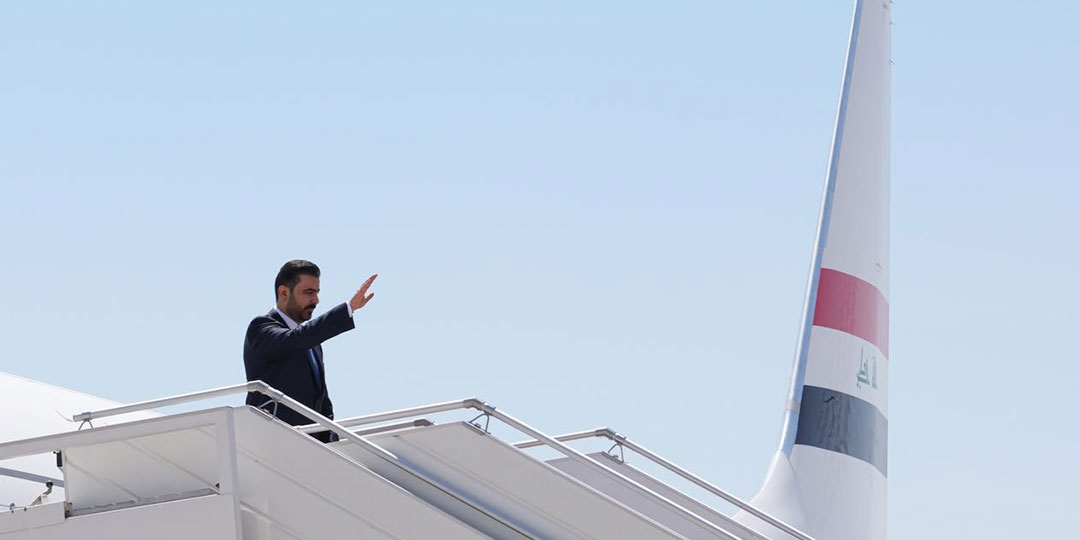

A top economic adviser to the Iraqi prime minister says the upcoming visit by Prime Minister Ali Faleh Al-Zaidi to France and Germany sends a clear message to Europe: Iraq is seeking a real investment partnership, not just financial aid. The visit, he said, comes at an important economic moment, in line with global shifts that favor long-term partnerships, private capital mobilization, and risk-sharing in strategic projects.
According to the adviser, Iraq has natural resources, a geographic advantage, a large market, and major projects, while European companies bring capital, technology, expertise, and access to global markets. That combination, he said, creates a strong basis for joint projects that can be implemented in practice.
An Economic Message to Europe
Iraq Wants Partnership, Not Just Funding
In comments to the Iraqi News Agency, economic adviser Mazhar Muhammad Salih said the visit reflects the same direction highlighted by the G7 summit in Evian, France, on June 16, 2026, especially its focus on long-term investment partnerships, joint investment, private capital mobilization, and blended finance for strategic projects.
Salih said Iraq is looking for a genuine investment partnership with Europe rather than simple financing. He added that the aim is to combine Iraq’s advantages with European capabilities in projects that generate returns for investors and added value for the Iraqi economy.
From Memorandums to Actual Projects
The adviser said the priority is to move from memorandums of understanding to projects that can be implemented. That would require selecting a meaningful number of strategic projects, identifying investors and partners, defining financing and guarantees, setting risk-sharing mechanisms, and establishing clear timelines for financial closure and implementation.
This approach reflects Iraq’s desire to turn economic relations with Europe into a practical and measurable track, rather than relying on broad or non-binding agreements.
The Development Road at the Center of Talks
A Strategic Integrated Corridor
Salih said the Development Road project will be among the top items presented during the visit. He described it as a strategic economic corridor rather than just a rail and transport project. The plan includes the Grand Faw Port, industrial and logistics zones, energy, telecommunications, and services, making it a model platform for Iraqi-European investment.
The project is one of Baghdad’s main bets for opening wider economic opportunities with international partners, especially as Europe shows growing interest in regional connectivity and cross-border infrastructure.
Multiple Sectors on the Table
Salih said the talks are expected to focus on energy, industry, petrochemicals, infrastructure, transport, and communications, with priority given to projects that transfer technology, create jobs, and build value chains inside Iraq, in line with the new principles adopted by the G7 since its 2025 summit.
Under this approach, cooperation with Europe should go beyond construction contracts or raw-material exports and move toward building a more sustainable local production and industrial base.
Different Priorities for Paris and Berlin
France on Energy, Transport, and Water
Salih said the priorities may differ between Paris and Berlin. With France, discussions could focus on energy, transport, infrastructure, water, and technology. That means talks with the French side may move toward projects with a direct impact on Iraq’s service and economic sectors.
Germany on Industry, Technology, and Training
With Germany, Salih said, the emphasis could be on industry, energy, railways, equipment, industrial technology, training, and knowledge transfer. This reflects a desire to benefit from German expertise in manufacturing, technical development, and advanced infrastructure.
A Joint Iraqi-European Investment Mechanism
Sharing Risk to Attract Investment
The adviser said the main goal of the visit is to agree on a joint Iraqi-European investment mechanism that brings together Iraqi capital, European and international financial institutions, European companies, and Iraq’s private sector. The mechanism would use guarantees and blended finance tools to reduce risk and attract larger investments.
He stressed that the success of the visit should not be measured by the number of agreements or memorandums signed, but by the number of projects that move to final study, financial closure, and actual implementation.
Partnership, Not Aid
Salih said Iraq has an opportunity to reshape its economic relationship with Europe around a new principle: partnership, not aid; investment, not just financing; production, not import dependence; and value chains built inside Iraq rather than simply investing in its resources.
He added that the clearest message of the visit is that Iraq is not asking Europe to fund its future, but inviting Europe to invest in Iraq’s future alongside it.
Official Visit at Macron’s Invitation
High-Level Meetings Ahead
Separately, the Prime Minister’s Media Office said Al-Zaidi will visit France on Sunday, September 13, at the invitation of French President Emmanuel Macron. The statement said the visit is part of efforts to strengthen bilateral ties between Iraq and France and expand partnerships in several areas, especially energy and security.
It added that Al-Zaidi will meet Macron on Monday, September 14, to discuss a number of regional and international issues of mutual interest and to jointly chair expanded talks between the Iraqi and French delegations.
New Memorandums and Partnerships
The statement said both sides will lay the groundwork for new partnerships between Baghdad and Paris and discuss the broad framework for cooperation in economics, security, energy, education, and other sectors. They will also oversee the signing of several memorandums of understanding in different fields.
Conclusion:
Al-Zaidi’s visit to France and Germany looks set to be an important step in Iraq’s effort to rebuild its economic relationship with Europe on the basis of long-term investment and partnership. With the Development Road project and major energy, infrastructure, and logistics files on the agenda, Baghdad is presenting itself as an investment partner with real assets, not simply a country seeking funding.