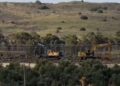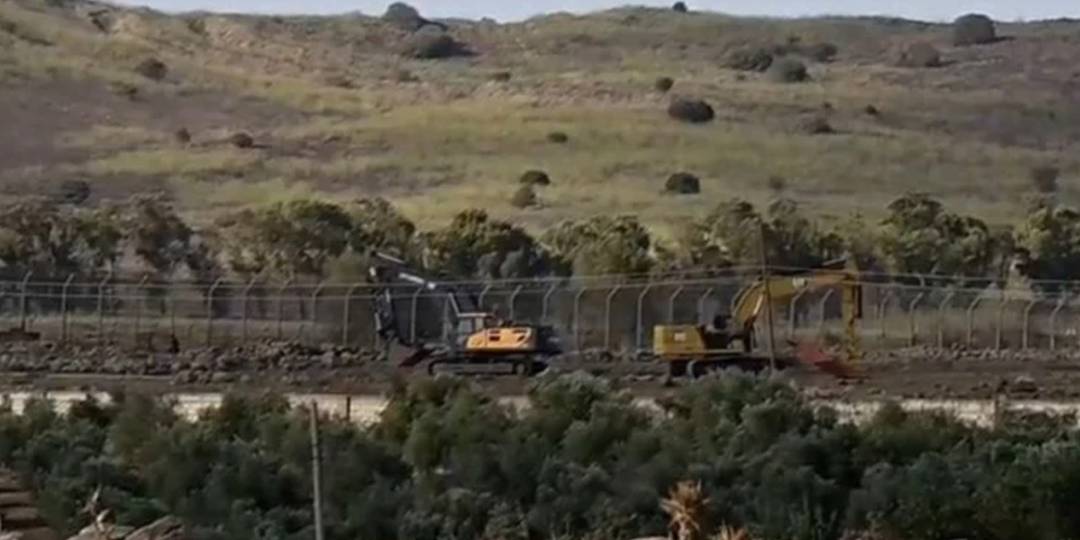

The Syrian Foreign Ministry strongly condemned ongoing unlawful engineering excavations and land grading operations carried out by Israeli forces inside Syrian territory along the separation line bordering the occupied Golan Heights. Damascus denounced the completion of the Israeli Soufa 53 project west of Al-Ashah village in the Quneitra countryside, characterizing the military works as a grave breach of the 1974 Disengagement Agreement and a flagrant violation of United Nations Security Council resolutions.
Field reports confirm that Israeli military units continue to establish new physical facts on the ground inside the United Nations-monitored buffer zone. These activities include cutting strategic access corridors, digging deep anti-tank trenches, erecting fortified earth berms, and establishing automated observation towers, which coincide with repeated ground incursions and detentions of local residents across southern Syrian farming communities.
Technical Details and Scope of the Israeli Soufa 53 Project
Syrian state media reported that engineering works west of Al-Ashah village focus on constructing an eight-meter-wide military corridor designed to facilitate heavy armored vehicle maneuvers. The track is shielded by earthen berms and physical ramparts rising up to five meters in height to secure patrol movements from ground observation.
The construction blueprint also features deep trenches running parallel to the roadway, equipped with advanced electronic surveillance masts and thermal monitoring posts placed along the ceasefire line. Observers note that these measures aim to redraw operational boundaries and annex additional agricultural land belonging to residents of Quneitra governorate.
Key Structural Features of the Border Fortifications
– Constructing an eight-meter-wide reinforced military road running parallel to the Golan separation line.
– Building continuous defensive earthen embankments reaching up to five meters in height to shield armor.
– Excavating fortified anti-tank trenches along the western periphery of Al-Ashah village.
– Deploying integrated electronic sensor arrays, remote surveillance cameras, and military watchtowers on commanding ridgelines.
Damascus Demands International Action to Halt Sovereign Violations
In an official statement, the Syrian Ministry of Foreign Affairs and Expatriates emphasized that ongoing incursions, land levelling, and the construction of fortified barriers pose a direct threat to regional peace and security. Damascus called on the United Nations Security Council and international partners to adopt concrete measures to halt these unilateral engineering works immediately.
The ministry reiterated Syria’s sovereign right to exercise complete control over its national territory, asserting that all unilateral construction and annexation measures carried out in the occupied Golan are legally void under international law and UN resolutions, including Resolution 497.
Documented Ground Incursions and Border Violations
Official Syrian government documentation indicates an escalation in military operations and unauthorized crossings into southern governorates over recent months:
– Documenting 65 separate military incursions and agricultural bulldozing operations in Quneitra during July.
– Recording 52 additional military incursions into southern border villages during the first half of August.
– Registering 147 detention cases of Syrian citizens since the beginning of the year, with 49 individuals remaining in custody.
– Conducting home searches and agricultural land clearing across rural Damascus and Quneitra provinces.
Adherence to the 1974 Disengagement Agreement and 2024 Ceasefire Lines
The official condemnation follows representations made by Syrian Foreign Minister Asaad Al-Shaibani during the 70th General Conference of the International Atomic Energy Agency in Vienna. Al-Shaibani affirmed that regional stability in southern Syria depends on compelling Israeli forces to respect the 1974 Disengagement Agreement and halt sovereign airspace and territorial violations.
Damascus renewed its call for Israeli military forces to withdraw behind the lines established prior to December 8, 2024, rejecting attempts to enforce unauthorized security buffer zones or alter the legal and demographic status of the occupied Syrian Golan.
Conclusion:
The continued expansion of the Israeli Soufa 53 project represents an escalation that undermines the fragile ceasefire established under the 1974 Disengagement Agreement. With Syrian authorities actively documenting field violations, international bodies face growing responsibility to enforce international law, halt unilateral military engineering, and protect Syrian territorial integrity.