
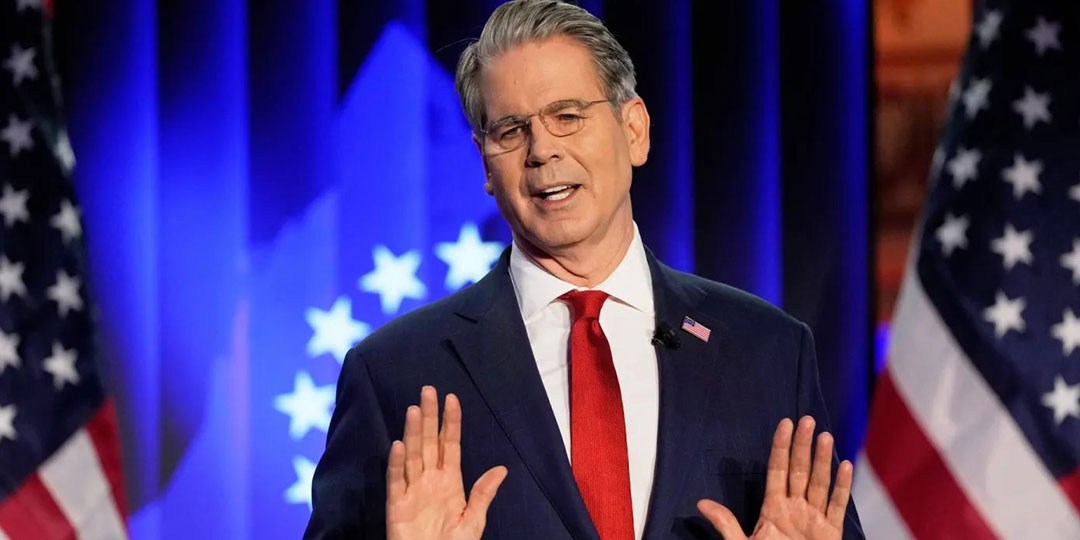

U.S. Treasury Secretary Scott Bessent said on Friday that the European Union has officially joined what he described as the “economic isolation” of Iran, in a sign of mounting Western pressure on Tehran. Bessent said Washington values what he called the EU’s strong and early stance, adding that the United States will continue to work with its allies to prevent the Iranian system from benefiting from the global financial network.
At the same time, the U.S. Treasury announced sanctions on Turkey’s Golden Global Bank over suspected links to Iran’s Islamic Revolutionary Guard Corps, as part of Washington’s broader effort to cut off Iran economically.
Washington Tightens Pressure on Tehran
EU Joins the Isolation Drive
Bessent told reporters that the EU has formally joined the economic isolation campaign against Iran, adding that Washington appreciates the Europeans’ “strong and early position.” The comments point to growing Western coordination on the Iranian file, especially on financial and banking measures.
He said the United States is standing firmly with its allies to make sure the Iranian system cannot exploit the global financial system, and added that the effort will continue “until every remaining financial artery to Iran is cut off,” as he put it.
A Clear Financial and Political Message
The remarks are part of a broader push to increase pressure on Tehran through economic and financial tools, alongside political and diplomatic pressure. Washington appears eager to broaden international support for the policy and bring more actors into compliance with sanctions.
U.S. Sanctions on a Turkish Bank
Golden Global Bank Under Scrutiny
The U.S. Treasury announced sanctions on Turkey’s Golden Global Bank over suspected ties to the IRGC. The move is part of Washington’s effort to isolate Iran economically and block its access to the international financial system.
In his statement, Bessent said financial institutions understand how serious the economic isolation campaign is. He added: “While we hope we will not have to sanction more banks, that ultimately depends on how quickly the international community responds and stops supporting the murderous Iranian regime.”
A Warning to Financial Institutions
The sanctions send a direct message to banks and financial institutions in the region and beyond: any suspicious dealings with entities linked to Tehran could trigger U.S. measures. The move also shows Washington’s determination to use financial tools as a key lever of pressure on Iran and its allies.
Regional and Global Implications
The Economy as a Battlefield
The latest measures show that the confrontation with Iran is not limited to military fronts or political rhetoric. It also extends to the global financial system and banking networks, which are essential to any economy. Any expansion of sanctions could affect transfers, financing, and banking transactions across the region.
A Relatively Unified Western Position
Bessent’s remarks suggest a degree of Western alignment on how to deal with Iran, even though approaches and limits on pressure often vary. That alignment strengthens Washington’s ability to impose further economic restrictions on Tehran in the period ahead.
Conclusion:
The United States is continuing to widen economic pressure on Iran, with the Treasury secretary saying the European Union has formally joined the economic isolation campaign. At the same time, Washington imposed sanctions on a Turkish bank over suspected links to the IRGC, underscoring that the confrontation with Iran is now firmly taking place in the financial and economic arena as well as in politics and security.