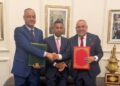
Iraq’s Counter-Terrorism Service chief, Lieutenant General Zaid Hoshi Al-Mousawi, and the Director General of Counter-Terrorism in the Kurdistan Region, Wahab Halabji, said on Wednesday that maintaining joint cooperation and raising the level of security, intelligence, and field coordination is essential to strengthening stability in the Kurdistan Region and across Iraq.
The two officials met at the Counter-Terrorism Service headquarters in Baghdad, where they discussed ways to deepen joint work in tracking terrorist groups, exchanging intelligence, and dismantling security networks to prevent extremist cells from regrouping.
Security Meeting in Baghdad
Greetings and Commitment to Cooperation
In a statement cited by the Iraqi News Agency, the Counter-Terrorism Service said Al-Mousawi received Halabji and a delegation of senior officers from the Kurdistan counter-terrorism directorate at the agency’s headquarters in Baghdad.
The statement added that Halabji congratulated Al-Mousawi on taking up his new duties as head of the Counter-Terrorism Service, wishing him success in carrying out his national responsibilities. The meeting reflected continued institutional communication between Iraq’s federal security bodies and their counterparts in the Kurdistan Region.
Intelligence and Field Coordination
The two sides discussed strengthening security, intelligence, and field coordination, and continuing to share information in ways that help track terrorist groups and prevent them from reorganizing. The talks came as Iraq’s security agencies continue to rely on close coordination to respond to evolving threats on the ground.
Shared Security Goals
Security in Kurdistan and Across Iraq
According to the statement, both sides stressed the importance of maintaining joint cooperation and raising the level of coordination to enhance security and stability in the Kurdistan Region and across Iraq. The message reflected a shared understanding that security threats are not confined to one area and require a nationwide response.
Counter-Terrorism Remains a Priority
The meeting comes at a time when fighting terrorism and extremism remains a key priority for Iraqi security agencies, especially as they continue to monitor and pursue remaining cells linked to extremist groups. Intelligence sharing between Baghdad and Erbil remains a major part of efforts to prevent security breaches or the regrouping of militants.
Counter-Terrorism Service Announces Arrests in Anbar and Najaf
Two Separate Operations
In a related development, Iraq’s Counter-Terrorism Service said on Wednesday that it had arrested two suspects in the provinces of Anbar and Najaf. In a statement cited by the Iraqi News Agency, the service said it continued to carry out security duties aimed at pursuing wanted individuals and strengthening stability in the country.
The statement said Counter-Terrorism Service units arrested one suspect in Anbar who was accused of being affiliated with remnants of ISIS, while a second operation in Najaf led to the arrest of another suspect wanted in a drug-related case.
Handed Over to the Relevant Authorities
The suspect arrested in the drug case was handed over to the directorate responsible for narcotics and psychotropic substances in the province. The service said the arrests were part of ongoing operations conducted in coordination with the relevant security agencies to pursue wanted individuals and cut off sources of crime and terrorism.
Ongoing Security and Intelligence Operations
Pursuing Wanted Figures and Cutting Off Crime Networks
The Counter-Terrorism Service said it remains committed to carrying out its national duties and continuing security and intelligence operations to pursue wanted individuals and cut off the roots of crime and terrorism. The statement indicates that security work is continuing across multiple provinces, targeting both extremist remnants and criminal networks.
Message of Reassurance
The latest operations also send a message of reassurance to the Iraqi public that the relevant agencies are continuing their work across several tracks, from counter-terrorism to combating organized crime and drugs. The meeting between the two counter-terrorism leaders in Baghdad and the Kurdistan Region also reinforces the image of cooperation between the two institutions in protecting national security.
Conclusion:
The meeting between Iraq’s Counter-Terrorism Service chief and his Kurdistan counterpart reflects a shared commitment to stronger security, intelligence, and field coordination in support of stability across Iraq. At the same time, the service continues operations in Anbar and Najaf, where it said it arrested two suspects as part of its ongoing efforts to pursue wanted individuals and fight terrorism and crime.