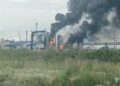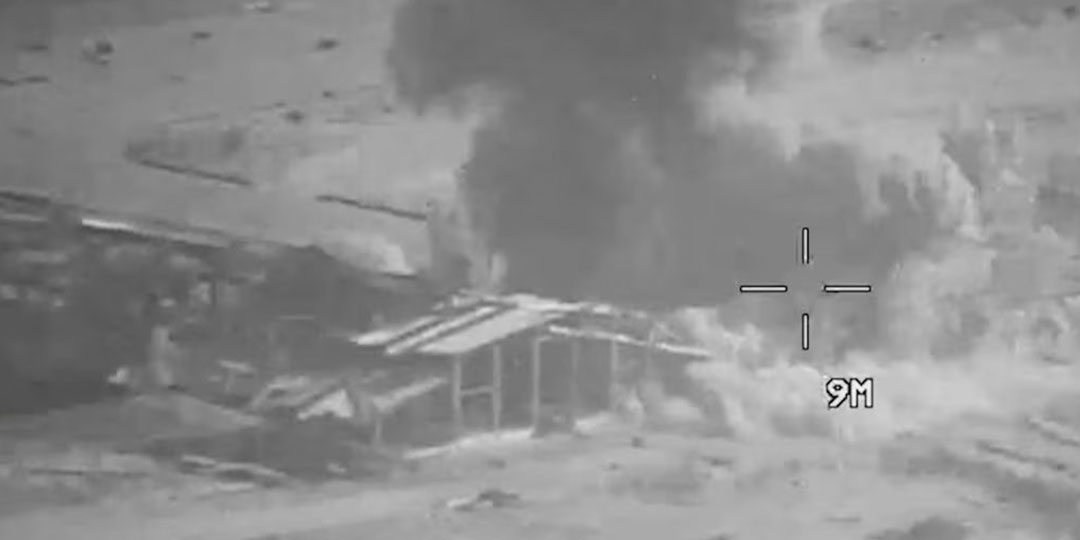

U.S. Central Command said on Tuesday that it has begun carrying out strikes on targets belonging to Iran’s Islamic Revolutionary Guard Corps inside Iran, marking a new escalation in the region. In a statement cited by the Iraqi News Agency, Centcom said the strikes came after recent attacks by the IRGC targeting shipping traffic in the Strait of Hormuz, as well as what it described as attacks on U.S. military personnel in the region.
The announcement came as U.S. President Donald Trump said the attacks were strong and wide-ranging, adding that a larger strike was still expected. His remarks reflected a sharp rise in the tone of the U.S. response toward Iran.
Centcom Says the Strikes Were a Response
Linked to the Strait of Hormuz
Centcom said the strikes on Iran followed what it described as hostile attempts by the IRGC to target navigation in the Strait of Hormuz. The strait is one of the world’s most important maritime routes, and any threat to shipping there has major regional and international consequences.
The statement also said the strikes came after attempts by the IRGC to target U.S. military personnel in the region, which Washington described as a direct reason for the response.
A Highly Sensitive Regional Flashpoint
The latest development comes amid rising tension between the United States and Iran, especially because it is tied to the Strait of Hormuz and to U.S. forces deployed in the region. The U.S. statement frames the strikes as a response to earlier Iranian actions, while also presenting them as part of efforts to protect navigation and American troops.
Trump Says the Attacks Are Strong and Widespread
“The Bigger Attack Is Still Ahead”
President Donald Trump said the strikes on Iran are “strong and wide-ranging,” and added that “the bigger attack is still ahead.” He said the United States was “right now” carrying out strikes on Iranian targets near the Strait of Hormuz.
Trump said the strikes were in response to an Iranian attempt to plant naval mines in the Strait of Hormuz, and also to the launch of eight missiles that he said were all intercepted after targeting a U.S. military base in Jordan.
Warning of Harsher Response
Trump warned that if Iran responds to the current attacks, it will face additional strikes that would be “much stronger and more painful.” He also said, “We are bombing Iran now,” indicating that the U.S. military operation was still ongoing.
He added that “the biggest attack of all is still coming, and when it ends, there will be very little left of Iran,” a statement that reflects the highly escalatory tone of his remarks.
The Strait of Hormuz at the Center of the Crisis
Strategic Importance
The Strait of Hormuz is at the heart of the latest escalation because of its critical role in global trade and energy flows. Any disruption or threat to shipping through this route immediately affects oil markets and maritime security across the Gulf and beyond.
The U.S. statements suggest Washington sees the latest actions as a direct threat to both navigation and forces in the region, while Iran has often framed its own military posture within a broader confrontation with the United States and its allies.
Wider Regional Impact
The consequences of this escalation go beyond U.S.-Iran relations. They could affect Gulf states and the wider Middle East through risks to sea lanes, energy supplies, and possible retaliatory steps. The situation may also place additional pressure on ongoing diplomatic efforts in the region.
Conclusion:
The confrontation between the United States and Iran has entered a more dangerous phase after U.S. Central Command announced strikes on IRGC targets inside Iran, linking them to threats against shipping in the Strait of Hormuz and U.S. forces in the region. While Trump described the attacks as strong and widespread and warned of a larger strike still ahead, the situation remains highly volatile in one of the world’s most sensitive regions.