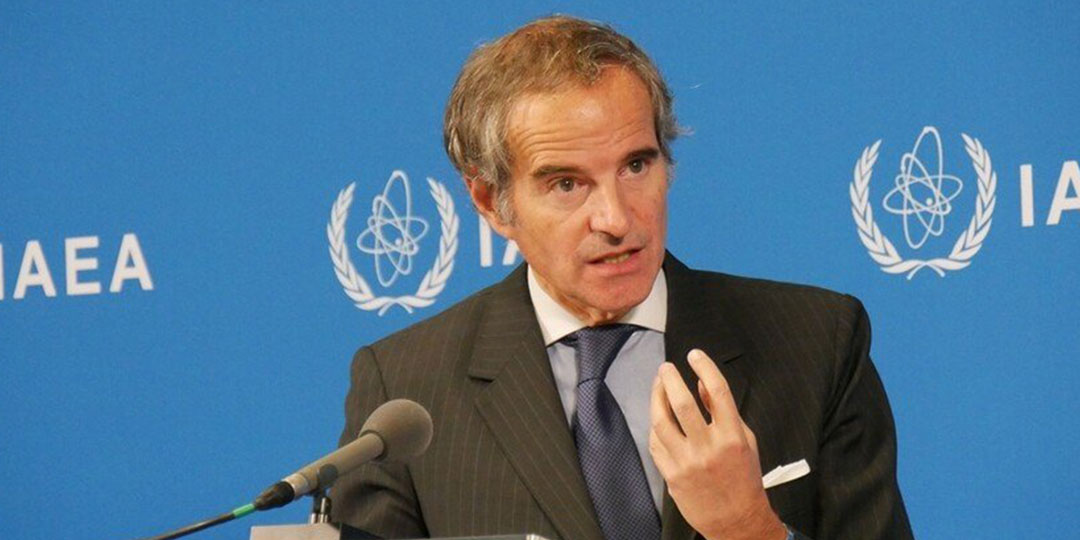

International Atomic Energy Agency (IAEA) Director General Rafael Grossi said on Friday that the agency’s work in Iran will depend on the outcome of ongoing negotiations between Tehran and Washington.
His remarks come amid renewed diplomatic efforts to address Iran’s nuclear program and broader regional tensions.
Grossi: Inspections Linked to Negotiations
Grossi stated that the IAEA has a memorandum of understanding governing inspections of Iran’s nuclear facilities and is ready to continue its technical mission.
However, he emphasized that “the details of the agency’s work in Iran, including the structure of the inspection coordination body, will be determined by the outcome of US-Iran negotiations.”
He also expressed hope that IAEA experts will soon be granted access to Iranian nuclear sites.
Uranium Stockpile and Verification
Grossi noted that reducing the enrichment level of Iran’s highly enriched uranium is one of the proposed solutions to address its stockpile.
He added that the agency believes Iran’s nuclear materials “have not been moved since the last inspection in 2025,” but stressed that verification is still required.
Trump: Iran Seeking Deal
In a related development, US President Donald Trump said that Iran is eager to reach an agreement with the United States.
He expressed confidence that a deal could be achieved soon and reiterated that “Iran will not have nuclear weapons,” claiming Tehran has agreed to this “100 percent.”
Economic Elements in Talks
Trump also indicated that an agreement could include Iran purchasing US agricultural products, such as:
– Wheat
– Soybeans
– Corn
He said Iranian funds would be used to support these transactions.
US Claims and Energy Context
Trump stated that the United States is negotiating “from a position of strength,” adding that oil prices are declining and that this will impact global markets.
He also said that the Strait of Hormuz remains open and reported that 19 million barrels of oil passed through it in one day, describing it as a record level.
Some of these claims could not be independently verified.
Key Points
– IAEA role in Iran depends on negotiation outcomes
– Inspections tied to US-Iran agreement framework
– Uranium enrichment reduction discussed as solution
– Trump says Iran wants a deal
– US insists Iran will not develop nuclear weapons
– Economic and energy aspects linked to negotiations
Conclusion
Grossi’s statements highlight the central role of diplomacy in determining the future of Iran’s nuclear inspections. At the same time, political messaging from Washington reflects ongoing negotiations that combine technical, economic, and strategic elements. The outcome of the talks will likely shape the next phase of international engagement with Iran.