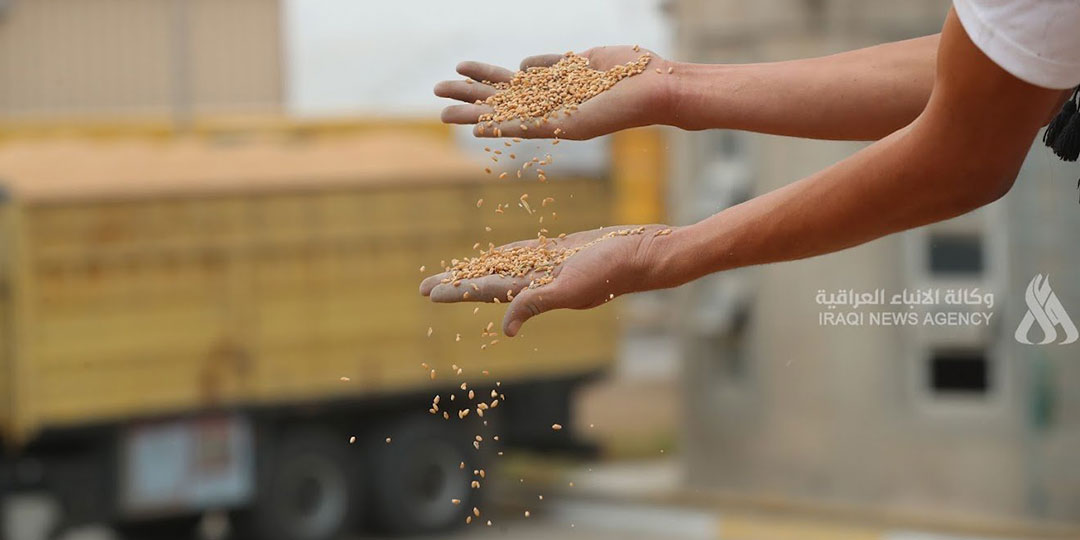

Iraq expects a wheat surplus this season as production levels rise significantly, according to Trade Minister Mustafa Nizar, who confirmed that stricter controls have been imposed on truck movement between northern provinces and the Kurdistan Region.
The government plans to export surplus wheat after securing national food reserves, as marketing operations continue across key agricultural areas.
Truck Movement Restrictions to Protect Farmers
Minister Nizar stated during a visit to Kirkuk that administrative borders were temporarily closed to wheat transport between Duhok, Erbil, Nineveh, Sulaymaniyah, and Kirkuk.
He explained that the measure aims to protect local producers and guarantee farmers’ rights during the marketing season.
The minister noted that inspections of quality testing laboratories were conducted and that marketing operations are proceeding smoothly without major obstacles.
He also confirmed that the Prime Minister has ordered the urgent payment of outstanding 2025 dues to farmers.
Production Figures Indicate Surplus
Haider Nouri, Director General of the State Company for Grain Trade, described the current season as one of the most successful in recent years.
According to official figures:
– Iraq’s annual wheat requirement: 4.2 million tons
– Wheat marketed so far: 3.1 million tons
– Expected total production: Over 5 million tons
Nouri said this marks the third consecutive year of strong output, bringing Iraq closer to full self-sufficiency.
Government Support and Payments
The ministerial delegation emphasized the federal government’s commitment to supporting farmers.
Officials confirmed that 350 billion dinars from last year’s dues were distributed, with Kirkuk farmers receiving the largest share.
Authorities indicated that once strategic food security reserves are secured, surplus wheat quantities will be prepared for export.
Kurdistan Region Begins Wheat Collection
Separately, the Kurdistan Regional Government announced the start of wheat collection for the current season.
The Ministry of Trade and Industry in the Kurdistan Region said 400,000 tons of wheat will be purchased this year.
Pricing details include:
– 700,000 Iraqi dinars per ton for 292,000 tons
– 500,000 dinars per ton for the remaining 108,000 tons outside the plan
Distribution of purchased wheat will be as follows:
– Erbil: 122,680 tons
– Duhok: 116,830 tons
– Sulaymaniyah: 150,209 tons
– Halabja: 11,280 tons
Conclusion:
Iraq’s wheat surplus reflects sustained agricultural growth and improving productivity. With strict marketing controls and coordinated federal and regional efforts, authorities aim to secure food reserves and potentially expand exports, reinforcing national food security and farmer support.