
Iran attacks Kuwait in a series of missile strikes early Wednesday, targeting US military bases and facilities near Kuwait International Airport, according to official statements from Tehran and Kuwaiti authorities. The assault left 63 people injured and at least one person killed, officials confirmed.
The Kuwaiti Ministry of Health announced that the injuries included civilians, airport employees, and travelers at Kuwait International Airport. The Ministry of Foreign Affairs condemned the attack, describing it as a dangerous and aggressive escalation involving ballistic missiles and drones.
63 Injured and One Fatality Confirmed
In an official statement, Kuwait’s Ministry of Health reported that the latest Iranian attacks resulted in 63 injuries. The ministry clarified that those injured were not limited to military personnel, but also included:
– Civilians
– Airport staff
– Travelers at Kuwait International Airport
The Kuwaiti Ministry of Foreign Affairs later confirmed that one person was killed in the attack, while others sustained injuries. The strike also caused damage to several vital facilities, including diplomatic missions located in the vicinity of the airport complex.
Authorities did not immediately release details regarding the severity of the injuries, but emergency services were deployed following the impact.
Kuwait Condemns the Missile and Drone Strikes
Kuwait’s Foreign Ministry strongly condemned what it described as continued Iranian ballistic missile and drone attacks targeting civilian facilities at dawn.
In its statement, carried by the Iraqi News Agency (INA), the ministry said the attacks represent “a dangerous approach” and characterized the repeated strikes as an “aggressive course of action.”
The ministry emphasized that Kuwait “will not accept this and will not tolerate it,” signaling a firm diplomatic position in response to the escalation.
Officials also underlined that the strikes affected civilian infrastructure, including Kuwait International Airport and diplomatic premises, raising concerns about violations of international norms protecting civilian and diplomatic sites.
IRGC Claims Responsibility for Strikes on US Bases
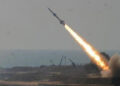
The Islamic Revolutionary Guard Corps announced responsibility for the attack, stating that it launched precise missile strikes against US military bases in Kuwait.
In its statement, the IRGC said the operation was carried out “in response to the aggression committed by US forces targeting Qeshm Island,” referring to an alleged US strike on the Iranian island located in the Strait of Hormuz.
The IRGC described the operation as being conducted by its aerospace force and characterized the missile strikes as precise. Iranian authorities did not provide further operational details regarding the number of missiles fired or the exact locations of the targeted bases.
Regional Context and Escalation
The Iran attacks Kuwait incident comes amid heightened regional tensions involving Iran and the United States. Kuwait hosts US military forces as part of long standing security arrangements in the Gulf.
The targeting of facilities in Kuwait signals a widening geographic scope of confrontation, extending beyond previously affected areas. The incident also highlights the risks faced by Gulf states hosting foreign military forces during periods of regional conflict.
Key elements of the escalation include:
Direct missile strikes claimed by Iran against US bases in Kuwait
Civilian casualties and damage to airport infrastructure
Diplomatic condemnation by Kuwaiti authorities
Broader regional tensions linked to US Iran confrontations
Conclusion:
The missile assault that left 63 injured and one person killed marks a serious development in regional tensions. Kuwait has firmly condemned the attack, while Iran has openly acknowledged carrying out the strikes against US military installations in the country.
As regional tensions continue, the incident underscores the vulnerability of civilian infrastructure in states that host foreign military forces, raising concerns about further escalation in the Gulf.