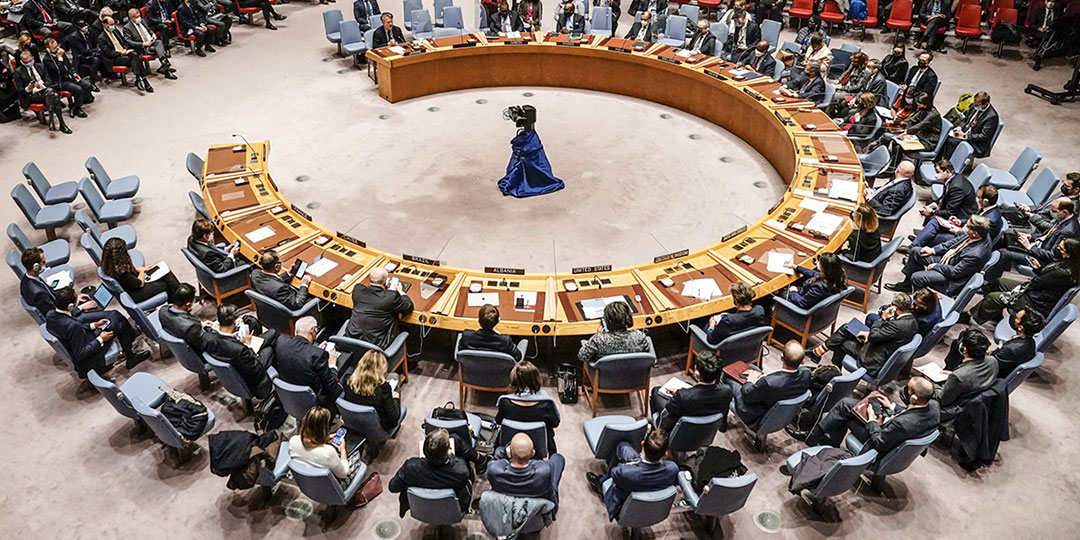

The UN Security Council convened an emergency meeting on Lebanon’s deteriorating security situation, with officials warning that recent escalation threatens hard-won diplomatic progress toward a permanent ceasefire.
UN officials and diplomats condemned Israeli military operations and called for restraint and immediate de-escalation measures.
The meeting comes two days before planned direct negotiations between the parties in Washington.
UN warns of “devastating human toll” from escalating hostilities
Martha Boby, UN Assistant Secretary-General for Peace Operations and Political Affairs, said the Lebanon situation raises “deep concern.”
She reported that escalation since March 2 has caused a “devastating human toll” with widespread destruction and displacement of thousands.
Boby warned that developments represent a “serious and concerning escalation” directly undermining the US-announced ceasefire understanding of April 16 and eroding fragile diplomatic efforts to reduce tensions.
Diplomatic efforts threatened
Boby stressed that escalation threatens planned direct negotiations between parties and risks “derailing the already fragile path toward a permanent ceasefire.”
She called for:
Adequate space for diplomatic efforts to succeed
Immediate steps to reduce suffering
Restraint from all parties
French ambassador calls Israeli operations “grave strategic error”
French Ambassador Jerome Bonnafon said France requested the emergency meeting in response to “serious escalation” and “significant expansion of Israeli military operations in Lebanon” despite the US-sponsored ceasefire.
Bonnafon said there is “nothing that justifies the continuation and scale of Israeli military operations” resulting in displacement and civilian casualties.
He described Israeli actions as a “grave strategic error” violating commitments made under the April ceasefire and UN Security Council resolutions.
Russia condemns escalation as “smoke screen” for continued aggression
Russian Ambassador Vasily Nebenzia said the April 17 ceasefire was “unfortunately a smoke screen for creeping aggression” against Lebanon.
He noted that while the world awaited second-round negotiations scheduled for June 2 in Washington, Israel continued “systematically expanding” its occupation.
Nebenzia said evidence shows Lebanon is witnessing a scenario “almost identical” to what happened in Gaza, with widespread control and forced displacement of civilians.
Call for immediate Israeli withdrawal
Nebenzia strongly condemned “Israeli aggressive actions” and renewed Russia’s commitment to Lebanon’s sovereignty, independence and territorial integrity.
He demanded “immediate withdrawal” of occupation forces, stating “without it, achieving a ceasefire will be impossible.”
UN Secretary-General insists on continued UN presence
Secretary-General Antonio Gutierres emphasized the need to maintain UN military presence in Lebanon after UNIFIL’s mandate ends in late 2026.
In a report to the Security Council, Gutierres said UN forces remain necessary to:
Facilitate de-escalation and dialogue
Support Lebanese armed forces
Monitor the 120-km Blue Line
The report proposed three options ranging from 2,000 to over 5,500 troops, with the larger force providing higher credibility for monitoring the border.
Monitoring challenges without adequate presence
Gutierres noted that smaller force levels may be insufficient to monitor the entire border without additional technical support, suggesting that the larger deployment option offers the best assurance for effective monitoring.
Conclusion:
The emergency Security Council meeting reflects deep international concern over escalating hostilities in Lebanon. With warnings from multiple nations and calls for immediate de-escalation, the situation remains precarious as diplomatic negotiations are set to resume amid continued military operations.