
Saraya al‑Salam separation from the Shiite National Movement and its full integration into Iraqi state institutions has been officially welcomed by Parliament Speaker Mohammed al‑Halboosi.
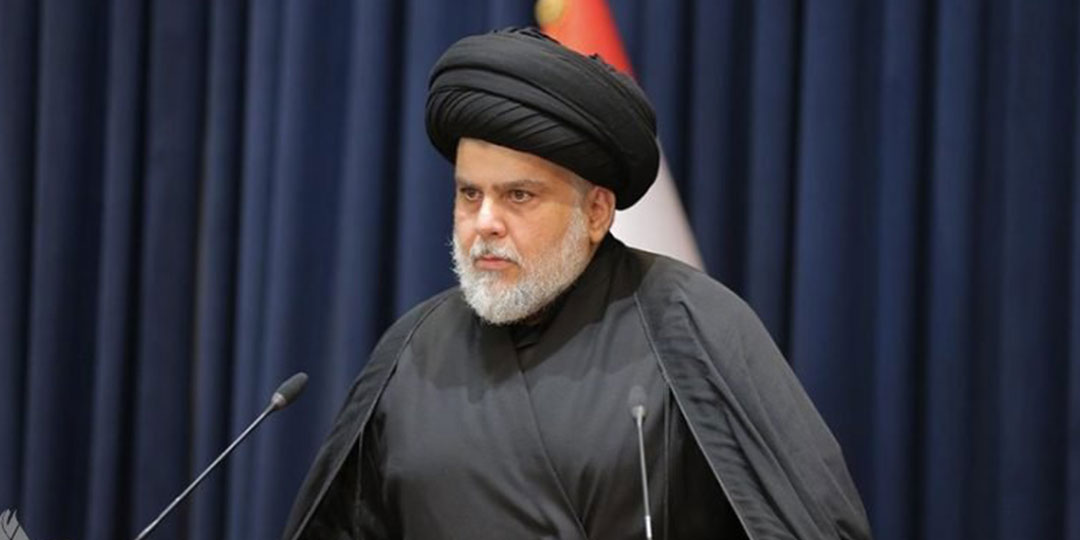
The development follows an announcement by Shiite leader Muqtada al‑Sadr declaring the complete disengagement of the armed formation from the movement and its incorporation under state authority.
The move comes amid renewed calls to consolidate weapons under state control and strengthen institutional authority in Iraq.
Halboosi Welcomes the Decision
In a statement carried by the Iraqi News Agency, Halboosi said he highly values what he described as the responsible national position taken by al‑Sadr regarding the separation of Saraya al‑Salam and its full integration into state institutions.
He described the step as significant in supporting state authority, enhancing stability, and reinforcing the rule of law.
Halboosi noted that Iraq had experienced exceptional circumstances in recent years, including wars and major security challenges that shaped the nature of that period. He added that the country is now moving toward reconstruction and long‑term stability, which requires strengthening state institutions and enabling them to perform their full role in maintaining security and serving citizens.
Call to Restrict Weapons to the State
The Parliament Speaker called for continued responsible national steps that contribute to restricting weapons to the state, adhering to the constitution and the law, and avoiding tensions or divisions.
He stressed the need to build a strong state capable of confronting internal and external challenges while safeguarding Iraq’s sovereignty and protecting the interests of its people.
Al‑Sadr Announces Full Integration into the State
Muqtada al‑Sadr announced on Wednesday the complete separation of Saraya al‑Salam from the Shiite National Movement and its full integration into the state under the authority responsible for military formations.
In a statement carried by the Iraqi News Agency, al‑Sadr said the decision was taken in the national interest and to avoid risks facing the country.
He added that civilian entities affiliated with the formation would be transformed into a civil framework under the name “Al‑Bunyan Al‑Marsous,” without headquarters, weapons, uniforms, or any military designation.
Al‑Sadr expressed appreciation to members of Saraya al‑Salam for their past efforts.
Call on London to Extradite Wanted Individuals
In a separate statement, al‑Sadr called on the British government to hand over individuals he described as Baathists and infiltrators residing in London, saying their presence represents a political and diplomatic gap.
He said he had been informed that the British ambassador claimed that Britain had handed power to Shiites in Iraq, a statement that he said angered and saddened him.
Al‑Sadr stated that he found it appropriate to respond to what he described as claims made by the former major power’s ambassador.
Political Implications of the Saraya al‑Salam Separation
The Saraya al‑Salam separation carries several political and security implications, including:
Strengthening the principle of state monopoly over weapons
Reinforcing institutional authority
Reducing potential political or field tensions
The practical implementation of the decision will be key in determining its impact on Iraq’s internal stability.
Conclusion:
The announcement of Saraya al‑Salam separation and its integration into state institutions marks a significant development in Iraq’s political landscape. Official praise and calls for consolidating weapons under state authority highlight the broader push toward institutional stability and sovereignty.