
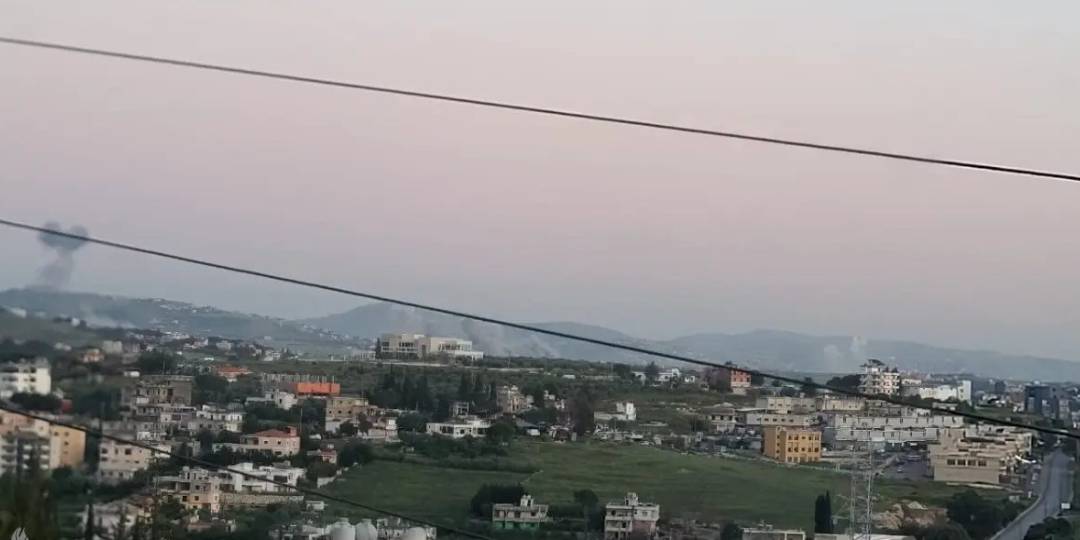

Israeli media reported today that an assassination operation targeted the commander of Rida Force in southern Beirut. Simultaneously, Lebanon’s National News Agency reported seven people killed and 15 wounded in Israeli airstrikes on south Lebanon, alongside ongoing ceasefire violations. The operations mark dangerous escalation despite the April 16 ceasefire agreement that was extended on April 23.
These developments reflect severe deterioration in the security situation and continued military aggression.
Israeli media confirms assassination of Rida Force commander
Israeli media reported today that an assassination operation targeted “the commander of Rida Force in southern Beirut.”
Israeli Channel 14 stated that “its forces successfully eliminated Malik Balout, commander of Rida Force, along with a number of other gunmen.”
Israeli broadcasting authority confirmed that “the targeted commander in the strike was Malik Balout.”
Operation details and targets
The operation included:
Targeting Rida Force commander Malik Balout
Elimination of additional gunmen
Strike in southern Beirut
US coordination
US-Israeli coordination on the operation
Channel 14 added that “the operation targeting southern Beirut was carried out in coordination with the United States.”
This coordination reflects high-level cooperation between Washington and Tel Aviv in military operations in the region.
The channel quoted an Israeli source saying: “If additional opportunities arise to carry out assassinations, they will be pursued anywhere.”
Intent for future assassination operations
Israeli reporting indicated:
Clear intent for additional assassinations
No geographic limitation
Continuation of targeted operations
Available capabilities and opportunities
Israeli assessments claim successful operation
Israeli assessments indicated “success of the assassination operation in Beirut.”
These assessments came days after escalation of targeted operations against resistance leaders.
The Israeli announcement attempted to demonstrate strength and capability of Israeli security and military agencies.
Israeli airstrike targets southern Beirut suburb
Lebanon’s National News Agency reported “loud explosion sounds around southern Beirut suburb.”
The agency stated: “Israeli military aircraft conducted a strike around Haret Hreik near Alamah station.”
It added that “this resulted in loud explosion sounds” with “hostile military aircraft flying at very low altitude over the Bekaa plain.”
Airstrike details
The strike included:
Targeting Haret Hreik area
Near strategic Alamah station
Very low altitude flights
Multiple rocket strikes
Residential building struck with three missiles
The Lebanese agency reported that “a warship targeted a residential apartment with 3 missiles in southern Beirut specifically around Haret Hreik.”
This targeting of residential buildings reflects continued practices that may result in civilian casualties.
The southern suburb experiences repeated bombardment since security escalation began.
Seven killed and 15 wounded in Israeli strikes on south Lebanon
Lebanon’s National News Agency reported “seven people killed and 15 wounded in two Israeli military aircraft strikes today on south Lebanon.”
The agency stated that “the strike targeted the town of Siksikiyye, resulting in five deaths and 15 wounded.”
It noted that “civil defense teams recovered two additional bodies in an Israeli strike targeting a vehicle on the Hadaya road between Wadi Jilo and Tirdba.”
Distribution of casualties and destruction
The strikes resulted in:
Five killed in Siksikiyye strike
Two killed in vehicle targeting
15 wounded in total
Ongoing debris removal operations
Israeli evacuation warnings for southern areas
Israeli forces “directed urgent evacuation warnings to residents of the following towns and villages”: Kuthairiyya al-Sayyad, al-Ghassaniyye, Mazraat al-Daudiyye, Bidyas, al-Rayhan, Zalayya, al-Bazuriyye, Haruf, Hubush, Ansariyye, Qalawih and Deir al-Zahra.
These numerous warnings reflect clear intent for additional military operations in coming days.
Warning scope and future intentions
The warnings indicate:
Intent for additional military operations
Extensive geographic coverage
Multiple civilian area targeting
Not limited to single objective
Ceasefire violations continue
The Lebanese agency noted that “the Israeli entity continues violations of the ceasefire that began April 16 for ten days and was extended for three weeks starting April 23” through “continued attacks on south Lebanon.”
These violations represent clear and explicit breach of the agreed accord.
Ceasefire timeline and violations
The ceasefire agreement:
Began April 16, 2026
Initially lasted ten days
Extended April 23
Extended additional three weeks
Dangerous escalation in security situation
Recent strikes and assassinations reflect:
Dangerous escalation in Lebanon’s and the region’s security situation.
Transition from relative calm ceasefire to renewed military operations.
Clear non-compliance with agreed accord conditions.
Indicators of future escalation
Indicators suggest:
Probable additional escalation in coming days
Not limited to current operations
Possible geographic expansion
Continued security violations
Civilian impact of military operations
Operations affect:
Civilian populations in targeted areas
Infrastructure and residential buildings
General climate of fear and anxiety
Forced population displacement
Escalating humanitarian crisis
Operations cause:
Civilian injuries and deaths
Mass population displacement
Basic services shortage
Increasing human suffering
Regional implications of escalation
Escalation may lead to:
Worsening regional tensions
Additional parties drawn into conflict
Regional peace affected
Widespread economic and political consequences
International community response needed
The escalation requires:
Immediate international intervention
Diplomatic pressure on all parties
Ceasefire enforcement mechanisms
Humanitarian aid provision
Elements needed for ceasefire enforcement
Effective ceasefire requires:
International monitoring mechanisms
Clear consequences for violations
Impartial enforcement authority
Transparent reporting procedures
Conclusion:
Israeli assassination and bombardment operations reflect continued aggression despite agreed accords. Repeated ceasefire violations indicate serious non-compliance with agreements and potential for worsening security situation in coming period. International diplomatic efforts require intensification to halt this dangerous escalation and maintain ceasefire stability. The human cost of continued conflict demands urgent international action to achieve lasting peace in the region.