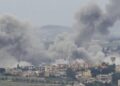

Israeli airstrikes continued their relentless bombardment of Lebanon on Saturday, striking a residential building in the Burj Hammoud neighborhood of northern Beirut for the second time in two days, while a separate strike on a medical facility in the southern town of Burj Qalaouia killed 12 healthcare workers. By day thirteen of the Israel-Hezbollah war, the Lebanese health ministry confirmed that 26 medical personnel have been killed since the conflict began on March 2.
In evening remarks Friday, Hezbollah Secretary-General Naim Qassem declared the organization’s readiness for a prolonged conflict, describing the current struggle as an “existential battle” that could represent the “final” confrontation in the decades-long conflict between the two sides. The escalating humanitarian toll continues mounting as airstrikes expand beyond traditional Hezbollah strongholds into civilian neighborhoods previously spared from bombardment.
Airstrikes Expand into Northern Beirut Civilian Areas
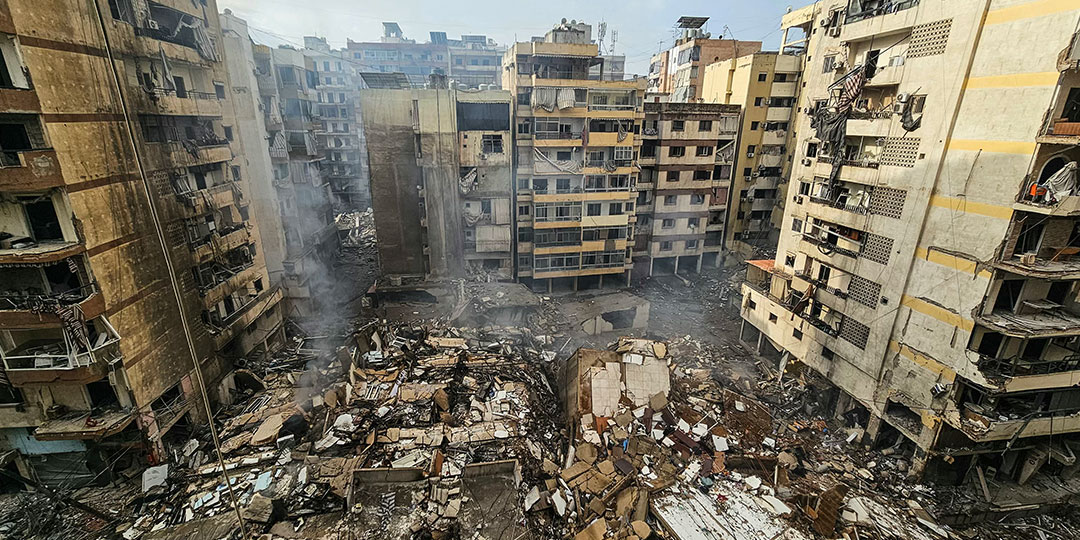
Israeli aircraft targeted the Burj Hammoud neighborhood in northern Beirut on Saturday, striking the same residential building that had been bombed on Friday without casualties. The neighborhood, densely populated primarily by Lebanese Armenians, has historically remained outside the conflict between Israel and Hezbollah, spared in previous wars in 2006 and 2024.
Agence France-Presse reporters on scene documented rescue teams working at the site, describing a gaping hole in the building and widespread damage to surrounding infrastructure. The Lebanese National News Agency confirmed that “Israeli airstrikes targeted the Burj Hammoud area for the second time,” indicating expanding geographic scope of the bombardment campaign.
Residents Express Terror and Uncertainty
Levon Gazalyan, a 42-year-old resident of an adjacent building, stated this was the “first time” the neighborhood had experienced Israeli airstrikes, having remained untouched during previous wars in 2006 and 2024. He recounted: “All the neighbors are frightened after hearing the explosion very close. The sound was extremely loud and stones flew onto the balconies of homes.”
Hanadi Hashem, 50 years old, expressed the prevailing sentiment among residents: “There is no more security. We don’t know where the next strike will come from.” She revealed that she and her family had begun sleeping in their car out of fear of bombardment of residential buildings. This displacement from homes to vehicles reflects the psychological terror inflicting the civilian population.
Deadly Strike on Medical Facility in Southern Lebanon
An Israeli airstrike on a medical center in the southern town of Burj Qalaouia at dawn Saturday resulted in the deaths of 12 healthcare workers. The Lebanese health ministry announced the victims included “doctors, paramedics, and nurses who were on duty at the center,” plus one healthcare worker suffering injuries.
The ministry noted that “this is the preliminary toll with rescue operations continuing to search for missing persons,” suggesting the death toll could rise further. The strike on the medical facility providing essential healthcare services to civilians in an area experiencing intense bombardment reflects the expanding targeting of civilian infrastructure.
Cumulative Toll on Medical Personnel
The Lebanese health ministry announced Saturday that total healthcare worker deaths since the war’s beginning on March 2 reached 26 killed and 51 wounded. The ministry characterized this toll as “the clearest evidence of the enemy’s violent practices.”
These casualties represent a severe blow to Lebanon’s already-strained healthcare system. The loss of significant numbers of medical personnel undermines the capacity to provide essential medical services to civilians injured in the ongoing bombardment. Medical infrastructure destruction and personnel losses compound the humanitarian crisis.
Israeli Military Claims About Ambulance Misuse
Israeli military spokesman Avihai Adrai responded to criticism about killing healthcare workers by accusing Hezbollah of “widespread military use of ambulances.” Adrai warned that Israel would work “in accordance with international law against any military activity conducted by Hezbollah using ambulances.”
The claim provided a justification for targeting medical facilities and healthcare workers but offered no specific evidence of widespread military misuse of ambulances. International humanitarian law protects medical personnel and facilities, rendering such targeting legally questionable regardless of allegations.
Hezbollah Declares Readiness for “Existential Battle”
Hezbollah Secretary-General Naim Qassem declared Friday evening that the organization had prepared itself for a prolonged confrontation with Israel. Qassem characterized the current conflict as an “existential battle” that could represent the “final” clash in the decades-long struggle between the two sides.
Qassem justified the escalation by arguing that “circumstances have become appropriate for confrontation” with an enemy that “has attacked for 15 months and appears it will not stop. On the other hand, it killed our imam and leader,” referring to Iranian Supreme Leader Ali Khamenei’s death in US-Israeli strikes.
Launch of Hostilities Following Khamenei’s Assassination
Hezbollah launched its offensive on March 2, responding to the death of Iranian Supreme Leader Ali Khamenei in US-Israeli airstrikes. The decision shocked Lebanon’s government and even Hezbollah’s allies, with the organization sending a delegation to parliament speaker Nabih Berri only thirty minutes before launching the first missiles to inform him of the decision.
The timing and circumstances of Hezbollah’s decision to initiate hostilities raise questions about subordination to Iranian strategic interests versus autonomous Lebanese decision-making. The organization broke a November 2024 ceasefire despite Israel’s continued strikes during the intervening months that killed approximately 500 Hezbollah members.
Strategic Analysis: “Final Battle” Assessment
Military analysts suggest this may represent the “final battle” between Israel and Hezbollah. Military expert Hassan Jouni told Agence France-Presse: “For Hezbollah, this is an existential battle, because its complete elimination is being demanded, so it will fight to its last breath.”
Jouni added: “For Israel, this is the final battle with Hezbollah” under conditions “that may not repeat,” including Iran’s “very weak” position in its war with the US-Israeli coalition, favorable regional and international circumstances, and the “Trump administration’s” supportive stance. These convergent factors create what Israeli strategists view as an unprecedented opportunity.
Hezbollah’s Strategic Calculations Exposed
A Hezbollah source speaking anonymously to Agence France-Presse revealed: “The organization entered the war with everything it possesses. Either it ends, or it establishes a new equation requiring complete Israeli withdrawal from Lebanon and cessation of attacks.”
The source elaborated: “Hezbollah decided to wage war months ago and was waiting for a regional development, which it found in the American-Israeli war on Iran, because it knows well that regardless of that war’s outcome, its moment will come and Israel will not hesitate to launch a broad campaign against it.”
Hezbollah’s Recovery and Renewed Capabilities Despite Losses
Despite suffering devastating losses and setbacks in the previous 2024-2025 conflict, Hezbollah has demonstrated capacity for surprise military action. An Israeli military spokesman acknowledged last week: “Hezbollah spent decades accumulating weapons, and although we significantly reduced its capabilities over the past two and a half years, it still possesses large quantities of weapons that endanger Israeli civilians.”
The organization had absorbed the previous conflict’s shocks, regrouped, and reorganized its forces. Yet this renewal occurred under deteriorating strategic circumstances: Iran’s weakened position, Syria’s changed political landscape since the fall of the previous regime in late 2024, and the severing of supply lines through Syrian territory.
Escalating Humanitarian Crisis
The war has displaced over 800,000 people from their homes, primarily from southern Beirut suburbs and southern Lebanon. These displacement figures represent approximately one in three Lebanese citizens uprooted from their communities. Hundreds of thousands shelter in temporary reception centers, creating an acute humanitarian emergency.
International Humanitarian Response
UN Secretary-General António Guterres launched an emergency appeal for $325 million to support Lebanon in responding to the displacement crisis during his Friday visit to Beirut. The appeal underscores the scale of the humanitarian catastrophe unfolding across the country.
French President Emmanuel Macron called Saturday via the X platform for Israel to accept “direct talks” with Lebanon, which the government has indicated willingness to pursue. Macron urged ending the war while emphasizing that Hezbollah must “immediately cease its escalatory approach” and Israel must “abandon any large-scale attack and halt its intensive bombardments.”
Breaches Against UN Forces
The Lebanese National News Agency reported Friday that Israeli shells fell inside the Nepali Battalion headquarters of UNIFIL (United Nations Interim Force in Lebanon) in the town of Meis al-Jebel in Nabatieh governorate. This incident represents a violation of international law and endangers UN personnel tasked with monitoring the separation between belligerents.
Lebanese Government Constraints and Diplomatic Paralysis
Following Hezbollah’s launch of hostilities, the Lebanese government moved to ban the organization’s military and security activities. President Joseph Aoun accused Hezbollah of working toward “the collapse of the Lebanese state for the sake of Iranian regime calculations.”
However, the Lebanese government appears powerless and constrained, unable to impose control while the organization operates independently. Aoun’s direct negotiations proposal with Israel has received no response, leaving the government diplomatically paralyzed.
Academic Analysis: “End of Hezbollah as Regional Power”
Academic and legal scholar Ali Murad told Agence France-Presse: “It is clear that Hezbollah’s priority was opening a Lebanese front in service of the Iranian agenda, given that it took no action for 15 months despite receiving strikes.”
Murad characterized the current struggle as “a battle of existence on two fronts: the Lebanon front and the front of its political, ideological, and strategic ally.” More starkly, Murad concluded: “Hezbollah has ended as a regional power and as a strategic weapon. This war will not end in victory.”
This analysis suggests that regardless of tactical military outcomes, the strategic position of Hezbollah as a regional actor has fundamentally deteriorated, with this conflict potentially marking the terminal phase of its power.
Targeting Patterns and Civilian Infrastructure
Israeli airstrikes have increasingly targeted civilian infrastructure including medical facilities, residential neighborhoods previously spared, and infrastructure serving displaced populations. The expansion of targeting beyond traditional military strongholds suggests either deliberate strategy to break civilian morale or indifference to civilian harm.
Medical Infrastructure as Target
The systematic targeting of healthcare workers and medical facilities raises concerns about compliance with international humanitarian law protections for medical personnel. Twelve deaths at a single medical facility within one strike represents a substantial loss of essential medical capacity in a region experiencing significant civilian casualties.
Broader Context: Regional Dynamics and Great Power Competition
The Lebanon conflict reflects broader Middle Eastern power competition. Iran’s weakened position following American-Israeli strikes removes a crucial strategic asset for Hezbollah. The Trump administration’s apparent support for Israeli operations removes diplomatic constraints present in prior administrations. Regional allies of Hezbollah cannot provide adequate support, leaving the organization strategically isolated.
Ceasefire Prospects and International Mediation
France’s call for direct negotiations and the Lebanese government’s stated willingness suggest diplomatic openings exist, yet Israeli threats of expanded ground operations and Hezbollah’s declaration of existential commitment indicate negotiations face steep obstacles. The organization claims it will accept nothing less than complete Israeli withdrawal and cessation of attacks, positions unlikely compatible with Israeli objectives.
Conclusion:
The intensifying Israeli bombardment campaign targeting healthcare workers and expanding into previously spared civilian neighborhoods reflects the war’s rapid escalation and expansion beyond traditional conflict zones. Hezbollah’s declaration of an “existential battle” signals commitment to prolonged conflict despite devastating losses and deteriorating strategic circumstances. The Lebanese government remains constrained and diplomatically isolated, unable to impose control while humanitarian catastrophe unfolds with over 800,000 displaced persons. International diplomatic efforts proceed amid declarations from both parties that compromise represents existential defeat, suggesting the conflict may persist regardless of humanitarian costs mounting against the Lebanese civilian population.