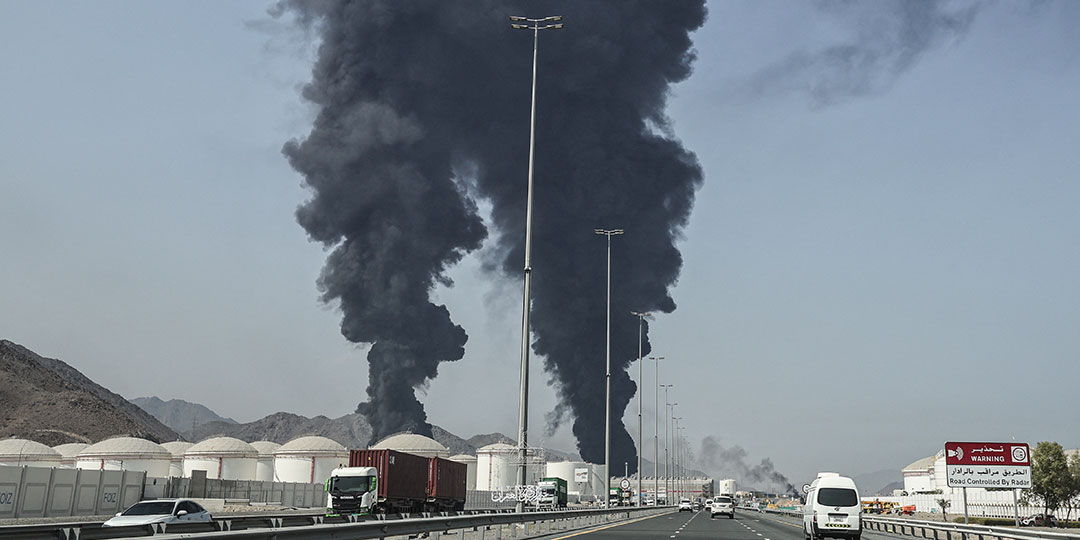

The United Arab Emirates announced Saturday that its consulate general in Iraqi Kurdistan came under drone attack for the second time in one week, resulting in two security personnel wounded and structural damage to the diplomatic facility. Simultaneously, thick black smoke rose from a major energy installation in Fujairah after a drone was successfully intercepted, and Iran’s military leadership issued direct threats against UAE ports, declaring them “legitimate targets” for Iranian operations.
In formal statements, the Iranian Revolutionary Guard Corps called on civilians residing near UAE ports to evacuate immediately, signaling preparations for imminent military strikes. The escalating threats and attacks reflect a dangerous expansion of Middle East conflict into the Persian Gulf energy infrastructure, threatening global oil supplies and maritime commerce in one of the world’s most critical shipping lanes.
Second Drone Strike on UAE Diplomatic Mission in Arbil
The UAE Ministry of Foreign Affairs condemned what it described as a “cowardly terrorist attack by drone” that targeted the general consulate in Iraqi Kurdistan. Two security personnel sustained injuries, and the consulate building suffered structural damage in the strike.
The ministry requested investigations by both the Iraqi federal government and the Kurdistan Regional Government to “determine the parties responsible for this attack” and “take all necessary measures to ensure accountability of those responsible.” Notably, the UAE statement did not explicitly identify the source of the drone, though the repeated targeting suggests coordinated action by Iran-aligned forces operating within Iraqi territory.
Pattern of Escalating Attacks on UAE Interests
The second drone strike within seven days reflects a systematic pattern of attacks targeting UAE assets and interests. The repeated strikes on diplomatic facilities signal intent to impose costs on the UAE for its support of US military operations against Iran and its hosting of American military personnel and facilities.
The targeting of the consulate in Arbil, rather than in UAE territory itself, may reflect attempts by Iran-aligned militias operating within Iraq to avoid direct confrontation with UAE air defenses while still inflicting political damage and demonstrating capability to strike UAE interests in the region.
Fire at Fujairah Energy Facility Following Drone Interception
Thick plumes of black smoke visibly rose Saturday from the vicinity of a major energy facility in Fujairah, UAE’s northeastern port city. Local authorities reported that debris from a successfully intercepted drone caused the fire but did not specify the exact location of the installation.
Fujairah hosts a major commercial port and substantial oil storage facilities. Previous Iranian drone attacks had targeted oil storage centers in the same port. The facility also contains a major crude oil export terminal critical to global energy supplies.
Timing and Context of the Attack
The attack occurred within hours of US President Donald Trump announcing that American military forces had struck targets on Iran’s Kharg Island, which handles the vast majority of Iran’s crude oil exports. Trump threatened to expand targeting of Iranian oil infrastructure, escalating the direct US-Iranian military exchange.
The timing reflects a heated cycle of military operations: American forces targeting Iranian energy infrastructure, and Iranian forces responding by targeting energy infrastructure in Gulf states allied with the United States. Each strike invites escalatory retaliation, creating a dangerous spiral.
Systematic Iranian Campaign Against Gulf Energy Infrastructure
Since the US-Israeli attack on Iran began February 28, Tehran has systematically targeted major energy facilities throughout the Persian Gulf. The campaign reflects a deliberate strategy to impose economic costs on states supporting American military operations and to demonstrate Iran’s capacity to disrupt global energy supplies.
Targeted facilities have included:
Saudi Arabia’s massive Ras Tanura refinery
Qatar’s Ras Laffan gas processing facility
UAE’s Ruwais refining complex
Multiple energy installations and ports in Fujairah and across the Emirates
Threat to Global Energy Markets
Approximately 20 percent of the world’s oil and liquefied natural gas passes through the Strait of Hormuz, which Iran has effectively halted through repeated attacks on commercial shipping. Systematic targeting of Gulf energy infrastructure threatens global energy price stability and economic recovery.
Continued strikes on energy facilities risk supply disruptions that could trigger sharp increases in global oil prices, with cascading effects on economies worldwide, particularly the American economy already facing other inflationary pressures.
Direct Iranian Military Threat to UAE Ports
Iran’s Revolutionary Guard Corps issued formal warning Saturday that residents near UAE ports should evacuate immediately, characterizing the ports as “legitimate targets” for Iranian military operations. The statement originated from “Khatam al-Anbiya,” the central military command coordinating Iranian operations.
The statement declared: “The Islamic Republic of Iran considers it within its legitimate right to defend its national sovereignty and territorial integrity by striking American enemy missiles stationed at UAE ports, wharves, and American weapons caches in the Emirates.” The formal demand for civilian evacuation essentially constituted an advance warning of imminent Iranian military strikes.
Escalation From Implicit to Explicit Threats
Previous Iranian military operations included threats and statements, but the Saturday demand for civilian evacuation represents a more direct and explicit threat. Such warnings typically precede major military operations and signal Iranian intent to conduct substantial strikes.
The transformation from implicit threats to explicit evacuation demands suggests Iran may be preparing a significant escalation of military operations against UAE infrastructure, potentially including multiple waves of drone or missile attacks against port facilities.
Context: Regional Power Competition and Strategic Calculations
Iran’s escalating threats and attacks against UAE interests reflect broader calculations about regional power competition. The UAE hosts American military personnel and facilities and provides strategic support for US military operations in the region. By targeting UAE interests, Iran attempts to:
Impose costs on states allied with the United States
Demonstrate military capability and resolve
Deter future support for American military operations
Disrupt global energy markets to pressure American and allied governments
US Military Response and Counter-Escalation
The American military response to Iranian strikes has involved targeting Iranian energy infrastructure, particularly Kharg Island, through which passes most Iranian crude oil exports. Trump’s threats to expand targeting of Iranian oil infrastructure create a dangerous dynamic of mutual targeting of energy facilities.
Each escalatory cycle increases risks of inadvertent conflict expansion or uncontrolled escalation that neither side desires but both fear becoming unable to prevent.
Disruption of Global Maritime Commerce
Iran has effectively halted normal maritime traffic through the Strait of Hormuz through repeated attacks on commercial vessels and explicit threats to shipping. Prior to the conflict, approximately 20 percent of global traded oil and liquefied natural gas passed through this critical chokepoint.
Expanded Iranian targeting of Gulf port facilities threatens to further disrupt maritime commerce, stranding vessels in Gulf waters and preventing normal commercial operations. This disruption extends beyond energy to all maritime trade with the Gulf region.
Economic Consequences of Port Disruption
Widespread targeting and evacuation warnings at UAE ports could force temporary or extended closure of port facilities, halting commercial operations and preventing loading of oil tankers and other cargo vessels. Such closures impose economic costs on Gulf states while threatening global supply chains that depend on Gulf maritime commerce.
Iraqi Kurdish Region Amid Regional Conflict
The Iraqi Kurdistan region, where the UAE consulate came under attack, occupies a strategic position amid broader Middle Eastern conflicts. The region hosts American military personnel and serves as a staging area for US operations in Iraq and against Iran.
Attacks on foreign installations in Erbil likely reflect local contests between different Iraqi and Kurdish factions regarding the region’s alignment in regional conflicts. Iran-aligned groups may seek to demonstrate costs to states aligned with American military operations and to discourage further American military presence in Iraq.
Risks to Civilian Infrastructure
Drone strikes on diplomatic facilities and repeated attacks on energy infrastructure create risks to civilian populations. Diplomatic targets in crowded urban areas endanger nearby civilians, and attacks on energy infrastructure threaten power supplies and economic disruption affecting ordinary residents.
International Response and Coordination
The escalating Iranian military threats against UAE and other Gulf states have prompted discussions among American allies regarding coordinated response measures. Options include:
Enhanced air defense systems for Gulf ports and energy facilities
Increased American military presence in the Gulf
Naval operations to protect maritime commerce
Diplomatic efforts to negotiate de-escalation
Limitations on Diplomatic Solutions
The explicit Iranian threats to conduct military strikes on UAE ports and American military facilities leave limited room for diplomatic negotiation. Both sides appear committed to military confrontation despite potential economic and human costs.
Energy Market Volatility and Economic Impacts
Threats to Gulf energy infrastructure already trading on elevated risk premiums have generated volatility in global energy markets. Oil prices have risen substantially amid fears of supply disruption, and further attacks or escalation could trigger sharper increases.
Elevated energy prices threaten to reignite inflation concerns in the American economy and globally, complicating monetary policy decisions by central banks attempting to manage price stability.
Humanitarian Concerns
The Iranian military demand for civilian evacuation near ports and repeated attacks on infrastructure raise humanitarian concerns. Military operations near population centers risk civilian casualties and displacement. Extended disruption of energy supplies threatens access to electricity and heating, creating humanitarian vulnerabilities particularly for vulnerable populations.
Conclusion:
The escalating cycle of Iranian threats, military strikes against UAE consulates and energy facilities, and advancing warnings for civilian evacuation signal dangerous expansion of Middle East conflict into the Persian Gulf energy infrastructure. Direct Iranian military threats to evacuate civilians near UAE ports essentially constitute advance warning of imminent military strikes. Simultaneous American attacks on Iranian energy infrastructure create a dangerous dynamic of mutual escalation targeting civilian economic infrastructure. Continued escalation risks uncontrolled expansion of conflict, disruption of global energy supplies, and potential humanitarian consequences. The strategic calculations driving each side’s military operations suggest further escalation remains likely absent diplomatic intervention or mutual recognition of unacceptable costs.