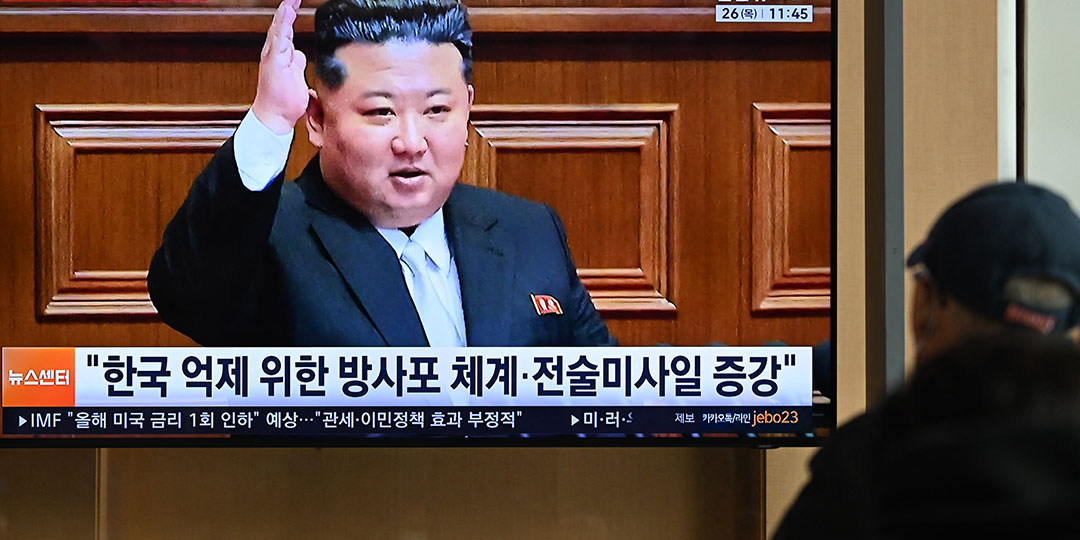

North Korea nuclear power status was reaffirmed by leader Kim Jong Un as he closed a major ruling party congress in Pyongyang, signaling conditional openness toward the United States while intensifying his stance against South Korea. State media coverage highlighted Kim’s demand that Washington recognize North Korea’s nuclear position and abandon what he called “hostile policies”.
The remarks came as the Workers’ Party congress concluded with a large military parade and a series of high-profile appearances by Kim’s daughter, fueling renewed debate over succession signals inside the isolated state.
Kim demands US recognition of nuclear status
North Korean leader Kim Jong Un said Pyongyang could “get along well” with the United States if Washington accepted the country’s officially declared position as a nuclear power and halted what he described as hostile policies. According to the Korean Central News Agency, Kim stated that if the US “respects our country’s current status as stipulated in the Constitution and withdraws its hostile policy, there is no reason why we cannot get along well”.
The comment follows previous overtures by US President Donald Trump, who last year suggested he was “100 percent” open to meeting Kim and acknowledged North Korea as “sort of a nuclear power”, a rare admission coming from a sitting US president. Trump is expected to visit China, North Korea’s main ally, in April, raising speculation about a potential side meeting.
Nuclear status codified in North Korean law
North Korea formally amended its constitution in 2024 to describe itself as an “irreversible” nuclear state. This marked the first time Pyongyang embedded its nuclear weapons status directly in its legal framework, underscoring its longstanding refusal to consider disarmament.
Kim reaffirmed this position during the party congress, declaring that the state “has irreversibly established itself as a nuclear power”. The statement aligns with years of North Korean insistence that its nuclear program serves as a core security guarantee.
Pyongyang escalates hostility toward South Korea
While expressing conditional openness toward Washington, Kim sharply escalated his rhetoric toward South Korea. He rejected recent diplomatic overtures from Seoul and described South Korea as North Korea’s “most hostile entity”.
KCNA quoted Kim as saying North Korea would “permanently exclude South Korea from the category of compatriots” and that Pyongyang has “absolutely no business dealing” with the South.
Seoul’s response and efforts for coexistence
South Korea’s current administration under President Lee Jae Myung has attempted to reduce tensions through humanitarian engagement and by limiting previous practices such as propaganda leaflets. Government officials said Seoul “regrets” Pyongyang’s rejection of efforts aimed at “peaceful coexistence” on the Korean Peninsula.
The presidential office emphasized that both sides must “refrain from hostile and confrontational actions” and work toward building trust. Diplomatic sources also confirmed that a UN Security Council committee recently approved exemptions allowing new deliveries of food and medical aid to North Korea.
Military parade marks end of party congress
Pyongyang ended the party congress with what KCNA described as a “grand” military parade at Kim Il Sung Square. These parades have historically showcased new military systems, providing rare insights into North Korea’s capabilities. Thousands of party members from across the country attended the gathering, which directs state policy on issues ranging from foreign relations to military planning.
Kim’s daughter Ju Ae appears in matching attire
State media photos from the parade showed Kim’s daughter, Ju Ae, wearing a matching leather jacket alongside her father. Analysts say such symbolic presentation strengthens speculation that she is being groomed as a future leader.
Experts like Lim Eul-chul emphasized that North Korea’s leadership attire carries political meaning and is often tied to national security symbolism. South Korea’s intelligence service recently stated that Ju Ae “has been clearly designated as a successor”, although she does not yet hold official party titles due to her age.
Public appearances fuel succession speculation
Ju Ae has gained prominence in recent years, joining her father at major weapons tests and political events. She has also drawn attention for her luxury fashion items, further elevating her profile within tightly controlled state media coverage.
Conclusion:
North Korea’s reaffirmation of its nuclear identity, combined with hostile rhetoric toward South Korea and conditional openness toward Washington, highlights the complex dynamics shaping the Korean Peninsula. The political symbolism displayed during the military parade also underscores Pyongyang’s focus on leadership continuity amid growing international scrutiny.