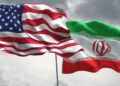
Trump warns Iran that failure to reach an agreement on its nuclear programme would lead to what he described as a “very traumatic” outcome, as Washington intensifies both diplomatic and military pressure on Tehran.
The remarks came after Trump hosted Israeli Prime Minister Benjamin Netanyahu at the White House, amid renewed negotiations between US and Iranian officials and reports that a second US aircraft carrier could soon be deployed to the Middle East.
Talks between Washington and Tehran resumed last week in Oman, marking the first formal engagement in months following last year’s 12 day war between Israel and Iran, during which the United States carried out strikes on Iranian nuclear facilities.
Trump warns Iran as US weighs military options
Speaking to reporters, Trump said a deal must be reached soon.
“We have to make a deal, otherwise it’s going to be very traumatic,” he said. “I don’t want that to happen, but we have to make a deal.”
He added that if negotiations fail, the United States would move to what he called “phase two,” which he described as “very tough” for Iran.
US media reported that Washington is preparing to deploy a second aircraft carrier strike group to the region. The USS Abraham Lincoln is already operating in Middle Eastern waters. Reports in The New York Times and The Wall Street Journal said the USS Gerald R. Ford could join it within weeks.
The show of force follows US participation in last year’s war, when American forces struck Iranian nuclear facilities after Israel launched a 12 day military campaign against the Islamic Republic.
Netanyahu expresses skepticism
Netanyahu travelled to Washington urging a tougher US stance, particularly demanding that any agreement address Iran’s ballistic missile programme and its support for armed groups including Hamas, Yemen’s Houthi movement and Hezbollah in Lebanon.
After meeting Trump, Netanyahu said the US president believed conditions were being created for a “good deal,” but he voiced “general skepticism” about the quality of any agreement.
“It’s not just the nuclear issue,” Netanyahu said, stressing that missile capabilities and regional alliances must be included from Israel’s perspective.
Trump, however, indicated he wanted negotiations to continue.
IAEA says inspection deal “terribly difficult”
At the Munich Security Conference, International Atomic Energy Agency Director General Rafael Grossi said reaching an agreement with Iran on access to damaged nuclear sites was “absolutely possible” but “terribly difficult.”
IAEA inspectors returned to Iran after last year’s attacks by Israeli and US forces, but Grossi said they have not been allowed to visit the sites targeted during the conflict. Tehran insists that any inspections must be part of a broader new agreement.
Grossi described dialogue with Iran as “imperfect and complicated,” but said the agency knows what needs to be verified and how to do it.
Status of Iran US nuclear talks
Key developments in the renewed diplomatic track include:
- Indirect talks held in Oman on February 6 between Iranian Foreign Minister Abbas Araghchi and US envoy Steve Witkoff, with Omani mediation.
- No date yet set for a second round of negotiations.
- US officials signalling openness to a deal that could set limits on uranium enrichment.
- Iran rejecting expansion of talks beyond the nuclear file.
Iran denies seeking to develop a nuclear weapon and says its programme is for peaceful purposes. Western governments argue that high level uranium enrichment could enable weaponisation.
Domestic unrest and regional tensions
The diplomatic push comes after a violent crackdown on protests inside Iran last month. According to the US based Human Rights Activists News Agency, 7,005 people were killed, most of them protesters. More than 53,000 were arrested.
The Norway based Iran Human Rights group said hundreds face charges that could lead to death sentences. Iranian authorities have not confirmed those figures.
Despite tensions, Trump has linked refraining from further military action to progress in nuclear negotiations rather than directly to the protest crackdown.
Regional actors remain divided. Israel has urged stronger measures, while several Gulf states are seen as supporting a diplomatic path to avoid wider conflict in the region.
Conclusion:
With aircraft carriers positioned in the region and negotiations still fragile, the coming weeks will determine whether diplomacy prevails or tensions escalate further. The outcome of the Iran US nuclear talks carries significant implications for regional security, energy markets and stability across the Middle East, including Iraq.