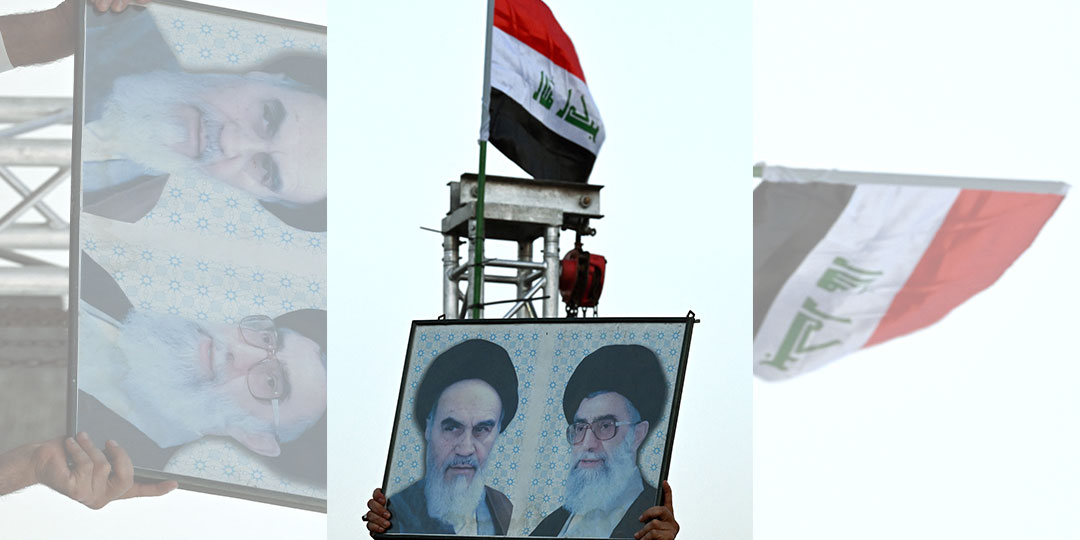

Six Iran-aligned Iraqi factions on Sunday rejected any discussion about their weapons before the end of all forms of “occupation,” an implicit reference to the US military presence in the country. The stance comes in response to growing calls—particularly from Washington—to limit arms exclusively to the state.
For years, Iraqi factions loyal to Tehran and incorporated into the Popular Mobilization Forces (PMF), which are part of the government security apparatus, have demanded the withdrawal of US troops deployed as part of the international coalition fighting ISIS since 2014. Washington has maintained political and security influence in Iraq since the 2003 invasion that toppled Saddam Hussein.
In recent months, US calls to disarm these factions have intensified, especially after the November parliamentary elections and amid a decline in the role of regional actors allied with Tehran in the post-Gaza war phase.
In a statement issued Sunday evening, the “Iraqi Resistance Coordination Committee” said that “the weapons of the resistance are sacred, particularly in a country where occupation still exists,” firmly rejecting “any discussion of them by external parties.”
The statement stressed that “dialogue on this matter—even with the government—can only take place after full sovereignty is achieved and the country is freed from all forms of occupation and its threats.”
The Coordination Committee includes Kataib Hezbollah, Asaib Ahl al-Haq, Kataib Sayyid al-Shuhada, Kataib Karbala, Ansar Allah al-Awfiya, and Harakat al-Nujaba.
The factions urged the next government to “end all forms and labels of foreign occupying presence over Iraqi land and airspace (…) and prevent any influence, regardless of its form—political, security, or economic.”
The statement came hours after remarks by the head of Iraq’s Supreme Judicial Council, Faiq Zaidan, who said that “there is no longer a need for weapons outside legitimate institutions; the battle has ended, and new challenges require a different kind of weapon—law, justice, and development.”
Zaidan had said in December that faction leaders agreed to cooperate on limiting weapons to the state. However, Kataib Hezbollah later said it would not discuss the issue until foreign forces withdraw.
Meanwhile, caretaker Prime Minister Mohammed Shia’ al-Sudani said on Sunday that “restricting weapons to the state is an Iraqi decision and an Iraqi vision, free from any external interference or dictates.”
The United States has called on the next Iraqi government—still under negotiation to select a prime minister—to exclude six factions it designates as “terrorist” and to work toward dismantling them, according to Iraqi officials and diplomats cited by AFP.
Washington and Baghdad agreed last year that the international coalition would end its military mission in Iraq by the end of 2025, and by September 2026 in the semi-autonomous Kurdistan Region, transitioning to a bilateral security partnership.
Iraqi forces are expected this week to take over the international coalition’s headquarters at Ain al-Asad Air Base in Anbar province in western Iraq.