
The United Nations High Commissioner for Refugees announced Thursday that approximately 3.2 million people have been internally displaced within Iran since the beginning of the US-Israeli bombing campaign roughly two weeks ago. This staggering figure reflects a massive population movement driven by the military conflict, representing one of the largest internal displacement crises in recent memory. According to UNHCR leadership, between 600,000 and one million Iranian families were temporarily displaced within the country, with officials warning that “this number is poised to increase as hostilities continue, indicating a troubling escalation of humanitarian needs.” The displacement crisis unfolds within the broader context of escalating military operations between Iran and the US-Israeli coalition, with ongoing explosions in Tehran and escalating threats of further military action.
The announcement underscores the devastating humanitarian toll of the regional conflict extending far beyond direct military targets.
Staggering Displacement Figures
The United Nations High Commissioner for Refugees released alarming statistics regarding internal displacement in Iran. According to the UNHCR, between 600,000 and one million Iranian families have been temporarily displaced within the country, accounting for approximately 3.2 million individuals.
This figure represents an enormous scale of internal population movement occurring over an extremely short timeframe of approximately two weeks. The displacement rate far exceeds that of many small nations’ total populations, occurring in response to military operations and security concerns.
Ayaki Ito, head of the UNHCR emergency support team and emergency response coordinator for refugees in the Middle East, stated that “this number is poised to increase as hostilities continue,” indicating expectation of further displacement as military operations persist.
Geographic Patterns of Displacement
Reports indicate specific patterns in displacement movement:
Urban to rural migration: Most displaced persons are fleeing Tehran and other major cities
Northward movement: Primary displacement flows toward northern regions of Iran
Search for security: Displaced populations seek areas distant from potential military targets
Temporary nature: Most displaced hope to return when hostilities cease
Vulnerable Populations and Refugee Families
The UNHCR highlighted particular vulnerability among certain population groups. Families of refugees residing in Iran, predominantly Afghans, have been severely impacted by the crisis.
The UNHCR described these families as “particularly vulnerable given their already precarious situation and limited support networks.” The agency stated that “families are leaving affected areas amid escalating insecurity and limited access to essential services.”
Afghan refugee families face compounded challenges due to their existing vulnerability, limited legal protections, and marginal social position within Iranian society. Access to basic services including food, water, and medical care has become severely limited for these populations.
Challenges Facing Vulnerable Groups
Vulnerable populations face specific obstacles:
Limited resources: Scarce resources for evacuation and relocation
Legal vulnerabilities: Afghan refugees may lack complete legal documentation
Service access: Difficulty accessing food, water, and healthcare
Potential discrimination: Risk of prejudiced treatment from local populations
UNHCR Response and Adaptation
The United Nations High Commissioner for Refugees announced adaptation of its response to address mounting needs. The agency stated it is “adapting its response to meet increasing needs, working with national authorities and partners to assess emerging requirements and strengthen preparedness as population mobility increases.”
Ito emphasized the “urgent need for protection of civilians, continued access to humanitarian assistance, and ensuring that borders remain open to those seeking safety, in line with international commitments.”
Timeline and Military Context
The US-Israeli bombing campaign against Iran commenced on February 28, 2026. Military operations have continued through March 12, 2026, representing approximately two weeks of sustained conflict. Within this brief period, 3.2 million people have been displaced, representing an unprecedented rate of rapid displacement.
Concurrent Military Escalation
The UNHCR displacement announcement coincides with intensifying military operations:
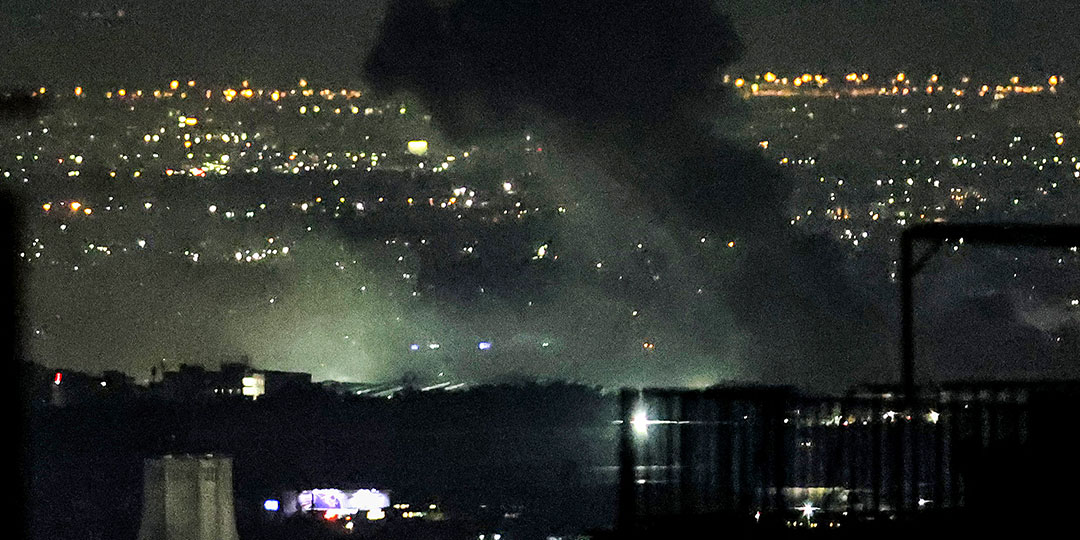
The Iranian Revolutionary Guards announced targeting of American and Israeli positions in the UAE, Iraq, and Kuwait. Series of powerful explosions shook Tehran on Thursday, indicating continuation of military operations. Iranian parliamentary speaker warned that Iran will “abandon all restraint” if the US and Israel attack Iranian islands. Iranian foreign ministry spokesman accused the European Union of “complicity” in US-Israeli attacks.
Announced Iranian Military Targets
Iran announced striking multiple locations:
UAE: American marines headquarters at Al Dhafra base
Kuwait: American forces at Ahmad Al Jaber Airport
Dubai: American forces concentration on Sheikh Zayed Street
Iraq: Mobile American bases and Israeli positions
Tel Aviv: Israeli positions described as “Zionist killers’ stronghold”
Signs of Continued Instability
Thursday witnessed multiple indicators of ongoing instability:
Series of powerful explosions in Tehran with smoke visible from western areas. Iranian military warnings of escalation thresholds. Statements from Iranian foreign ministry accusing EU complicity. Iranian parliamentary warnings regarding island attacks triggering unlimited retaliation. Anticipated first address from new Iranian supreme leader.
Iranian Criticisms of European Position
Iranian Foreign Ministry spokesman Ismail Baghaei accused the European Union of “complicity” in US-Israeli attacks. Baghaei stated: “The EU’s indifference and capitulation in the face of American and Israeli aggression, brutality, and atrocities amounts to nothing but complicity.”
This statement reflects Iranian attempts to diplomatically isolate Europe from the US-Israeli coalition and portray European neutrality as tacit support for military operations.
Escalation Thresholds and Red Lines
Iranian Parliament Speaker Mohammad Baqer Qalibaf warned that any attack on Iranian islands would end Iranian restraint. Qalibaf stated: “Any aggression against Iranian island territory will end all restraint” and added “this will lead to bloodshed of invaders” in the Gulf.
While Qalibaf did not specify which islands, reports indicate that the strategically important Kharg Island may be a focus of concern. Axios reported that US officials mentioned studying potential attacks on Kharg Island.
Strategic Island Threats
The mention of potential attacks on Iranian islands carries significant implications:
Kharg Island: Major Iranian oil production facility
Strategic value: Critical to Iranian economy and military
Escalation potential: Attack would trigger significant Iranian response
Regional impact: Could dramatically escalate Gulf regional conflict
Humanitarian Consequences of Large-Scale Displacement
The massive displacement carries severe humanitarian consequences:
Food and water shortages in rural areas receiving displaced populations. Pressure on medical and healthcare services. Risk of disease spread among crowded populations. Deaths from accidents and acute health emergencies. Breakdown of social support systems for vulnerable populations.
Increasing Humanitarian Needs
Ito indicated that needs are expected to escalate further as conflict continues. Rising humanitarian requirements include:
Shelter, food, and water provision. Medical and healthcare services. Protection from violence and exploitation. Education for displaced children. Psychosocial support for traumatized populations.
Role of International Organizations
International organizations play critical roles in responding to the crisis. The UNHCR stated it has “long been present in Iran” and is working to “adapt its response to meet increasing needs.”
However, ongoing military operations may limit organizational capacity to deliver assistance effectively. Security threats to humanitarian workers could impede operations.
Uncertain Future for Displaced Populations
The future trajectory for displaced Iranians remains uncertain. Continued conflict may transform temporary displacement into permanent relocation. Rural areas receiving displaced populations face mounting socioeconomic pressures. Iran may require massive reconstruction when conflict concludes.
Anticipated Message from New Supreme Leader
Iranian state television announced that the new Iranian supreme leader will deliver “a message in the near future.” This address may contain commentary on humanitarian crisis or outline new military strategies.
The message is expected to carry significant importance in shaping the conflict’s future trajectory and Iran’s humanitarian response.
International Humanitarian Implications
The displacement crisis carries implications extending beyond Iran:
Regional refugee flows may occur if displacement continues. Other countries may receive Iranian refugees seeking safety. International humanitarian resources will be strained. Global attention to Middle Eastern humanitarian crisis increases.
Economic and Social Impacts
Large-scale displacement generates severe economic and social impacts:
Urban economies lose displaced workers and consumers. Rural areas face resource strain from population influx. Family separation creates psychological trauma. Educational disruption for millions of children. Healthcare system collapse in some areas.
Conclusion:
The displacement of 3.2 million Iranians within their country due to the US-Israeli bombing campaign represents an enormous humanitarian crisis unfolding in real time. The United Nations warning that displacement figures are “poised to increase” signals expectations of further deterioration. Vulnerable populations, particularly Afghan refugee families, face compounded challenges amid the broader crisis. Concurrent military escalation, including explosions in Tehran and Iranian threats regarding island attacks, indicates likelihood of further displacement and humanitarian emergency. As the conflict’s trajectory remains uncertain, the fate of millions of displaced persons depends on developments in coming weeks. Escalating humanitarian needs demand rapid and comprehensive international response to prevent wider catastrophe. The displacement crisis represents one of the conflict’s most immediate and severe humanitarian consequences, with long-term implications for Iran’s social, economic, and political stability extending well beyond the cessation of military operations.