
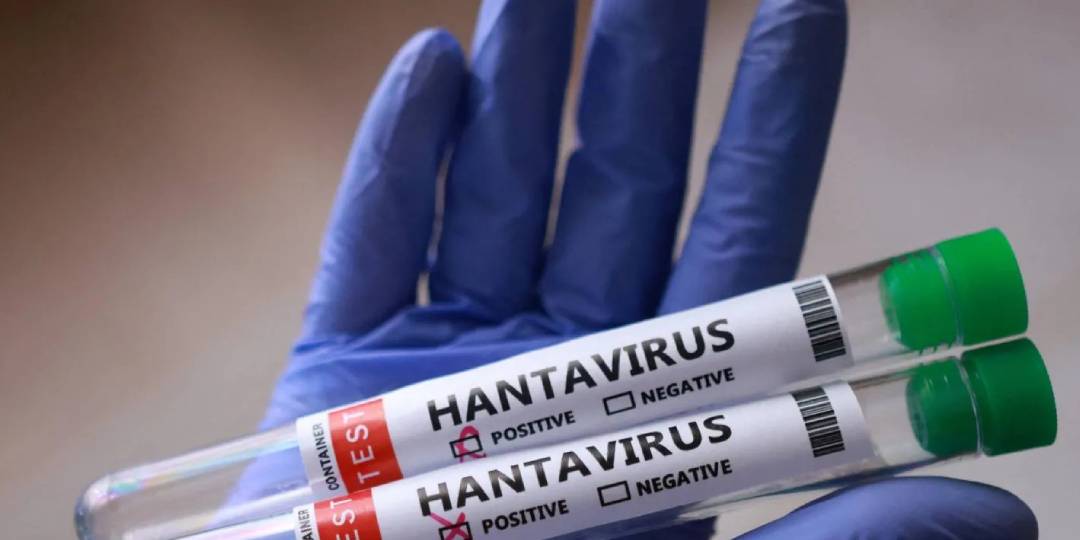

The World Health Organization confirmed the global health threat from hantavirus outbreak remains limited while issuing new preventive warnings. Britain transferred 20 British citizens along with a resident German and Japanese passenger to hospital for precautionary isolation lasting up to 45 days. The WHO identified seven effective prevention measures to limit virus transmission. The WHO Director-General stated no indicators show wider outbreak but new cases possible in coming weeks.
The developments reflect coordinated global health efforts to combat the virus.
WHO confirms limited threat level
The “World Health Organization confirmed global health threat from hantavirus outbreak remains limited.”
The organization “issued new preventive warnings.”
The confirmation came “amid continued global health efforts.”
Threat levels and confirmed cases
Developments include:
Limited threat on global level
Confirmed cases in specific countries
Possibility of new cases emerging
Precise health monitoring
Britain isolates 20 British citizens
Britain “transferred 20 British citizens to English hospital.”
Added were “German resident in United Kingdom and Japanese passenger.”
“They undergo precautionary isolation that may last up to 45 days.”
Isolation procedure details
Procedures include:
Isolation of 23 people from different nationalities
Isolation duration potentially 45 days
Continuous medical monitoring
Regular periodic testing
British health supervision authorities
Isolation came “under supervision of National Health Service NHS.”
Also overseeing “UK Health Security Agency UKHSA.”
This reflects “high-level health coordination.”
Health monitoring institutions
Responsible for:
National Health Service
UK Health Security Agency
Specialized hospitals
Precise medical monitoring
Seven preventive measures
The WHO identified “seven effective preventive measures.”
Beginning with “avoid contact with infected persons or approaching rodents.”
Including “maintaining cleanliness of homes and workplaces.”
First preventive steps
Include:
Avoiding infected persons and rodents
Maintaining home cleanliness
Closing rodent entry points
Safe food storage
Cleaning and prevention procedures
The organization recommended “adopting safe cleaning methods.”
Stressed “avoiding dry sweeping of contaminated waste.”
Emphasized “necessity of moistening before cleaning.”
Hygiene procedure details
Include:
Using safe cleaning methods
Not sweeping dry waste
Pre-moistening contaminated areas
Continuous hand washing
UK Health Security Agency position
The agency confirmed on May 11 “all passengers in Wirral area show no symptoms.”
Stressed “implementing strict infection control measures.”
Considered “danger to general public very low.”
Health risk assessment
Assessment included:
No symptoms in monitored individuals
Very low public risk
Strict health procedures applied
Precise continuous monitoring
WHO Director-General statement
Tedros Adhanom Ghebreyesus stated: “No indicators show wider outbreak beginning.”
Added: “But did not exclude new case emergence.”
Told journalists “currently no indicators of larger outbreak.”
Future virus expectations
Expectations indicate:
No widespread outbreak currently
Possibility of new cases
Potential situation changes
Weekly development monitoring
Virus incubation period and new cases
Ghebreyesus stated: “Given virus’s long incubation period.”
Added: “Likely to see more cases in coming weeks.”
Warning came “based on biological virus characteristics.”
Virus temporal characteristics
Include:
Long incubation period
Delayed symptom appearance
Possibility of late cases
Need for long-term monitoring
Hantavirus transmission methods
The WHO clarified “infection transmits mainly through contact with infected rodent urine, feces, or saliva.”
Noted “especially in poorly ventilated or rodent-infested areas.”
Stated “agricultural and forest workers face exposure.”
High-risk groups
Include:
Agricultural workers
Forest workers
Persons in infested areas
Inhabitants of poorly ventilated spaces
Human-to-human transmission
The organization confirmed “cruise ship strain recorded rare human-to-human transmission cases.”
Stated “human transmission usually requires close prolonged contact.”
Added “often recorded among family members or close partners.”
Human transmission requirements
Requires:
Very close contact
Long-term exposure
Large physical proximity
Usually among close relations
Hantavirus symptoms and progression
The organization stated “symptoms may delay several weeks after exposure.”
Added “typically begin with influenza-like symptoms.”
Warned “disease may progress rapidly in some cases.”
Possible complications
May include:
Lung fluid accumulation
Hemorrhagic disorders
Kidney failure
Rapid acute progression
Viral strain type importance
The WHO clarified “complications depend on strain type.”
Stated “Andes strain on cruise ship may be more dangerous.”
Confirmed “need to identify specific strain for prognosis.”
Different strains and risk
Strains differ in:
Mortality rates
Progression speed
Possible complications
Incubation period
Early detection and isolation importance
The WHO stressed “early detection importance.”
Emphasized “need for immediate suspected case isolation.”
Stated “precise medical monitoring necessary for all cases.”
Diagnostic and monitoring procedures
Include:
Regular testing
Symptom monitoring
Laboratory testing
Long precautionary isolation
International cooperation in virus control
The situation reflects “coordinated international cooperation.”
Involved “World Health Organization and national authorities.”
Includes “information and medical expertise sharing.”
International cooperation mechanisms
Include:
Epidemiological information exchange
Treatment experience sharing
Preventive measure coordination
International support for affected countries
Health awareness and preventive culture
Efforts focus on “health awareness.”
Stress “preventive procedure adherence necessity.”
Aim “raising public awareness of protection methods.”
Awareness elements
Include:
Spreading correct information
Educating public on prevention
Explaining infection symptoms
Explaining isolation importance
Global monitoring and coordination
Requires “continuous health monitoring globally.”
Demands “strict adherence to preventive measures.”
Necessitates “information sharing between health authorities.”
Ongoing monitoring requirements
Necessary for:
Early outbreak detection
Rapid response capability
Case containment
Trend identification
Conclusion:
WHO confirmations of limited hantavirus outbreak threat reflect actual health crisis reality. While cases remain limited currently, possibility of new cases in coming weeks exists due to virus’s long incubation period. Seven preventive measures reflect global desire to control virus before progression. The situation requires continued health monitoring and commitment to preventive measures at global level to ensure containment and minimize spread. International coordination remains essential for effective response to emerging health threats.