
The United States approved on Thursday (March 19) its largest weapons sale to Gulf Arab states since launching a joint military campaign with Israel against Iran in late February. The transaction totals $16.46 billion, distributed between the United Arab Emirates and Kuwait, the two nations most severely impacted by escalating Iranian ballistic missile and drone strikes.
The American approval arrives following intense Iranian retaliatory bombardments launched in response to the US-Israeli air campaign that commenced on February 28, targeting Iranian military installations and government command centers. Iran countered with waves of ballistic missiles and unmanned aerial vehicles directed at American, Israeli, and Gulf facilities. The weapons sale reflects Washington’s determination to strengthen the defensive capabilities of its Gulf allies, particularly in air and missile defense systems, while securing its economic and military interests in this strategically vital region.
Breaking Down the Deal: Advanced Radar Systems and Missiles for Kuwait and the UAE
Kuwait Secures Largest Single Contract Worth $8 Billion
Kuwait has received the largest individual contract valued at $8 billion, according to an official statement from the US State Department. The package comprises advanced air defense and anti-missile radar systems specifically engineered to track high-speed targets, unmanned aircraft, and ballistic missiles.
These radar networks will constitute a critical component of Kuwait’s comprehensive air defense architecture, designed to protect the capital city and surrounding populated areas from Iranian ballistic missile attacks. The technology is essential for Kuwaiti defense, particularly following multiple Iranian ballistic strikes that resulted in dozens of deaths and substantial infrastructure destruction. The integrated system will furnish early warning capabilities and targeting data to Kuwaiti air defense batteries in real time.
H3: United Arab Emirates Receives $8.46 Billion in Multi-Layered Defense Equipment
The United Arab Emirates has secured $8.46 billion in military equipment distributed across multiple defensive domains:
Ballistic Missile Detection Radar Systems ($4.5 billion): This package includes long-range discrimination radars specialized in detecting Iranian ballistic missile threats and associated equipment. These systems enable the UAE to detect incoming missiles at extreme distances, providing critical reaction time for implementing defensive countermeasures and protecting civilian populations.
Counter-Unmanned Aircraft Systems ($2.1 billion): Advanced systems specifically engineered to intercept small and medium-sized unmanned aerial vehicles that Iran has deployed extensively throughout recent regional attacks. These systems address a significant defensive vulnerability exposed by recent Iranian drone operations.
Advanced Air-to-Air Missiles ($1.22 billion): Modern air superiority missiles designed to enhance the offensive capabilities of UAE fighter aircraft, enabling superior engagement of aerial threats across greater distances and with increased lethality.
F-16 Fighter Munitions and Technical Upgrades ($644 million): Maintenance equipment and technology upgrades to optimize the operational effectiveness of the UAE’s existing fleet of American-manufactured F-16 combat aircraft.
Circumventing Congressional Review Through Emergency Procedures
Secretary of State Marco Rubio announced that he “determined and provided detailed justification for an emergency requiring immediate sale” of military equipment. This procedure enables the Trump administration to bypass advance congressional approval by invoking an “emergency condition” arising from the Iranian conflict.
Employment of emergency procedures underscores the acute nature of the Gulf security situation and the American administration’s commitment to accelerating weapons delivery to allies without legislative delays that could impede rapid deployment.
Geopolitical Context: Why These Sales Now and Why These Specific Systems?
The Iranian Conflict and Urgent Security Requirements
The current conflict commenced on February 28 when the United States and Israel executed a comprehensive military operation against Iranian military installations and government centers. Iran retaliated with successive waves of ballistic missiles and unmanned systems targeting American, Israeli, and Gulf facilities.
Gulf states, particularly the UAE and Kuwait, have sustained direct Iranian fire targeting petroleum facilities, military bases, and critical infrastructure. These attacks have resulted in casualties and significant economic damage, prompting urgent requests for American military assistance. These weapons sales represent rapid response to demonstrable, ongoing threats rather than theoretical security scenarios.
Economic and Strategic Dimensions
These weapons contracts advance multiple American strategic objectives:
Deepening Military Dependence: Provision of advanced weapons systems ensures Gulf allies remain dependent on American technology and expertise for decades, strengthening enduring strategic partnerships.
Protecting Economic Interests: Maintaining Gulf stability shields American petroleum interests and global energy market access, particularly crucial given the conflict’s impact on world oil prices.
Building Cohesive Alliance: Strengthening Gulf partners’ defensive capabilities helps contain Iranian regional influence and military power projection.
Strategic Messages to Iran, Russia, and China
These weapons sales transmit explicit messages: Washington is committed to defending Gulf allies, intends to sustain military operations against Iran, and possesses capability to supply security guarantees that regional competitors cannot replicate. The timing, magnitude, and system types demonstrate American technological superiority and enduring strategic confidence in the region.
Trump’s Statements Regarding Israeli Strikes Against Iranian Gas Fields
Trump Denies Prior Knowledge, Then Acknowledges Military Coordination
President Donald Trump stated on Thursday that he had instructed Israeli Prime Minister Benjamin Netanyahu to refrain from additional strikes on Iranian gas fields. Trump’s statement responded to an Israeli attack on Iran’s South Pars gas field on Wednesday, which Tehran retaliated against by striking Qatari energy facilities.
Trump insisted via social media that he “knew nothing” about the Israeli strike. However, American intelligence sources confirmed that Washington possessed advance knowledge of the operation, although not directly participating in actual attack execution.
Contradictions in American Messaging
Despite denying prior knowledge, Trump acknowledged that military operations are “coordinated” with Israel, stating: “We get along great. It’s coordinated, but on occasion, he’ll do something, and if I don’t like it…and so we’re not doing that anymore.”
This apparent contradiction between denying knowledge and acknowledging coordination reveals inconsistencies in Trump administration messaging. The statement suggests that while America maintains general operational oversight, Israel retains tactical autonomy, creating a potentially unstable arrangement wherein allies might pursue divergent strategic objectives.
American Anxiety Regarding Energy Price Impacts
Trump has previously stated that the United States refrains from attacking Iranian energy infrastructure because the war has already caused dramatic global oil price increases. Simultaneously, Trump warned via social media that America would “massively blow up” the South Pars field if Iran continued attacking Qatar.
This contradictory messaging reflects genuine American concern that sustained energy market disruption could damage the US economy ahead of crucial November midterm elections. The president appears caught between supporting Israeli operational autonomy and protecting American economic interests threatened by energy price volatility.
Iran’s Forceful Response and Escalating Cycle
Iran responded decisively to American warnings, declaring it would exercise “zero restraint” if its energy infrastructure faces renewed attack. This escalating tit-for-tat pattern demonstrates how miscalculation or misunderstood signals could rapidly expand the conflict beyond current parameters, potentially engulfing Gulf energy infrastructure in wider destruction.
American Versus Israeli Strategic Objectives: Widening Strategic Misalignment
Trump Emphasizes Nuclear Weapons Constraints and Conventional Military Degradation
Trump has defined American war objectives narrowly: “ensuring Iran cannot have a nuclear weapon and destroying its missiles and navy.” These goals emphasize containing Iranian military capability while avoiding regime change, suggesting possible eventual negotiated settlement once military objectives are achieved.
Trump’s restrained language regarding post-war arrangements suggests either genuine uncertainty about American strategic objectives or political caution about publicly declaring regime change goals that could alienate regional allies.
Netanyahu Explicitly Calls for Iranian Regime Collapse
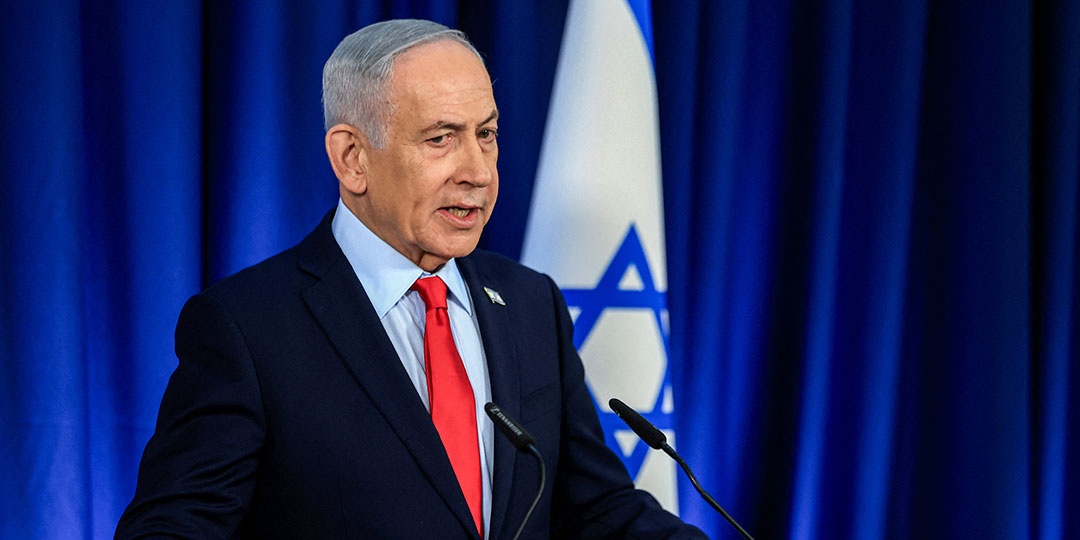
Israeli Prime Minister Netanyahu has been substantially more transparent, explicitly calling for Iranians to “overthrow the Islamic Republic’s clerical rulers.” The assassination of Iran’s Supreme Leader Ali Khamenei at the war’s outset through an Israeli airstrike represented an unmistakable signal regarding Israeli regime change intentions.
Dangerous Strategic Divergence Between Allies
The difference between stated American and apparent Israeli objectives creates substantial risks. If Israel pursues regime change while America seeks limited military objectives, the allies may clash over war termination timing, negotiation parameters, and post-conflict regional arrangements. This fundamental objective misalignment could fracture the alliance or extend conflict duration far beyond either ally’s planning.
War’s Impact on Global Energy Markets and Gulf Economies
Oil Price Volatility and Economic Anxiety
The conflict has directly destabilized global energy markets. Iranian attacks on Gulf petroleum and gas infrastructure combined with Israeli strikes on Iranian energy facilities have generated acute concerns about global energy supply security.
Oil prices have experienced sharp volatility, with acute price spikes reflecting legitimate apprehensions regarding energy supply disruption. This impacts global economies, particularly the American economy already struggling with elevated inflation. Protracted conflict threatens to embed persistently higher energy costs within global economic structures.
Trump’s Gamble on Rapid Conflict Resolution
Trump insists that energy prices will decline rapidly once the conflict concludes. However, unexplained operational duration and strategic misalignment between American and Israeli objectives raise serious questions about conflict resolution timelines. Should the war extend beyond Trump’s optimistic projections, global energy market damage could become economically catastrophic.
Conclusion:
America’s $16.46 billion weapons sale to the Gulf reflects Washington’s commitment to regional allies confronting genuine Iranian threats. These sales occur within an expanding regional conflict where America and Israel compete with Iran for Middle Eastern influence and strategic positioning.
However, contradictions in American messaging, strategic disagreements with Israel regarding war objectives, and growing anxiety about global economic impact from sustained conflict all suggest the United States may be entering a protracted regional struggle without clear exit strategies or unified allied objectives.
For Gulf states, these weapons packages represent necessary defensive investments against tangible, ongoing threats. But they come with substantial economic and strategic costs, deepening dependence on American technology and security guarantees that constrain future political and diplomatic flexibility. The Gulf’s dilemma remains acute: military protection requires deepened American integration, yet that integration reduces strategic autonomy in an increasingly multipolar world.