

Ukraine war latest developments unfolded on Sunday as Russian forces claimed new territorial gains in eastern Ukraine, Ukrainian drones struck energy infrastructure inside Russia, and Latvia’s intelligence chief warned that Moscow’s war economy may persist even if the fighting ends.
The updates came as leaders gathered at the Munich Security Conference and days before the fourth anniversary of Russia’s full-scale invasion of Ukraine in February 2022.
The conflict continues to reshape security calculations across Europe, with negotiations expected to resume next week under United States mediation.
Latvia warns Russia’s war economy may continue after fighting ends
Latvia’s intelligence chief Egils Zviedris said Russia is unlikely to reverse the militarisation of its economy once the war in Ukraine stops.
Speaking to AFP on the sidelines of the Munich Security Conference, Zviedris said Russia’s future posture would depend on how the war ends and whether Western sanctions remain in place.
“The potential aggressiveness of Russia when the Ukraine war stops will depend on many factors,” he said, adding that lifting sanctions would allow Moscow to rebuild and expand its military capacity more rapidly.
Zviedris acknowledged that Russia has drawn up contingency plans that include scenarios for attacking Baltic states, but stressed that Latvia does not currently face an immediate military threat.
“The fact that Russia has made plans to invade the Baltics does not mean Russia is going to attack,” he told AFP.
However, Latvia’s Security Service warned in its 2025 annual report that Russia remains the primary cyber threat to the country. The agency said cyber attacks have “considerably increased” since the 2022 invasion of Ukraine.
Key concerns outlined by Latvian intelligence include:
Expanded Russian cyber operations targeting state and critical infrastructure
• Efforts to exploit grievances among Russian-speaking minorities in the Baltics
• Legal and diplomatic pressure through international forums
Russia’s Foreign Ministry has said it is preparing legal cases against Latvia, Lithuania and Estonia at the International Court of Justice over the rights of Russian-speaking minorities.
In 2025, around 23 percent of Latvia’s 1.8 million residents identified as ethnic Russians, according to official statistics. Following Russia’s invasion of Ukraine, Latvia required many Russian residents to pass a Latvian language exam, with failure potentially leading to deportation.
Russia claims advances in Donetsk and other regions
Russia’s army chief Valery Gerasimov visited troops in Ukraine and said Russian forces seized 12 settlements in eastern Ukraine during the first two weeks of February.
According to Russia’s Defence Ministry, the advances came despite severe winter conditions. AFP said it could not independently verify the claims.
Moscow has intensified operations in recent months but has not fully taken control of the Donetsk region after nearly four years of fighting.
Russia has demanded that Ukraine withdraw from Donetsk as a condition for any settlement, a position Kyiv has rejected.
Gerasimov said Russian troops were advancing toward Sloviansk, an industrial city previously held by pro-Russian separatists in 2014. Russian forces are reported to be about 15 kilometres from the city.
Moscow claims the Donetsk, Lugansk, Zaporizhzhia and Kherson regions as Russian territory. It has also reported operations in the Sumy, Kharkiv and Dnipropetrovsk regions, although the Kremlin has not formally claimed Dnipropetrovsk.
Russian President Vladimir Putin has repeatedly said Russia intends to take full control of Donetsk if diplomacy fails.
Ukrainian drones strike oil infrastructure in southern Russia
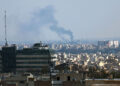
Russian officials said Ukrainian drones damaged an oil storage facility in the southern Krasnodar region, causing multiple fires and injuring two people.
Krasnodar Governor Veniamin Kondratyev said the facility in the Black Sea village of Volna was hit. The site is near Crimea, which Russia annexed in 2014, and close to the Port of Taman, a key hub for oil, coal and grain exports.
“The most difficult situation is in the village of Volna,” Kondratyev said, adding that over 100 firefighters were deployed.
Russia’s Defence Ministry said it intercepted 88 Ukrainian drones over southern and border regions early Sunday.
Ukraine has repeatedly targeted Russian energy and oil infrastructure since the start of the invasion, describing such attacks as efforts to weaken Moscow’s war logistics and financing.
Zelensky urges security guarantees, criticises Putin
At the Munich Security Conference, Ukrainian President Volodymyr Zelensky sharply criticised Russian President Vladimir Putin, describing him as a “slave to war.”
Zelensky said every power plant in Ukraine had been damaged by Russian attacks since 2022 but added that the country continues to generate electricity.
“There is not a single power plant left in Ukraine that has not been damaged,” he said, while praising energy workers for maintaining supply.
He again called on Western allies to accelerate deliveries of air defence systems.
Zelensky warned against pressuring Ukraine into territorial concessions, drawing a parallel with the 1938 Munich Agreement. He argued that dividing Ukraine would not bring lasting peace and insisted that firm security guarantees are essential to prevent renewed Russian aggression.
Ukraine and Russia are expected to hold US-mediated talks in Geneva next week, following earlier rounds of negotiations in Abu Dhabi.
Conclusion:
As diplomatic efforts continue, military operations remain active across multiple fronts. From Russian advances in eastern Ukraine to Ukrainian drone strikes inside Russia and renewed warnings from Baltic intelligence services, the conflict shows no immediate signs of de-escalation.