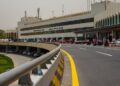


Al-Shadadi base was taken over by Syrian government forces on Sunday, according to a statement by Syria’s defence ministry, marking the latest shift in the presence of US forces in the country’s northeast.
Damascus said the Syrian Arab Army assumed control of the facility in Hasakeh province “following coordination with the American side,” indicating an agreed handover rather than a military confrontation.
The development comes days after the United States confirmed it had withdrawn from Al-Tanf base near Syria’s borders with Iraq and Jordan, as Washington recalibrates its military role in the country.
Damascus announces takeover of Al-Shadadi base
In a statement carried by state media, Syria’s defence ministry said its forces had entered and taken over the Al-Shadadi base, previously used by US troops operating under the international coalition against the Islamic State group.
The base is located outside the town of Al-Shadadi in Hasakeh countryside. The town had housed a prison where Kurdish-led forces detained members of the Islamic State organization before Syrian government forces advanced into surrounding areas last month.
The ministry said the takeover followed coordination with US forces, without providing further operational details. There were no reports of clashes linked to the handover.
The move follows Thursday’s confirmation by US forces that they had vacated Al-Tanf base, a strategic facility near the Syrian-Iraqi-Jordanian border triangle.
Key developments include:
Syrian army entry into Al-Shadadi base after coordination with US forces
• US confirmation of withdrawal from Al-Tanf base
• Ongoing US air strikes against Islamic State targets
• Transfer of thousands of IS detainees from Syria to Iraq
US military continues strikes on Islamic State targets
While reducing its fixed base presence, the United States Central Command said Saturday that it had carried out multiple air strikes against Islamic State targets in Syria this month.
According to CENTCOM, US forces conducted 10 strikes between February 3 and February 12 against more than 30 IS targets. The strikes targeted infrastructure and weapons storage facilities.
The statement also said that between January 27 and February 2, US forces carried out five additional strikes against an IS communication site, a logistics node, and weapons storage facilities.
CENTCOM added that during two months of operations under what it called Operation Hawkeye Strike, more than 50 IS members were killed or captured and over 100 infrastructure targets were struck using precision munitions.
Washington launched the operation after an IS fighter ambushed and killed two US soldiers and a US civilian interpreter in Palmyra on December 13. Syrian authorities said the gunman had been a member of the security forces who was due to be dismissed for extremist affiliations.
Transfer of IS detainees to Iraq
CENTCOM also confirmed that more than 5,700 detained IS suspects from 61 countries were transferred from Syria to Iraq.
The detainees had been held for years in prisons run by the Kurdish-led Syrian Democratic Forces, which played a central role in the fight against IS and in the group’s territorial defeat in Syria in 2019.
The transfer began last month after Syrian government forces expanded their control over areas surrounding detention facilities, raising concerns about the future management of the prisoners.
Shifting alliances after political changes in Damascus
Following the fall of former president Bashar al-Assad in December 2024, the United States has moved closer to Syria’s new authorities. Washington recently indicated that its strategic reliance on the Kurdish-led Syrian Democratic Forces had largely diminished.
The SDF had been a key partner in the US-led coalition against the Islamic State organization. However, as Damascus works to reassert control over all Syrian territory, the role and footprint of foreign forces are undergoing adjustment.
Despite the loss of its territorial strongholds in 2019, the Islamic State organization remains active in parts of Syria, carrying out sporadic attacks and maintaining sleeper cells, according to US military assessments.
Conclusion:
The takeover of Al-Shadadi base by Syrian government forces, alongside the US withdrawal from Al-Tanf, signals a continued shift in military arrangements on Syrian territory. At the same time, US air operations against Islamic State targets indicate that Washington maintains an active counterterrorism role, even as its on-the-ground presence evolves.