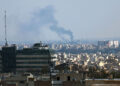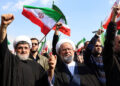

The United Arab Emirates arrested 109 people on March 20 for filming and posting “misleading” information about the Middle East war on social media platforms, representing a sweeping crackdown on independent documentation and citizen journalism as Gulf governments intensify information control during military escalation. The mass arrests coincide with a dramatic expansion of Israeli military operations to new geographic areas, including strikes on Iran’s Caspian Sea region for the first time, attacks on Syrian army camps, destruction of 16 Iranian cargo vessels in Gulf ports, and the killing of Iran’s Revolutionary Guards spokesman. The simultaneous enforcement of information suppression and expansion of military operations illustrates how the war has evolved from a regional military conflict into a comprehensive campaign encompassing geographic expansion, infrastructure destruction, information control, and diplomatic isolation. The arrests of over 100 residents of the UAE on charges related to social media documentation represent an unprecedented peacetime-style information crackdown during active warfare, raising serious concerns about free expression and accountability as governments suppress civilian documentation of conflict impacts while simultaneously expanding military operations to previously untouched regions including the Caspian Sea, Syria, and surrounding areas.
UAE Arrests 109 for Social Media Posts
Abu Dhabi Police announced on March 20 that they had arrested 109 individuals of various nationalities for filming sites and incidents related to the ongoing war and circulating information deemed “misleading” via social media platforms. The statement released on X characterized the arrests as targeting people who “filmed sites and incidents and circulated incorrect information via social media platforms during current events.”
The mass arrest represents a dramatic expansion of information control efforts by Gulf governments seeking to manage public discourse during the Middle East war. The arrests specifically targeted individuals who documented and shared information about Iranian attacks, military incidents, and war-related developments on platforms including WeChat, Facebook, Instagram, and other social media services widely used throughout the region.
The characterization of documented information as “misleading” raises significant concerns about government determination of acceptable speech during wartime. The broad sweep of arrests, involving 109 individuals of various nationalities, suggests systematic targeting of all independent documentation rather than narrowly tailored enforcement against demonstrably false information.
Information Control Across Gulf States
The UAE arrests represent part of a broader pattern of information suppression across Gulf states during the Middle East war. Regional governments have implemented multiple mechanisms to restrict independent documentation, journalism, and citizen reporting of war impacts including attacks, casualties, and infrastructure damage.
The arrests follow earlier reports of similar enforcement actions in other Gulf countries targeting individuals who recorded or shared information about Iranian missile and drone attacks, damage to energy infrastructure, and other conflict-related developments. The coordinated nature of information control across multiple Gulf states suggests regional agreement on managing media narratives during the conflict.
Israel Expands Operations to Caspian Sea Region
Israel’s military announced on March 20 that it was launching strikes in Iran’s Noor region on the shores of the Caspian Sea, representing a significant geographic expansion of military operations. The strikes marked the second consecutive day of Israeli operations targeting Iranian positions along the Caspian Sea, a body of water bordered by five nations including Russia and Azerbaijan.
The expansion of Israeli military operations to the Caspian region represents a strategic escalation aimed at targeting Iranian military and energy infrastructure previously considered beyond the direct theater of conflict. The geographic expansion suggests Israeli determination to carry the war into previously untouched regions of Iranian territory.
Israel Strikes Syrian Army Camps
Israel’s military announced strikes against Syrian army camps in response to what Israeli officials characterized as attacks against the Druze community in southern Sweida province. Israeli Defence Minister Israel Katz stated in a statement: “We will not allow the Syrian regime to exploit our war against Iran and Hezbollah to harm the Druze.”
The strikes on Syrian targets represent an expansion of the conflict beyond the primary Israel-Iran-Hezbollah dimensions to include Syrian government forces. Israel justified the operations as defensive measures protecting the Druze community, the largest Arab minority in Israel serving in substantial numbers in the Israeli military.
Beirut Sound Barrier Incident
An Israeli warplane broke the sound barrier over Beirut on Friday morning, according to state media reports and eyewitness accounts from AFP journalists. The loud booms from the supersonic aircraft reverberated across the city and could be heard in distant mountains, illustrating the intensity of Israeli air operations over Lebanon’s capital.
The sound barrier incident demonstrated Israeli air force activity over one of the region’s most densely populated cities, raising concerns about civilian safety and the risks of accidental casualties from military aircraft operations in urban airspace.
Sixteen Iranian Cargo Vessels Destroyed in Gulf Ports
The United States and Israel struck 16 Iranian cargo vessels in port towns across the Gulf, destroying the vessels according to reports from local media. The attacks on stationary cargo ships in port facilities represented deliberate targeting of Iranian maritime assets and commercial shipping infrastructure.
The destruction of 16 cargo vessels represents a significant blow to Iranian maritime commerce and represents escalation of targeting beyond military installations to commercial shipping and port infrastructure.
Syria’s Neutrality Position
Syrian President Ahmed al-Sharaa stated that Syria is working to keep the country out of the active war despite Israeli strikes on Syrian territory. Al-Sharaa said: “It is important to remember that Syria has always been an arena of conflict and strife during the past 15 years and before that, but today it is in harmony with all neighbouring countries regionally and internationally.”
The Syrian president added that Damascus stood “in full solidarity with the Arab states,” attempting to position Syria as aligned with regional positions while maintaining neutrality in the Israel-Iran conflict despite Israeli military operations on Syrian soil.
Iran’s Warning to UK Over Base Usage
Iran’s Foreign Minister Abbas Araghchi told his UK counterpart in a telephone call that Tehran would view any US use of British military bases in support of operations against Iran as “participation in aggression.” According to a statement from Iran’s Foreign Ministry, Araghchi stated: “These actions will certainly be regarded as participation in aggression and will be recorded in the history of relations between the two countries.”
The warning to the UK reflects Iranian concern about potential British military support or base access for American operations, illustrating how the conflict extends to diplomatic dimensions involving third countries’ roles in regional military operations.
Revolutionary Guards Spokesman Killed
Iran’s Revolutionary Guards announced that their spokesman Ali Mohammad Naini had been killed in US-Israeli strikes. The announcement came hours after Naini had refuted Israeli Prime Minister Netanyahu’s claims that Iran could no longer produce ballistic missiles, stating that there was “no concern” and “even under wartime conditions we continue missile production.”
The killing of the Revolutionary Guards spokesman immediately after his defiant statements represents the intensity of Israeli targeting of Iranian leadership figures and strategic communications personnel.
Oil Price Movement
Crude oil prices declined slightly after US and Israeli leaders announced that Israel would no longer target Iran’s remaining energy infrastructure. The statement by Israeli officials suggesting a halt to energy facility targeting temporarily reduced market concerns about further energy supply disruptions, leading to modest price decreases from the elevated levels caused by earlier infrastructure strikes.
Sri Lanka Refuses US Warplane Deployment
Sri Lankan President Anura Kumara Dissanayake announced in parliament that Sri Lanka had refused permission for the United States to station two warplanes at an airport in the country’s south in early March. The refusal reflects Sri Lanka’s attempt to maintain balanced relations with both the United States, its largest export market, and Iran, a key buyer of Sri Lankan tea exports.
Sri Lanka’s decision to deny US warplane deployment illustrated the diplomatic complexity for non-aligned nations attempting to maintain economic relationships with both sides of the conflict.
Gulf Regional Air Defense Responses
Multiple Gulf states reported active air defense responses to missile and drone attacks on March 20. Kuwait reported drone attacks hitting the Mina Al-Ahmadi oil refinery, causing several fires but no reported casualties according to state media. Kuwaiti and Emirati authorities stated that air defenses were responding to missile and drone attacks, while Saudi Arabia’s defense ministry reported intercepting and destroying more than a dozen drones in the country’s east and another in the north.
Bahrain’s interior ministry reported that shrapnel from an Iranian attack caused a fire at a warehouse, which was brought under control with no injuries reported.
UAE Arrests Iran/Hezbollah-Linked Network
UAE authorities announced the arrest of at least five members of a “terrorist network” linked to Iran and Lebanese militant group Hezbollah, according to state media reports. The arrests represented parallel enforcement actions targeting both independent social media documentation of the war and suspected terrorist networks with alleged Iranian and Hezbollah connections.
Conclusion:
The events of March 20, 2026, demonstrate the escalating dimensions of the Middle East war extending beyond military operations to encompass information control, geographic expansion to previously untouched regions, and international diplomatic dimensions. The UAE arrests of 109 people for social media documentation represent an unprecedented peacetime-style information crackdown during active warfare, raising serious questions about freedom of expression and government accountability during conflict. The simultaneous expansion of Israeli military operations to the Caspian Sea, strikes on Syrian targets, destruction of Iranian cargo vessels, and killing of the Revolutionary Guards spokesman illustrate the war’s intensifying scope and geographic reach. The information control measures implemented by Gulf governments, combined with ongoing military escalation, create an environment where civilian documentation of war impacts becomes criminalized while military operations expand unchecked. The war has transformed from a regional military conflict between Israel and Iran into a comprehensive campaign encompassing military expansion, infrastructure destruction, information suppression, and international diplomatic complications involving third countries and non-aligned nations struggling to maintain neutrality amid escalating violence and pressure to take sides in an increasingly complex regional conflict.