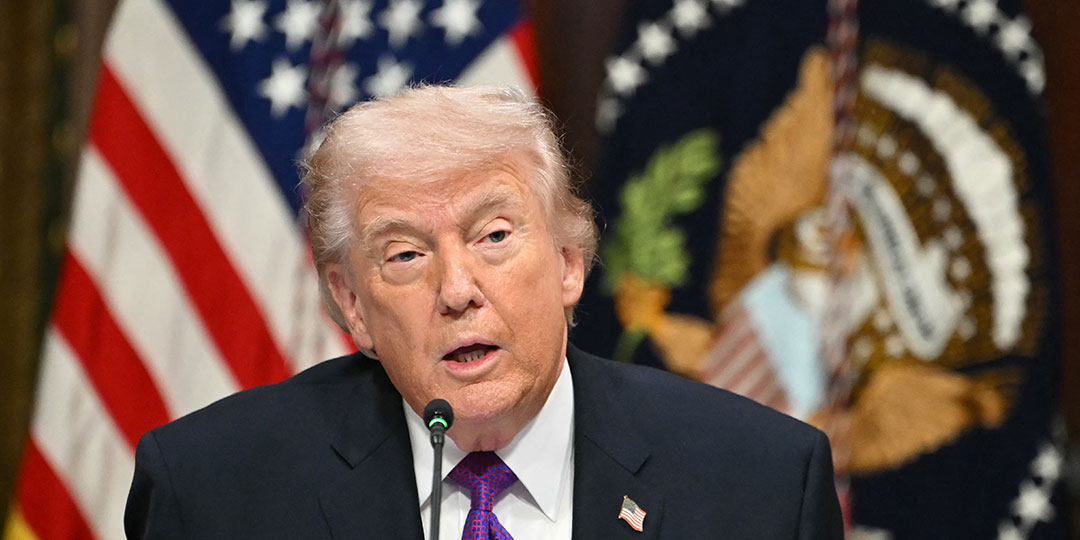

US President Donald Trump declared Friday that Iran’s unconditional surrender is the sole condition for ending the war launched by Washington and Israel one week ago. The statement came as conflict spreads across the Middle East, from Tehran to Beirut to Iraq and the Gulf, with unprecedented military escalation on multiple fronts.
Trump promised US assistance in rebuilding Iran’s economy if Tehran accepts his terms and chooses “new, acceptable leadership.” However, his comments came just hours after Iranian President Masoud Pezeshkian indicated that unnamed countries had launched mediation efforts, revealing the vast diplomatic gulf between the two sides.
Meanwhile, Secretary of Defense Pete Hegseth threatened to intensify American strikes on Iran, while Israeli forces continued bombardments of Tehran and southern Beirut.
Trump Rules Out Negotiations
Trump stated on his Truth Social platform: “There will be no deal with Iran except unconditional surrender.” He added his intention to “make Iran great again,” explaining that after new, acceptable leaders take power, the United States and its allies would work to rescue Iran “from the brink of collapse” and strengthen its economy.
Trump had told Reuters on Thursday that he wants to participate in selecting Iran’s next leader, rejecting the possibility of Majid Khamenei (son of Supreme Leader Ali Khamenei) assuming power.
Military Escalation Reaches New Heights
Intense Bombardment of Iran and Lebanon
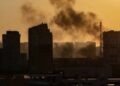
Tehran experienced one of the heaviest waves of airstrikes since the war began on Friday. Multiple Iranian media outlets and France Press correspondents on the ground reported a series of violent explosions across different districts of the capital, particularly in the east and west.
Israeli warplanes have significantly expanded their targeting scope. Defense Secretary Pete Hegseth threatened further escalation of American strikes on Iran, while Israeli forces continued bombing Tehran and southern Beirut (Hezbollah stronghold).
In Lebanon, southern suburbs witnessed panic and mass evacuation following an Israeli evacuation order. Tens of thousands fled amid scenes of complete destruction, burned vehicles, and rising smoke columns.
Iran’s Armed Response
The Iranian Revolutionary Guards announced Friday a “compound attack using missiles, drones, and Khaibar missiles” targeting locations in Tel Aviv. They also claimed to have struck American radar systems in the United Arab Emirates, Jordan, and Qatar.
The Iranian military stated it targeted an American oil tanker in the Gulf, claiming it was set ablaze. Saudi Arabia and Qatar announced interception of missiles and drones targeting their airbases Friday morning. Bahrain reported Iranian strikes on “two hotels and a residential building” in Manama without casualties. Qatar also confirmed its naval forces were in buildings struck by Tehran in Bahrain, with no reported injuries.
Humanitarian Crisis Deepens
Rising Casualty Figures and Displacement
The United Nations declared the Middle East conflict a “major humanitarian crisis” Friday. Iran’s official IRNA news agency reported 1,230 deaths in Iran since the war began. The Iranian government stated that 30% of the casualties were children.
Lebanon’s Health Ministry reported at least 217 deaths since fighting between Hezbollah and Israel began. Gulf countries reported 13 deaths, including seven civilians (among them an 11-year-old girl in Kuwait). Israel reported at least 10 deaths. France Press could not independently verify these figures.
Warnings of Human Catastrophe
Lebanese Prime Minister Nayaf Salam warned Friday of an “imminent humanitarian catastrophe” following mass displacement. Hezbollah called for Israeli residents to evacuate areas within 5 kilometers of the Lebanese border.
A Tehran businessman told France Press that many have fled the capital since the war’s start, saying “it’s really scary.” He added that “checkpoints have been established in the city to prevent looting and ensure control.”
Diplomatic Stalemate Deepens
Iran categorically rejected negotiations and ceasefire. Iranian Foreign Minister Abbas Araghchi told NBC News that Tehran “does not seek a ceasefire or negotiations with the United States.”
Yemeni Houthi leader Abdul Malik al-Houthi stated that “our fingers are on the trigger regarding military escalation at any moment developments require it.”
Limited Diplomatic Efforts:
French President Emmanuel Macron is discussing a “plan” with concerned parties to prevent Lebanon’s full-scale war
Iranian President Pezeshkian alluded to unnamed mediation efforts
No substantive talks between Washington and Tehran are occurring
Economic and Energy Impacts
Oil prices surged Friday after Iraq’s Kurdish authorities announced suspension of oil production following previous attacks. An Iraqi security official disclosed that drones targeted an airport and two oil facilities in southern Iraq Friday.
This geographic expansion of the conflict illustrates how deeply entangled the Middle East has become, with Iraq increasingly drawn into the US-Iran proxy conflict.
Scale of Israeli Destruction
Israel announced Thursday it has destroyed over 60% of Iran’s ballistic missile launch sites and 80% of its air defense systems through 2,500 airstrikes using more than 6,000 munitions. The military claimed to have achieved “near-complete air superiority over Iranian airspace.”
Conclusion:
The war launched by the United States and Israel with the assassination of Supreme Leader Ali Khamenei enters its seventh day, igniting conflict across the Middle East. While Trump insists on non-negotiable terms, Iran refuses dialogue, widening the diplomatic divide. The humanitarian crisis deepens daily as military operations continue and the conflict expands geographically and economically, with no clear end in sight.