


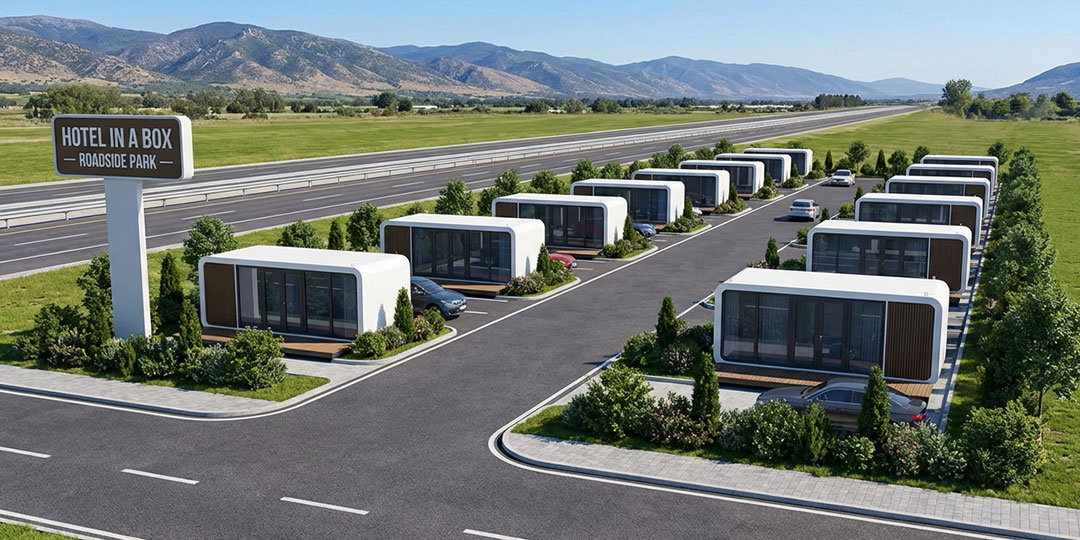
In Brazil, a new accommodation model is addressing a common problem faced by long-distance travelers and truck drivers: the need for a safe, affordable place to rest without committing to a full hotel stay. Tiny roadside cabin hotels offer compact, self-contained rooms located directly along highways and inter-city routes.
One example is Hotel in Box, a Brazilian concept that installs small private cabins near major roads. Each unit typically includes a bed, air conditioning, Wi‑Fi, and basic bathroom amenities. The focus is not luxury, but functionality and rest. Travelers can stop, sleep for a few hours, and continue their journey.
Why the Concept Works
Driver fatigue is widely recognized as a major contributor to road accidents. By providing easy access to short-stay accommodation directly on highways, tiny cabin hotels encourage drivers to rest instead of pushing through exhaustion.
The cabins are simple and compact, which allows them to be deployed on relatively small plots of land. This flexibility makes the model suitable for international highways, inter-city roads, and logistics corridors where traditional hotels may not be viable.
Cost is another factor. Many travelers are reluctant to pay for a full hotel room when they only need a few hours of sleep. Short-stay roadside cabins meet this need by offering a more affordable and time-efficient alternative.
Operational and Cultural Considerations
In some regions, particularly in parts of the Middle East, cultural and regulatory considerations may require adjustments to the model. Unsupervised access could raise concerns, making a staffed reception or controlled check-in process necessary.
One possible setup is a gated roadside facility where drivers enter through a check-in point, submit identification for verification, and are then assigned a cabin. Identification can be returned upon check-out. This approach balances convenience with accountability and aligns better with local expectations around security and oversight.
Design and Deployment
The cabins themselves can be prefabricated and sourced from manufacturers offering modular or expandable units. Similar compact cabin designs are already available through international suppliers, making local assembly and customization feasible.
Once installed, the model can scale by adding more units as demand grows, without requiring major changes to the site layout.
Conclusion and Sources for Getting Started
Tiny roadside cabin hotels show how a focused, problem-solving approach can create a new category of travel accommodation. By prioritizing rest, safety, and convenience, the concept addresses a real need for drivers and long-distance travelers.
For readers interested in exploring this idea further or assessing how it could be adapted locally, the following sources provide direct insight into existing implementations and equipment options:
Hotel in Box official website, Brazil
https://hotelinbox.com.br/
Hotel in Box Instagram account, showing real-world installations
https://www.instagram.com/hotelinbox/?hl=en
Example of prefabricated compact cabin units from Alibaba
https://www.alibaba.com/product-detail/Factory-Apple-Cabin-Home-Office-Expandable_1601588216128.html
Tiny Roadside Cabin Hotels: A Practical Rest Solution for Long-Distance Travelers


Latest News






Covering the top local and global news from trusted sources across a wide range of topics — with accuracy and balance.
Follow us daily and stay informed with daily updates.