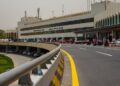
Qatar’s interior ministry announced Saturday that it was evacuating “several key areas” in the capital Doha as Iran continued its retaliatory air campaign against Gulf Cooperation Council states. The evacuation came as authorities reported intercepting two missiles targeting Qatar, with residents in the downtown Musheireb district receiving emergency alerts directing them to seek shelter. Simultaneously, NATO forces shot down a third ballistic missile fired from Iran into Turkish airspace near the critical Incirlik Air Base, prompting Turkish President Recep Tayyip Erdogan to declare keeping Turkey out of the Middle East war his “top priority.”
The coordinated Iranian air assault across the Gulf and into NATO territory demonstrates the expanding geographic scope of the conflict and the vulnerability of regional infrastructure and civilian populations to sustained missile and drone attacks. The third Iranian missile intercept over Turkey within two weeks indicates either persistent Iranian operational capability despite reported destruction of air defense systems, or deliberate Iranian strategy to test NATO response and Turkish resolve.
Qatar Evacuates Downtown Doha; Residents Seek Shelter
Qatar’s interior ministry stated it was “evacuating several key areas as a temporary precautionary measure, within the framework of ensuring public safety until the danger has passed.” The announcement came as blasts were heard in downtown Doha and AFP journalists witnessed interceptor fire downing two projectiles over the capital’s central district.
Residents in Doha’s Musheireb central district received phone alerts instructing them to “evacuate the area immediately… to the nearest safest place as a temporary precaution.” Scores of residents and hotel guests rushed into underground car parks for shelter as law enforcement cordoned off sections of Musheireb, which hosts corporate offices for US technology giants Google and American Express, along with Qatari government offices.
The al-Gharafa area west of Doha, near the US embassy, also issued evacuation messages to residents. Qatar authorities had previously vacated buildings around the American diplomatic mission on March 5 following Iranian attacks targeting US embassies across the region.
Strategic Importance of Targeted Areas
The choice of Musheireb district for evacuation suggests Iranian targeting of US corporate and government assets concentrated in central Doha. The area’s proximity to major international business operations and symbolic value as the capital’s commercial heart indicates Iranian strategy to inflict economic and psychological impact beyond military targets.
In Lusail, north of Doha, police stationed themselves at entrances to Microsoft’s Qatar headquarters, reflecting security concerns regarding technology sector facilities. Iran’s military stated on Wednesday it would launch strikes against US and Israeli economic interests in the region, including banks, with Iranian media identifying technology companies as possible “future targets.”
Qatar Intercepts Missiles; Coordinated Air Defense Response
Qatar’s defense ministry reported in separate statements Saturday that its military had “intercepted” a missile attack targeting the country. AFP journalists witnessed interceptor fire downing two projectiles over downtown Doha’s airspace, with audible blasts confirming successful interceptions.
The successful interceptions demonstrate Qatar’s air defense capability, though the requirement to evacuate civilian areas indicates the missiles reached proximity to populated zones before destruction. The dual interceptions occurred as Iran continued pressing what Iranian military officials describe as retaliatory strikes against US and allied Gulf state targets following US-Israeli bombing of Iranian facilities.
NATO Intercepts Third Iranian Ballistic Missile Over Turkey
NATO shot down a third ballistic missile fired from Iran into Turkish airspace on Friday, prompting Erdogan to declare Turkey’s top priority was avoiding entanglement in the Middle East war. The missile, which activated sirens at Incirlik Air Base near the southern city of Adana where US troops are stationed, “was neutralised by NATO air and missile defence assets,” according to Turkey’s defense ministry.
The interception marked the third Iranian ballistic missile downed over Turkish airspace within two weeks. NATO intercepted the first missile on March 4, a second on Monday, and now a third on Friday. Adana residents were awakened by sirens at 3:25 am local time, with residents posting footage of a fast-moving object in the sky caught fire, according to business news website Ekonomim.
Analysis of Repeated Iranian Missile Launches Into Turkish Airspace
Expert analysis suggests the pattern of repeated Iranian missiles toward Turkey represents either operational persistence despite losses, or deliberate testing of NATO response and Turkish political will. Sinan Ulgen, senior fellow at Carnegie Europe, told AFP: “The first one you can explain it away, the second one possibly, but the third? No. This cannot be accidental.”
Iran’s embassy in Ankara immediately denied involvement, claiming “no projectile” had been fired toward Turkey, though experts assessed such claims as unlikely given NATO confirmation and resident evidence.
Incirlik Air Base Strategic Significance
Incirlik Air Base holds critical NATO and US importance, serving as a facility for US troops for decades and hosting military personnel from Spain and Poland. Experts assess the base also houses 50-60 US-owned tactical nuclear weapons. The facility sits near critical US military installations including the Kurecik base in Malatya, where US troops man an early-warning radar system NATO describes as a “key element” of its missile shield capable of detecting Iranian missile launches.
Although Turkey categorically denies radar data has been used to assist Israel, the presence of such systems has provoked Iranian concern. Turkey deployed a Patriot missile defense system to Malatya following the second Iranian missile interception, as NATO announced strengthening its ballistic missile defense posture.
Turkish Strategic Position: Balancing Neutrality and Deterrence
Turkish President Erdogan declared that keeping Turkey out of the Middle East war was the nation’s “top priority,” vowing to act “very cautiously against plots, traps and provocations that seek to drag our country into war.” Erdogan pledged an “appropriate and measured” response while seeking to “maintain common sense” amid “complex events around us.”
Expert analysis suggests Turkey faces a genuine strategic dilemma: Iran’s repeated missile launches into Turkish airspace require demonstrable deterrent response to prevent further escalation, but Turkey seeks to avoid entanglement in the broader conflict. Ulgen noted: “Turkey’s political and military culture is different from Gulf countries. It’s a matter of demonstrating deterrence to Iran, so that things don’t escalate further.”
The US response to the third missile interception involved closing its consulate in Adana and urging all American citizens to depart southeastern Turkey, raising questions about US confidence in Turkish security posture and Turkish-American coordination.
Turkey Issues Travel Warnings for Iraq
Turkey advised its citizens Friday to avoid non-essential travel to Iraq, with the Turkish embassy in Baghdad issuing guidance to avoid crowded areas, the Green Zone, Baghdad and Erbil international airports, residential areas in and around Mosul, areas adjacent to Basra, and critical infrastructure including military zones and oil fields.
The warning reflects concerns about Iran-backed group attacks targeting US assets in Iraq, and Iranian strikes on positions of Iranian Kurdish groups exiled in Iraqi territory. However, the Turkish embassy noted that road connections between Turkey and Iraq remain open to traffic, suggesting some economic and humanitarian considerations tempering security restrictions.
Regional Pattern: Evacuation and Defensive Measures Cascading
The coordinated pattern of evacuation orders in Qatar, missile interceptions across the Gulf, NATO defensive measures over Turkey, and travel warnings to Iraq demonstrates how Iran’s sustained air campaign is forcing defensive mobilization across the region. The requirement to evacuate populated areas indicates that even successful air defense interceptions leave civilian populations vulnerable to debris and near-misses.
The psychological impact of repeated evacuation alerts, missile interceptions, and military mobilization extends beyond immediate security concerns to broader economic and social disruption across the region.
Conclusion:
Qatar’s evacuation of downtown Doha and NATO’s interception of a third Iranian ballistic missile over Turkey demonstrate how Iran’s retaliatory air campaign continues to expand geographically and test defensive capabilities across the region. With multiple Gulf states implementing evacuation procedures and NATO engaged in active missile defense over Turkish airspace, the conflict has evolved into a sustained test of regional air defense systems and political resolve. Turkish efforts to balance deterrence against provocation while maintaining strategic distance from the broader conflict represent a critical geopolitical tension, as Iran’s repeated ballistic missile launches into NATO airspace force Turkey toward increasingly visible military response despite official preference for neutrality.