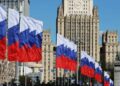
Russian President Vladimir Putin confirmed Monday that Russia stands ready to supply European nations with oil and gas if requested on basis of “permanent and regular cooperation” with Moscow. The Russian offer came amid sharp increase in energy prices caused by U.S.-Israeli war against Iran, which began February 28. Simultaneously, Hungarian Prime Minister Viktor Orban called directly for European Union to suspend sanctions on Russian oil and gas given rising prices triggered by Middle East conflict.
Oil prices surpassed $100 per barrel for first time since Russia’s invasion of Ukraine in 2022. The price spike presented potential geopolitical opportunity for Moscow to break economic isolation while placing European Union under unprecedented energy pressure. Group of Seven finance ministers, meanwhile, announced readiness to deploy strategic petroleum reserves if necessary, though without final commitment.
Putin’s Energy Offer and Conditions
Russia’s Conditional Readiness
Putin stated during a government meeting devoted to market conditions that Moscow stands ready to supply “reliable Asian partners” with oil, as well as Hungary and Slovakia, both European Union members.
Putin continued “if European companies and European buyers suddenly decide to open toward us again and offer long-term and sustainable cooperation, without political pressure, then please do so. We have never refused this.”
This offer reflects Russian calculation that Middle East energy crisis creates opportunity to rebuild economic ties severed by Western sanctions following 2022 invasion.
Requirements for European Engagement
Added Putin “we are ready to work with Europeans, but we need them to give us signals that they are ready and willing” to cooperate with Russia.
This conditional approach indicates Russia seeks concrete steps from European side toward economic normalization.
Context of European Oil Embargo
European Union banned imports of Russian crude oil by sea in 2022 following invasion of Ukraine. Russian exports via pipeline to Hungary and Slovakia effectively halted January following damage to Druzhba pipeline crossing Ukraine.
This comprehensive embargo reflected broader EU sanctions architecture in response to Russian military aggression.
Orban’s Pressure Campaign Against Sanctions
Direct Call to Suspend Sanctions
Hungarian Prime Minister Viktor Orban directly urged European Union to suspend sanctions on Russian oil and gas given price increases triggered by Middle East war.
Orban stated in video recording on Facebook “there is need to reconsider and suspend sanctions imposed on Russian energy sources throughout Europe. I have today sent letter to European Commission President Ursula von der Leyen.”
This position reflects Orban’s effort to exploit economic crisis created by regional conflict to advance his political objectives.
Orban’s Consistent Opposition to Sanctions
Orban, who maintains close relations with Putin, has repeatedly criticized EU sanctions against Russia, regularly using veto power to secure exemptions for Hungary.
This consistent behavior reflects Hungary’s strategic divergence from broader EU position on Russia under Orban’s nationalist government.
Hungary-Ukraine Dispute Over Energy
Orban pointed to escalating tensions between Hungary and Ukraine regarding Russian oil supplies through Druzhba pipeline crossing Ukrainian territory as “serious threat” to European Union.
Hungary and Slovakia accuse Ukraine of deliberately delaying pipeline reopening, which Kyiv claims was damaged by Russian strikes late January.
Orban’s Leverage and Political Strategy
Blocking EU Support for Ukraine
Budapest blocks €90 billion loan from European Union to Ukraine and adoption of new sanctions against Moscow unless Kyiv resumes Russian oil supplies.
This political leverage reflects Orban’s use of EU decision-making requirements for unanimous consent as pressure tool.
Recent Diplomatic Crisis
Tensions between Hungary and Ukraine escalated last week following Budapest’s detention of seven employees at Ukrainian state bank monitoring transfer of $40 million, €35 million, and 9 kilograms of gold from Austria.
Hungary released employees Friday, but incident reflects high levels of tension between neighboring countries.
Both Nations Resist Breaking Russian Energy Ties
Both Hungary and Slovakia, led by nationalist governments, do not intend to sever trade relations with Russia in energy sector.
This position reflects divergence between individual European nation policies and unified EU position on Russia.
Oil Price Crisis and Market Conditions
Historic Price Surge
Oil prices surpassed $100 per barrel for first time since Russian invasion of Ukraine in 2022. This surge followed commencement of U.S.-Israeli war against Iran February 28.
Oil prices rose 30 percent Monday alone amid concerns regarding continuation of U.S.-Israeli war with no clear horizon for ceasefire.
Iran’s Role in Energy Crisis
Iran continues attacks on oil installations in Gulf states while Revolutionary Guards impede transit through Strait of Hormuz in response to U.S.-Israeli war.
This disruption to one-fifth of world crude oil supplies represents primary cause of current energy crisis.
G7 Position on Strategic Reserves
Readiness Without Final Commitment
France announced Monday that Group of Seven finance ministers stand “ready” to use strategic petroleum reserves if necessary to restrain sharp oil price increases from Middle East war. However, they have not yet made final decision to implement this option.
French Finance Minister Roland Lesterre told media following video conference with counterparts “we will monitor closely, we are ready to take all necessary measures, including use of strategic oil reserves to achieve market stability. But we have not reached that stage yet.”
Requirement for Coordinated Action
Lesterre clarified from Brussels, where he participated in Eurogroup meeting, that any such measure, if deemed necessary, can be effective only if implemented in “coordinated” manner among Group members.
This requirement reflects understanding that individual national actions would prove insufficient.
Energy Ministers’ Meeting
French President Emmanuel Macron announced Tuesday meeting of energy ministers alongside nuclear summit Paris will host with participation of approximately sixty nations.
Macron stated “I have expressed desire that we be able to conduct close coordination at level of Group of Seven to optimally manage energy issues.”
Role of International Energy Agency
Reports indicated Group of Seven finance ministers would discuss joint use of strategic petroleum reserves with coordination from International Energy Agency.
Advanced economies maintain substantial emergency oil reserves, though deployment represents exceptional step with significant political and economic implications.
Broader Geopolitical Context
Russia Exploiting Crisis
Putin’s energy offer reflects Russian attempt to exploit current energy crisis to improve geopolitical and economic position. Moscow seeks to rebuild connection with Europe after years of sanctions.
European Divisions on Russia
Orban’s position reflects reality that European unity on Russia sanctions has weakened under pressure of economic crisis. This may encourage other nations to reconsider positions.
Global Economic Impacts of War
Current energy crisis demonstrates how regional Middle East conflict carries direct global economic consequences. Energy-dependent nations face mounting economic pressures.
Limited European Options
Constrained Short-Term Choices
Europe faces limited short-term options: deploy strategic reserves, pressure Middle East partners to reduce conflict, or reconsider Russian sanctions.
Political Risks of Each Option
Any European response carries political risks: using reserves may appear as weakness, pressuring Middle East may prove ineffective, reconsidering sanctions may fracture EU unity.
Long-Term Energy Independence
Current crisis reveals European vulnerability in energy independence and dependence on external oil and gas sources.
Macron’s Coordination Push
G7 Energy Coordination Efforts
Macron emphasized from Cyprus military base that France desires “close coordination at level of Group of Seven to optimally manage energy issues.”
This emphasis reflects recognition that coordinated response proves more effective than fragmented national actions.
Nuclear Energy Alternative
Paris nuclear summit hosting approximately sixty nations reflects broader effort to diversify energy sources beyond fossil fuels amid current crisis.
Conclusion:
Current energy crisis reflects complex intersection of regional Middle East war and internal European dynamics. Putin exploits crisis to rebuild Russian integration into European economy, while Orban pressures EU to reconsider Moscow sanctions policy. Crisis indicates Europe faces difficult choices between mounting economic pressure and commitment to political and security principles. This crisis may prove turning point in European-Russian relations, depending on European nations’ choices in coming weeks and months. The willingness of G7 to discuss strategic reserves reflects seriousness of situation, yet without final commitment, leaving markets uncertain and vulnerable to further volatility.