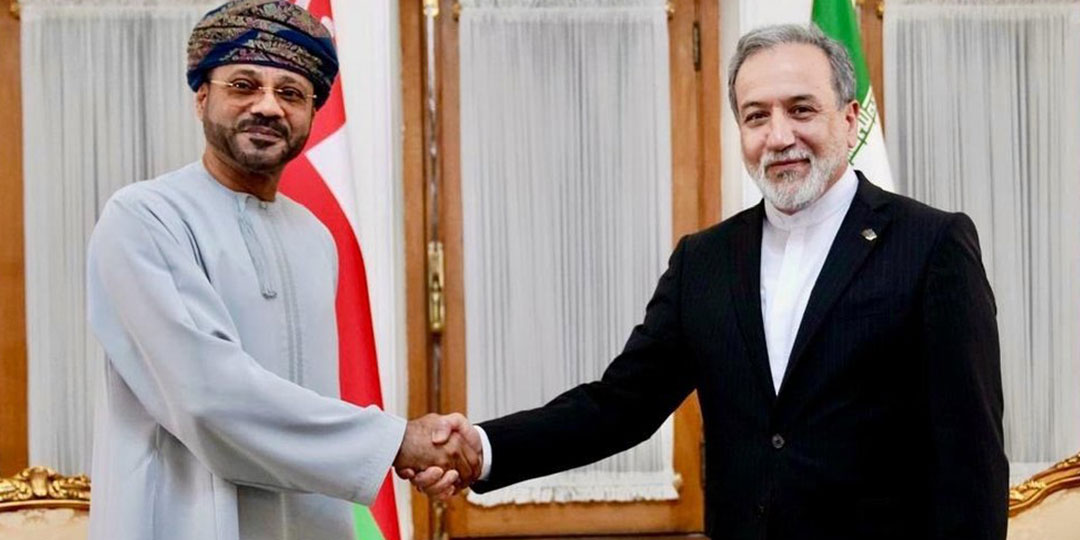

Omani Foreign Minister Badr bin Hamad Al Busaidi said talks with Iranian Foreign Minister Abbas Araghchi were constructive, expressing hope that a temporary corridor in the Strait of Hormuz could be announced soon, along with practical arrangements to restore safe navigation. The remarks come as Muscat and Tehran continue consultations on managing maritime traffic in one of the region’s most critical sea lanes after the recent war and its consequences.
Al Busaidi said the discussions also covered the future management of the strait, adding that a lasting solution would be pursued in due course, in line with Article 5 of the Islamabad Memorandum. He said the planned interim arrangement would aim to help shipping resume safely while broader technical and political talks continue.
Constructive Talks Between Muscat and Tehran
Al Busaidi Signals an Imminent Announcement
Al Busaidi said he had held constructive discussions with Araghchi and hoped a temporary passage through the Strait of Hormuz would be announced soon. He said the arrangement would be accompanied by practical steps to restore safe navigation, while respecting the sovereignty and sovereign rights of the countries concerned.
He also said further discussions would be held with regional partners in support of peace, cooperation, stability, and freedom of navigation. The comments reflect Oman’s effort to shape a practical framework that protects the interests of Gulf states and prevents renewed tensions in the strategic waterway.
Interim Management and a Future Permanent Solution
According to the Omani foreign minister, the management of the Strait of Hormuz will not be resolved all at once. Instead, it will be addressed later through a permanent solution reached at the appropriate time. The temporary corridor, he indicated, would serve as a transitional step to reduce tensions and keep shipping moving until more detailed arrangements are in place.
The issue is especially significant because the Strait of Hormuz is one of the world’s most important oil shipping routes, making any agreement on its status relevant far beyond the immediate parties.
Joint Omani-Iranian Proposal for a Temporary Maritime Corridor
Statement on Safe Navigation
The Omani News Agency said Al Busaidi visited Iran on a working trip and held constructive consultations with Araghchi. The talks focused on the importance of restoring safe navigation through the Strait of Hormuz in a way that preserves the sovereignty and sovereign rights of both countries.
The agency said the two ministers discussed a phased framework that could provide a practical and workable basis in light of the current situation in the strait after the recent war and its tragic fallout. The proposed framework includes the creation of a joint temporary shipping corridor through the Strait of Hormuz, as well as agreement on a joint project to clear mines from the strait.
Technical Talks Toward a Lasting Arrangement
The agency said technical negotiations between the two sides will continue in order to reach an agreement on a permanent maritime corridor and future arrangements for managing the strait. These arrangements would include a mechanism for information sharing, traffic management, and the provision of related navigational and security services.
The two sides also stressed the importance of holding joint discussions with countries in the Gulf region bordering its waters, indicating that any final arrangement would not be purely bilateral but would also consider the wider regional context and the interests of all coastal states.
International Law and Maritime Sovereignty
Respect for Sovereign Rights
Oman and Iran said it is essential to comply with international law and respect the sovereign rights of coastal states. The emphasis comes as part of an effort to balance maritime security requirements with the right of Gulf states to protect their territorial waters and sovereign channels.
The Omani-Iranian proposal appears to aim for a gradual approach, starting with a temporary corridor and moving later toward permanent arrangements. This would help reduce security risks and restore confidence in maritime traffic.
Regional Significance Beyond the Immediate Parties
The importance of the development goes beyond Oman and Iran. It extends to Gulf states in general and to global markets that depend on stable shipping through the Strait of Hormuz. Any agreement on the strait could therefore become an important step in regional maritime security and may open the door to broader coordination among regional states to ensure trade flows smoothly and supply lines remain protected.
Conclusion:
Muscat and Tehran are moving toward an interim formula for the Strait of Hormuz through a proposal for a temporary corridor and practical arrangements to restore safe navigation. While Oman says talks with Iran have been constructive, the official remarks and statements suggest the two sides are laying the groundwork for a later permanent solution, with respect for international law, sovereignty, and broader regional dialogue.