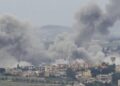


An Israeli was killed Sunday, March 22, by rocket fire from Lebanon, representing the first Israeli fatality directly caused by Lebanese bombardment since the confrontation between Hezbollah and Israel began on March 2, 2026. The incident marked a significant escalation as the Israeli military announced launching “extensive waves of airstrikes” targeting Hezbollah infrastructure in southern Lebanon.
Hezbollah claimed responsibility for targeting “an assembly of Israeli army soldiers” near Miskav Aame with “rocket salvoes,” introducing a new dimension to the three-week conflict that has already killed over one thousand people and displaced more than one million civilians. Simultaneously, Israeli Defence Minister Yisrael Katz threatened to destroy all bridges spanning the Litani River and accelerate demolition of Lebanese border homes, justifying the action as preventing transfer of “terrorist elements” and weapons.
The incident comes at a critical juncture in the conflict, potentially signaling the beginning of a more destructive phase if the trajectory of threats and escalation continues unchecked in coming days. Both sides appear to be crossing thresholds previously observed in earlier confrontations.
The First Israeli Casualty: Hezbollah’s New Lethal Capability
Details of the Attack and Victim
Israeli rescue organizations confirmed that an individual was killed “after a rocket strike on his vehicle fired from Lebanon.” Israeli firefighters reported that “flames shot up from two vehicles that suffered direct hits.”
Paramedics from Magen David Adom (Israel’s emergency medical service) stated: “We observed two burning vehicles upon arrival at the scene. The driver of one vehicle was found deceased.”
This incident represents a watershed moment: it constitutes the first Israeli fatality directly caused by a rocket launched from Lebanese territory since March 2, when Hezbollah initiated the confrontation by attacking Israel in retaliation for the assassination of Iran’s Supreme Leader Ayatollah Ali Khamenei in US-Israeli airstrikes.
Strategic Significance and Implications
Why does this incident carry such strategic importance?
First: Demonstrated Capability: Hezbollah has proven it can inflict direct casualties on Israel, not merely launch interceptable rockets aimed at general areas.
Second: Inevitable Israeli Escalation: An Israeli death will provoke a major Israeli military response. The conflict dynamics have fundamentally shifted.
Third: Breaking Psychological Barriers: If this represents the first Israeli death from Lebanese rockets, it shatters a psychological “ceiling” that may trigger cascading escalations.
Israeli Casualty Count
According to the Israeli military, two Israeli soldiers died on the Lebanese border previously during the preceding weeks. This third casualty raises the Israeli death toll from the Hezbollah conflict.
Hezbollah Expands Operations: From Ground Combat to Precision Strikes
Targeting Israeli Military Concentrations
Hezbollah announced targeting “an assembly of Israeli army soldiers” near Miskav Aame with “rocket salvoes.” This announcement indicates:
Evolved Munitions: Use of more precise and effective rocket systems
Intelligence Capability: Precise knowledge of Israeli troop positions and movements
Offensive Strategy: Systematic attempts for direct hits rather than area bombardment
Consecutive Attacks on Maalot-Tarshiha
Saturday, Hezbollah announced rocket attacks on Israeli military positions in Maalot-Tarshiha. Israeli public radio reported three people injured.
This reflects an emerging pattern:
Target Diversification: Hezbollah does not concentrate on single locations but strikes multiple positions
Operational Continuity: Attacks on consecutive days indicating sustained campaign
Ground Combat in Khiyam and Naqoura
Hezbollah announced Saturday that it is conducting “direct clashes” with Israeli forces in the border towns of Khiyam and Naqoura “using light and medium weapons and rocket projectiles.”
This announcement signifies:
Close Combat: Operations beyond airstrikes and missile launches, involving ground warfare
Defensive Strategy: Attempts to prevent Israeli penetration into southern Lebanon
Casualty Risk: Soldiers from both sides likely being killed
Multi-Front Attacks
Hezbollah reported attacks on Israeli forces in multiple villages:
Aitrun
Markabia
Aita al-Sha’ab
Adaisseh
Maroun al-Ras
Taybeh
This geographic spread indicates broad-scale strategy rather than operations confined to small areas.
Israeli Response: Threats to Destroy Litani Bridges and Border Villages
Defence Minister’s Threats
Israeli Defence Minister Yisrael Katz stated Sunday: “I ordered, alongside Prime Minister Benjamin Netanyahu, the military to immediately destroy all bridges spanning the Litani River used for terrorist activities, to prevent Hezbollah terrorists and their weapons from moving southward.”
The Litani River lies approximately 30 kilometers north of the Israeli border. This means Israel intends striking targets deep within Lebanese territory, not merely border areas.
Wednesday’s Precedent: Two Bridges Destroyed
Wednesday, Israel struck two bridges crossing the Litani River, accusing Hezbollah of using them “to transport military equipment.” Now Israel threatens destroying “all” bridges, not merely two.
Secondary Threat: Accelerated Home Demolitions
Defence Minister Katz added that the military received “instructions to accelerate destruction of Lebanese homes in villages bordering (Israel) to eliminate threats to Israeli towns.”
This means:
Expanded Targeting: From infrastructure to residential structures
Forced Displacement: Compelling civilians to abandon homes
Scorched Earth Policy: Systematic destruction of entire regions
Warning of Qasimiya Bridge Strike
An Israeli military spokesperson posted a warning on platform “X” announcing intention to strike “Qasimiya Bridge, the coastal highway bridge,” claiming “Hezbollah activity and transfer of terrorist elements to southern Lebanon with civilian population support.”
Naming the bridge specifically and issuing advance warning reflects:
Warning Tactic: Israel announces strikes before execution
Psychological Impact: Creating atmosphere of fear and instability
Waves of Israeli Airstrikes and Forced Evacuations
“Extensive Waves of Airstrikes”
The Israeli military stated: “We have just commenced extensive waves of airstrikes targeting terrorist Hezbollah infrastructure in southern Lebanon.”
This announcement signifies:
Programmatic Escalation: Not random attacks but coordinated campaign
Infrastructure Targeting: Roads, bridges, hospitals, schools
Strike Geographic Scope
Israeli airstrikes continued against multiple towns:
Khiyam
Naqoura
Bekaa Valley region in eastern territory
The Israeli military issued repeated evacuation warnings to residents across broad southern Lebanese areas, directing populations to relocate north of the Zahrani River, approximately 40 kilometers from the Lebanese-Israeli border.
Humanitarian Consequences
These evacuation orders mean:
Forced Displacement: Hundreds of thousands potentially compelled to abandon homes
Service Collapse: Overcrowding in receiving areas
Humanitarian Crisis: Insufficient housing and medical services
WHO Dispatches Medical Supplies: First Road Convoy from Dubai
First Ground Convoy
World Health Organization Director-General Tedros Adhanom Ghebreyesus announced Saturday that the organization dispatched to Beirut “the first ground convoy” of medical supplies, “departing from the organization’s global emergency logistics hub in Dubai.”
This signifies:
New Development: No ground convoys from Dubai had previously been attempted
New Logistics Route: Development of new supply route through multiple countries
Humanitarian Preparedness: Anticipating escalating humanitarian crisis
Supply Quantity and Nature
The World Health Organization dispatched 22 metric tons of:
“Life-saving medications”
“Injury treatment supplies”
“Emergency materials”
These quantities will enable:
Care for 50,000 patients
Performance of 40,000 surgical procedures
Current Healthcare Crisis
Lebanon’s healthcare sector labors under severe strain from:
Escalating Needs: War-related injuries
Massive Displacement: One million internally displaced persons
Medication Shortages: Road closures prevent supply arrival
Fuel Deficit: Power stations non-operational
Healthcare Facility Attacks: 63 incidents since conflict began
Healthcare Facility Attack Statistics
Since March 2, the World Health Organization has documented:
63 attacks on healthcare facilities
51 deaths
91 injuries
The WHO is investigating these attacks but “assigns blame to no party” as it lacks formal investigation authority.
Arrival Timeline and Expectations
The convoy is expected to reach Beirut “within one week.”
This timeline means:
Urgent Gap: Until supplies arrive, healthcare systems face critical shortages
Pressing Need: Hospitals may experience severe medication and supply deficits
Broader Context: Three Weeks of Escalating Conflict
Casualty Toll and Displacement Scale
In three weeks of intensive conflict:
1,000+ deaths documented
1 million+ displaced persons internally
118 children confirmed dead (minimum)
370 children wounded
40 healthcare workers killed
119 healthcare workers wounded
These figures reflect conflict intensity unprecedented in recent decades.
Infrastructure Destruction Pattern
Israeli strikes have systematically targeted:
Major highways and bridges
Power generation facilities
Water treatment plants
Hospitals and medical centers
Schools and public institutions
This pattern suggests long-term strategy designed to incapacitate Lebanese infrastructure systematically.
Strategic Implications
The escalation from the first Israeli death carries implications:
War Duration: Signals potential for prolonged conflict
Geographic Expansion: Threat to destroy Litani bridges indicates deeper penetration into Lebanese territory
Civilian Impact: Forced evacuation of hundreds of thousands
Regional Destabilization: Potential for wider conflict involving other regional actors
Conclusion:
Sunday, March 22, 2026, represents a watershed in the Israel-Hezbollah confrontation. The first Israeli death from Lebanese rocket fire signals entry into a new and more dangerous phase of conflict.
Israel’s response through threats to destroy bridges and accelerate home demolitions indicates not merely anger but a strategic shift toward broader destruction of southern Lebanese infrastructure. These threats, if implemented, could render large portions of southern Lebanon uninhabitable for years.
Meanwhile, the World Health Organization dispatches 22 metric tons of medical supplies. But this quantity cannot adequately address the needs of one million displaced persons and thousands of war wounded.
The trajectory is clear: escalating casualties, expanding threats, forced displacement, and growing humanitarian crisis.
Whether this represents the beginning of wider conflagration or the prelude to conflict collapse remains uncertain. What is clear is that both sides have crossed thresholds suggesting further escalation in coming days.
The humanitarian cost of this escalation will fall primarily on civilian populations—Lebanese displaced from their homes, Israeli communities under rocket threat, and medical systems struggling to provide basic care amid systematic destruction.