
Israel announced Wednesday, March 18, 2026, that it killed Iranian Intelligence Minister Ismail Khatib, threatening further assassinations of high-ranking Iranian officials on the nineteenth day of the war it launched with the United States against the Islamic Republic. The Israeli announcement came as Iran held funeral services for Ali Larijani, the National Security Council Secretary who had been one of the most prominent figures in Iranian governance.
Iran responded with volleys of missiles toward Israel and the Gulf states while Israel and the United States continued bombing the Islamic Republic. Iran reported Wednesday that a major gas facility in the Gulf sustained American-Israeli strikes, with firefighting crews working to contain fires erupting in “sections of gas facilities in the South Pars region.”
Israeli Defense Minister Announces Escalation and Blanket Authorization
Israeli Defence Minister Yoav Gallant stated Wednesday “last night, we also eliminated Iran’s intelligence minister Ismail Khatib,” following the killing of Larijani and Basij force commander Gholam Reza Soleimani. Gallant continued “the intensity of strikes in Iran is increasing. We are in the midst of a decisive phase.”
Gallant and Prime Minister Benjamin Netanyahu authorized the Israeli military to “eliminate any senior Iranian official without needing additional approval.” This authorization reflects a clear Israeli strategy to conduct a series of targeted assassinations against Iranian leadership, fundamentally weakening the Islamic Republic’s command structure.
Strategic Objectives Behind Targeting
Israel seeks through these assassinations to dismantle Iran’s leadership structure and weaken security and military capabilities. Targeting intelligence and national security leaders represents an attempt to disrupt Iran’s coordination abilities and capacity to respond to Israeli strikes.
Funeral Services for Larijani and Soleimani
Iran held funeral services Wednesday in Tehran for National Security Council Secretary Ali Larijani and Basij commander Soleimani, according to the “Farsi” and “Tasnim” news agencies. The “Mehr” agency published photographs Wednesday of the coffins of Larijani and his son, killed alongside him. His Telegram channel published a photograph of his hand, identifiable through his ring, covered in dust amid bombing rubble.
Iranian Response and Threats
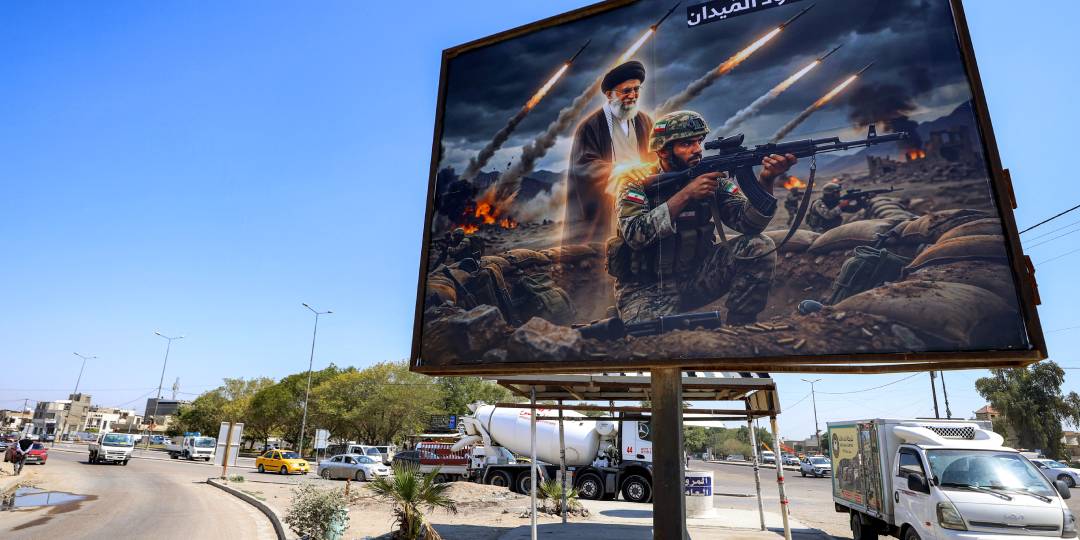
Iranian Armed Forces Commander Amir Hatami stated “Iran’s response to the assassination of the National Security Council Secretary will be decisive and regrettable.” The Revolutionary Guards warned that “the pure blood of this great martyr will be a source of honor, strength, and national awakening in confrontation with global arrogance.”
Iranian Missile and Drone Attacks
Iranian missiles resulted in the deaths of two people near Tel Aviv while Gulf states intercepted missiles and drones targeting positions including American bases. Saudi Arabia announced Wednesday downing two drones approaching the diplomatic quarter in Riyadh.
A “projectile” struck Iran’s Bushehr nuclear plant in southern Iran Tuesday evening without causing infrastructure damage or casualties, according to the International Atomic Energy Agency announced Wednesday. Iran also reported a major South Pars gas facility sustained American-Israeli strikes.
Regional Interceptions
In the Gulf, Saudi Arabia announced Wednesday downing two drones approaching Riyadh’s diplomatic quarter. In Qatar, the Defence Ministry announced intercepting a missile attack Wednesday amid explosions heard in Doha. AFP journalists in northern Iraq’s Erbil reported hearing four explosions.
Escalation in Lebanon
Israel escalated strikes in Lebanon where it has fought Hezbollah since March 2, threatening to bomb bridges and roads on the Litani River. Israel conducted strikes on central Beirut Wednesday morning, mostly without prior warning, resulting in 12 deaths and 41 wounded.
Hezbollah’s Al-Manar television announced the death of its political program director Muhammad Shri and his wife in an Israeli airstrike on Zqaq al-Blat in Beirut. Another airstrike targeted a vehicle in central Sidon in southern Lebanon.
Threats of Further Military Surprises
Defence Minister Gallant warned “during this day also, major surprises are expected across all theaters that will raise the level of the war we are waging against Iran and Hezbollah in Lebanon to a new level.” The Israeli military announced intentions to bomb bridges and roads on the Litani River approximately 30 kilometers from the border in southern Lebanon to disrupt what it claims are Hezbollah weapons transport routes.
Foreign Military Personnel Affected
Australian Prime Minister Anthony Albanese announced Wednesday that an Iranian projectile fell near the Australian military headquarters at Al-Dhafra base in the UAE, clarifying the projectile caused “minor damage” to a residential building and medical facility without injuries. Loud explosions heard early Wednesday in Dubai where authorities confirmed they resulted from “successful air interception operations” against Iranian attack.
Turkish authorities announced Wednesday that NATO deployed an additional Patriot missile battery at Incirlik Air Base in southern Turkey following repeated interceptions of Iranian missiles since the war began.
Global Economic Impact and Oil Prices
Seeking to pressure the global economy as part of its war response, Iran pursues raising oil prices by closing the Strait of Hormuz. With oil prices remaining around $100 per barrel, Iranian Foreign Minister Abbas Araghchi warned Wednesday that “global ramifications remain in their early stages and will affect everyone.”
In efforts to reopen Hormuz through which one-fifth of global oil exports pass, the US military announced striking Iranian anti-ship missile positions near the strait using bunker-busting bombs among the most powerful in the American arsenal. US Central Command stated the United States used several 5,000-pound bombs costing $288,000 each “against fortified Iranian missile positions on the Iranian coast near the Strait of Hormuz.”
Trump’s Criticism of Allies
President Donald Trump expressed anger Tuesday toward US allies’ refusal to stand with the United States by escorting oil tankers through the Strait of Hormuz. However, he wrote on his “Truth Social” platform that Washington needs no allies, stating “we need no one’s help!”
Iran Detains “Royal Cells” for Conspiracy and Espionage
Iranian authorities announced Wednesday they detained over 100 “royal cells” on charges of plotting against the Islamic Republic, along with suspected spies and individuals accused of cooperating with a banned television channel.
The Intelligence Ministry stated its forces “identified and detained 111 royal cells in 26 provinces before they could execute their operations in the last Wednesday of the Iranian year.” The ministry did not clarify the exact number of individuals belonging to these cells.
Espionage Arrests
The ministry stated four people suspected of being American spies were detained in Hamadan and West Azerbaijan Province. Additionally, authorities detained 21 others accused of cooperating with “Iran International,” a banned channel operating from London. Authorities seized firearms, bladed weapons, electric stun devices, and batons.
Broader Crackdown Context
These detentions occur amid the February 28 war beginning with joint Israeli-American airstrikes on Iran killing Supreme Leader Ayatollah Ali Khamenei. Local media reported authorities conducted widespread raids across Iran in recent weeks, detaining hundreds suspected of cooperating with Israel and the United States.
Sunday, police chief Ahmad Reza Radan announced arresting 500 people on suspicion of espionage and “leaking information to the enemy and media hostile to Iran,” according to local media.
Conclusion:
Israel’s announcement of killing Iran’s intelligence minister reflects a new escalation in its strategy targeting Iranian leadership. As Iran holds funerals for Larijani and renews threats of “decisive response,” the regional war enters a more intense phase. Iran’s detention of hundreds on espionage charges reflects internal turmoil and instability resulting from the war. As both sides continue attacking Lebanon and the Gulf with expanding global economic consequences, the conflict appears far from conclusion.