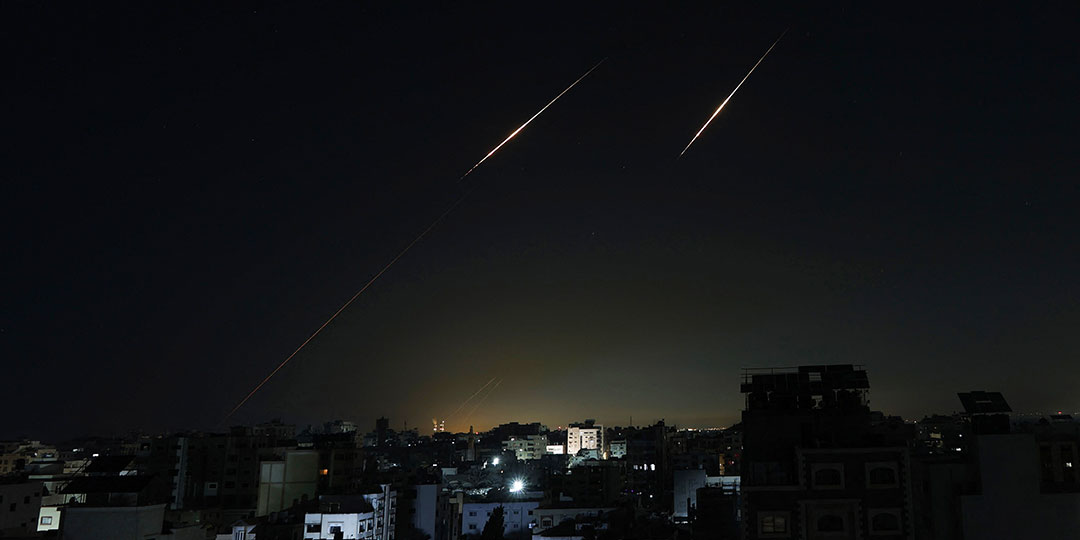

Late Thursday, the Israeli military detected a fresh volley of missiles launched from Iran toward Israeli territory, with defensive systems mobilized to intercept the incoming fire. The attack triggered a series of explosions across Tel Aviv on Friday morning, marking an intensification of direct military confrontation between the two regional powers. The strikes followed Israel’s expanded campaign against Hezbollah and Iran’s response to the killing of Iran’s supreme leader, Ayatollah Ali Khamenei, last Saturday.
The barrage sparked waves of explosions heard across central Israel, with rocket trails illuminating skies from Tel Aviv to Netanya. While Israel’s emergency services reported no casualties, the strikes caused structural damage to residential buildings and forced evacuations in affected areas.
Iranian Missiles Target Israeli Territory
Iran’s state broadcaster confirmed that Tehran had fired missiles “against targets in the heart of Tel Aviv” in response to continued Israeli military operations. AFP journalists in Tel Aviv documented two near-simultaneous waves of explosions reverberating across the city on Friday morning.
Israeli police reported “fallen projectiles in central Israel” with confirmed damage to multiple sites. A residential building on Tel Aviv’s outskirts was struck directly, forcing occupants to evacuate. At another location near Israel’s economic center, firefighters extinguished blazes caused by intercepted rocket debris.
Israel’s Home Front Command issued multiple rocket fire warnings Friday for communities near the Lebanon border, reflecting the widening scope of the conflict.
No Reported Casualties Despite Impact
Israel’s Magen David Adom emergency services visited several impact sites but reported no injuries from the Iranian barrage. Israeli police confirmed damage but reiterated that no casualties had been recorded in the immediate aftermath, though structural assessments were ongoing.
Israel Launches Counterstrike on Tehran
In response, Israeli forces executed a large-scale strike campaign on Tehran early Friday, targeting what the military described as “regime infrastructure” in the Iranian capital. Iranian state television reported explosions across multiple districts of Tehran during the operation.
The Israeli operation signals a shift from indirect confrontation to direct strikes on Iranian military and governmental facilities, representing a significant escalation in the weeks-long conflict.
Israeli Military Claims Significant Damage to Iranian Capabilities
Lieutenant General Eyal Zamir, Israel’s military chief, stated Thursday that over 60 percent of Iran’s ballistic missile launchers and 80 percent of its air-defence systems have been destroyed through the ongoing US-Israeli campaign against the Islamic Republic.
“We have neutralised and destroyed more than 60 percent of the ballistic missile launchers,” Zamir stated in a televised address. He further claimed that Israel had achieved “almost complete air superiority in the skies of Iran” through the sustained offensive operations.
Operations Enter New Phase
Zamir announced that the US-Israeli military campaign was transitioning into a new operational phase aimed at further dismantling Iranian military infrastructure. “We are now moving to the next phase of the operation. In this phase, we will further dismantle the regime and its military capabilities. We have additional surprises ahead which I do not intend to disclose,” the military chief stated.
The announcement suggests Israeli leadership intends to intensify operations beyond the current scale.
Context and Regional Implications
The escalation follows Saturday’s killing of Ayatollah Ali Khamenei, Iran’s supreme leader, which triggered Tehran’s decision to strike Israeli targets directly. Israel’s response has expanded its military operations against Hezbollah, the Tehran-backed militant group that entered the conflict following Khamenei’s death.
The direct exchange of missile fire and airstrikes between Israel and Iran marks a critical juncture in the conflict, moving beyond proxy warfare toward open military engagement between the two powers.
Conclusion:
The exchange of missile attacks and retaliatory airstrikes between Israel and Iran represents the most direct military confrontation between the two nations in recent years. While Israeli officials claim significant damage to Iranian military capabilities, Tehran’s continued ability to launch ballistic missiles demonstrates the conflict’s ongoing volatility. The transition to a new operational phase signals the potential for further escalation in the weeks ahead.