
Several municipalities in the border region of southern Lebanon reported receiving calls from the Israeli military over the past days ordering them to evacuate displaced persons who had fled from neighboring villages associated with Hezbollah. The demands represent an escalation in Israeli military control over civilian movement in areas under bombardment, raising serious humanitarian and legal concerns about forced displacement and violation of Lebanese sovereignty.
The war, now in its fourth week, has displaced hundreds of thousands of Lebanese, particularly from Hezbollah strongholds in southern Beirut’s suburbs and southern Lebanon, which have received evacuation warnings from the Israeli military.
Direct Israeli Contact with Village Leaders
Ely Abu Naqoula, mayor of the municipality of Koukaba in Hasbaya district, told AFP that he received a telephone call Sunday from the Israeli military demanding the village be “clean within 24 hours.” The demand forced the evacuation of 21 displaced families from the town.
Abu Naqoula explained the dilemma he faced: “I have 21 displaced families and two hundred families from the town itself. Who do I protect?” He stated that he ultimately chose to protect the displaced families from potential Israeli targeting while protecting his townspeople from danger.
Demands for Displaced Persons’ Names
Abu Naqoula disclosed that beginning early last week, he received multiple calls from the Israeli military requesting that he provide names of displaced persons within his municipality’s territory. He reported these contacts to Lebanese authorities and the military.
Abu Naqoula said: “I refused to provide the names, considering that this violates Lebanese laws, and I stressed that the displaced families are civilians and innocent people.” He indicated he informed Lebanese authorities and the military about the content of these communications.
Similar Pressure on Neighboring Municipalities
The nearby village of Abu Qomha received a similar call Sunday from the Israeli military, according to village chief Michel Abu Rashed. The Israeli military also requested names of displaced persons residing in the village. Abu Rashed stated he did not comply with the request.
Pattern of Direct Coercion
The coordinated nature of these demands across multiple municipalities suggests a systematic Israeli policy to control displaced populations in southern Lebanon through direct pressure on local officials.
Context of the War in Lebanon
The war reached Lebanon on March 2 when Hezbollah launched rockets toward Israel in response to the death of Iran’s Supreme Leader Ali Khamenei. Israel has responded with extensive airstrikes and ground incursions along multiple axes in southern Lebanon.
The Hasbaya region contains several towns inhabited by Druze, Christians, and Sunni populations, adjacent to the Marjeyoun area where Israeli forces have advanced into several towns including Al-Khiam and Kafr Kila, where Hezbollah claims to be fighting direct engagements with Israeli forces.
Broader Pattern of Israeli Demands
Over the past week, several municipalities not aligned with Hezbollah received calls from the Israeli military requesting that residents remain in their homes, avoid movement on town outskirts, and evacuate displaced persons from their areas.
The Municipality of Al-Mari in the Hasbaya area announced in a statement its “commitment to these coercive directives resulting from the delicate security and war conditions experienced by the region,” expressing regret for the decision imposed upon it “forcibly” regarding the requirement to inform displaced arrivals from neighboring villages that they must leave.
Municipal Authority Under Israeli Control
The statements from local officials reflect how Israeli military pressure has effectively transferred certain governance functions from Lebanese authorities to the occupying military, forcing Lebanese officials to enforce Israeli demands on their civilian populations.
Destruction of Critical Infrastructure: Litani River Bridges
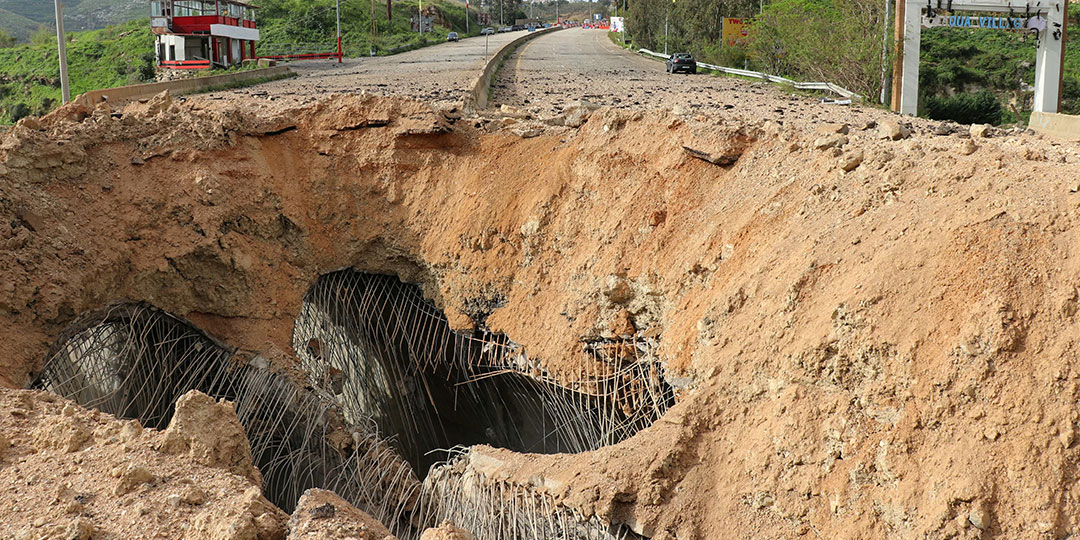
Israel targeted an additional bridge on Monday that connects southern Lebanon to the Bekaa region in eastern Lebanon, according to the National News Agency. This action continues a systematic campaign to destroy all bridges crossing the Litani River.
Israel has threatened to destroy all bridges on the river situated in southern Lebanon, claiming Hezbollah uses them to transport fighters and weapons. On Sunday, Israel bombed the Qasmiyeh bridge, a major crossing, putting it out of service.
The Litani River lies approximately 30 kilometers north of the Israeli border.
Strategic Infrastructure as Military Targets
The Israeli military posted a warning on platform X (formerly Twitter) on Monday afternoon threatening to attack the Dalaafeh bridge, accusing Hezbollah of using it for military purposes.
According to the National News Agency: “The Israeli military targeted this afternoon the Dalaafeh bridge connecting the Hasbaya-Marjeyoun areas with the Jezzine-Shouf and Western Bekaa regions.”
Impact on Civilian Connectivity
The systematic destruction of bridges cuts off civilian access between northern and southern regions of Lebanon, isolating populations and preventing humanitarian movement. Civilians in southern Lebanon face restricted access to hospitals, markets, and emergency services in other regions.
Expansion of Airstrikes into Greater Beirut Area
On Monday, at least one person was killed by an Israeli airstrike targeting an apartment in the Hazmieh district near Beirut, according to the Health Ministry. The Israeli military announced it had targeted a “saboteur” from the Quds Force of Iran’s Islamic Revolutionary Guard Corps.
Hazmieh is an affluent area adjacent to the Presidential Palace, containing diplomatic missions, ambassadors’ residences, government administrative offices, and luxury residential buildings.
Targeting of Displaced Persons
According to Hazmieh’s municipality chief Jean Asmar, the airstrike targeted a room within an apartment rented by a displaced family in a luxury residential building. Asmar noted the concerning pattern: “What happened today is a sample of what could happen. Lease papers are in one person’s name while the target is another person.”
Asmar questioned the logic: “If he was not responsible, why would they target him?” He left to security agencies the task of revealing the target’s identity.
Implications for Displaced Population in Beirut
Following the airstrike, Hazmieh municipality announced it would adopt new procedures regarding reception of displaced persons “so this incident does not repeat.” Municipal officials stated: “We are forced to protect the security of our city.”
The necessity to restrict displaced persons reflects the tension between humanitarian responsibility and military targeting, where Israeli strikes follow displaced individuals into ostensibly safe areas far from the conflict zone.
Second Strike on Hazmieh
This represents the second Israeli targeting of the Hazmieh area since the war began more than three weeks ago. A previous airstrike on March 5 targeted a hotel in Hazmieh, though the target’s identity remained unclear.
Pattern of Strikes on Beirut Periphery
On March 8, an Israeli airstrike targeted a room in a hotel in the Roueche area on Beirut’s waterfront, killing four people according to Lebanese authorities. Iran accused Israel of killing four of its diplomats in the strike, while the Israeli military claimed it killed five people, including three senior commanders of the Quds Force.
War’s Escalating Humanitarian Toll
Since Hezbollah launched rockets toward Israel on March 2 in response to the death of Supreme Leader Ali Khamenei, Israel has conducted extensive bombardment and ground infiltration into southern Lebanon. The war has resulted in 1,039 deaths and displacement of more than one million people, primarily from Hezbollah strongholds in southern Beirut’s suburbs and southern Lebanon.
Scale of Displacement Crisis
The displacement of over one million people represents one of the largest humanitarian crises in the Middle East in recent years, with displaced persons concentrated in municipal areas that themselves face Israeli airstrikes and military demands for their evacuation.
Israeli Defense Minister Orders Bridge Destruction
Israeli Defense Minister Yisrael Katz announced Sunday that he ordered the military to “immediately destroy all bridges on the Litani River used for terrorist activities, to prevent Hezbollah terrorists and their weapons from moving south.”
This directive represents an explicit strategy to isolate southern Lebanon from the rest of the country, effectively creating a military cordon that restricts civilian movement and humanitarian access.
Broader Context of Infrastructure Targeting
The destruction of bridges, control of civilian movement through direct municipal contact, and targeting of displaced persons in distant cities all reflect a comprehensive Israeli strategy to:
Isolate southern Lebanon militarily and geographically
Control the movement of displaced populations
Target individuals attempting to reach safety
Restrict Lebanese government authority in southern regions
Violation of International Humanitarian Law
Several aspects of these operations raise concerns under international humanitarian law:
Forced displacement of civilians
Direct demands for civilian population information
Targeting of civilian infrastructure (bridges)
Strikes on civilian areas far from conflict zones where displaced persons have sought refuge
Lebanese Government Capacity
The fact that Israeli military is directly contacting Lebanese municipal officials and issuing orders reflects the collapse of Lebanese state authority in southern regions. Lebanese security forces and government appear unable to protect civilian populations or enforce sovereignty in their own territory.
Humanitarian Agencies’ Response
The targeting of displaced persons and the systematic nature of Israeli demands for their information and movement suggest that humanitarian agencies face severe constraints in providing assistance. International organizations have expressed concern about the ability to deliver aid to displaced populations.
Conclusion:
The pattern of Israeli demands for evacuation of displaced persons from southern Lebanese municipalities, combined with the systematic destruction of infrastructure and targeting of civilians in areas where displaced persons have sought refuge, represents an escalation in military operations affecting civilian populations. The direct Israeli contact with Lebanese municipal officials demanding compliance with evacuation orders reflects an unprecedented assertion of control over Lebanese civilian administration. With over one million displaced and municipalities facing simultaneous demands to restrict population movement while providing humanitarian shelter, Lebanon faces a deepening humanitarian catastrophe. The fourth week of war has moved beyond military operations against Hezbollah to encompass systematic control of civilian movement and forced displacement of populations already suffering from the conflict’s initial phases.