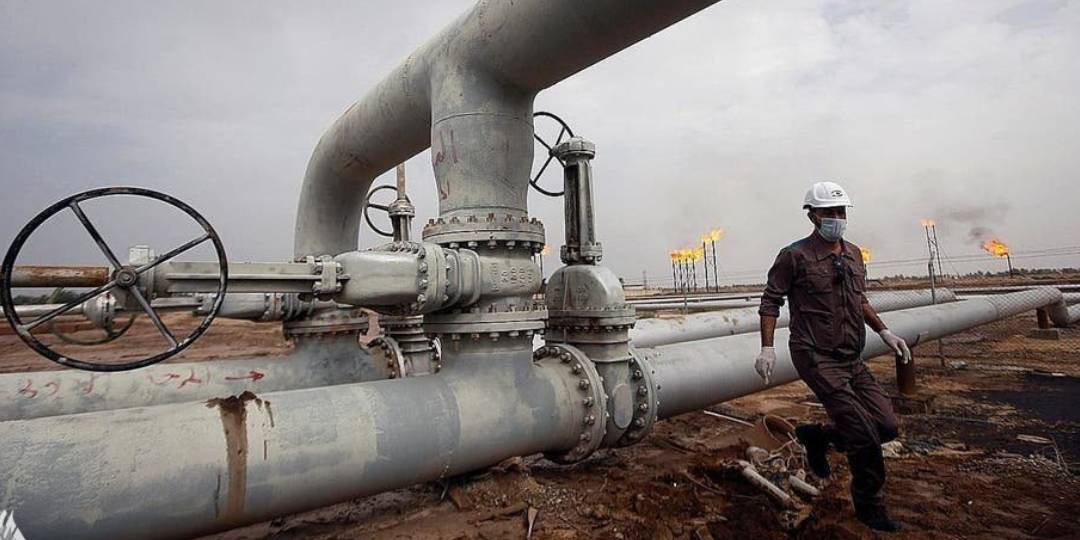

Iraq’s Oil Ministry announced today the Basra-Haditha pipeline project that will export 2.5 million barrels daily through three export terminals in Banias Syria, Ceyhan Turkey, and Aqaba Jordan. The project will create 15,000 Iraqi jobs and enable Iraq to utilize additional OPEC export quotas. The project represents a strategic effort to diversify crude transportation sources and maximize petroleum revenues for Iraq’s oil-dependent economy.
Basra-Haditha pipeline project and production capacity
Oil Ministry spokesman Sahib Buzoon stated: “The land route for oil export via Basra-Haditha pipeline is an auxiliary path to maritime transport which is safe, fast, and less costly.”
He clarified that “export volumes via Basra-Haditha pipeline will reach 2.5 million barrels.”
He emphasized it “has many benefits as it pumps crude oil to refineries located in central, southern, and northern Iraq for producing petroleum derivatives.”
Project’s main advantages
The project features:
Export of 2.5 million barrels daily
Higher safety and speed than maritime transport
Lower costs compared to alternative routes
Supply of domestic refineries with crude oil
Three export terminals
Buzoon identified the terminals:
Banias in Syria
Ceyhan in Turkey
Aqaba in Jordan
Each capable of handling “2.5 million barrels daily capacity.”
This diversification reflects Iraqi strategy to reduce dependence on single export point.
Importance of terminal diversification
Multiple terminals provide:
Flexibility in export operations
Reduced geopolitical risks
Alternative options during crises
Enhanced economic security
Infrastructure and engineering
Buzoon noted that “the pipeline includes 56 major pumping stations.”
This large number reflects:
Advanced engineering complexity
Sophisticated technical capabilities
Advanced pumping and control systems
International safety standards
Pipeline technologies employed
Include:
Modern pumping systems
Advanced automated control
International safety standards
Continuous performance monitoring
Timeline and financing
Buzoon stated: “Project work began following Council of Ministers and Oil Ministry decision during 2024.”
He explained “implementation was delayed due to lack of liquid funds with $5 billion allocated.”
He added “$1.5 billion has been allocated with the remainder in installments.”
Budget and financial resources
Total project budget:
$5 billion total cost
$1.5 billion allocated
Remaining funds in installments
Government budget financing
Employment opportunities and social impact
Buzoon stated “workforce on the project reaches approximately 15,000 Iraqi workers.”
This number represents:
Significant economic opportunities
Support for Iraqi labor market
Local employment opportunities
Income improvement for Iraqis
Social and economic benefits
Include:
Creating 15,000 job opportunities
Direct worker income
Local economic revitalization
Skills and experience development
Project’s domestic benefits
Buzoon confirmed “pipeline’s domestic benefits exceed external ones.”
He explained “transport vessels carrying crude from southern fields will use pipelines to fill refineries.”
This means the project serves domestic consumption first.
Utilizing petroleum derivatives
Iraq benefits from:
Supply of crude to refineries
Local petroleum derivative production
Reduced fuel imports
Improved economic situation
Kirkuk-Ceyhan pipeline activation
Buzoon referenced “activation of important Kirkuk-Ceyhan pipeline which the Ministry is operating at 1.6 million barrels daily capacity.”
He clarified it “is not a substitute for maritime transport but an auxiliary in crises to diversify oil export outlets.”
This reflects comprehensive diversification strategy.
Multiple petroleum projects
The plan includes:
Basra-Haditha pipeline (2.5 million barrels)
Kirkuk-Ceyhan pipeline (1.6 million barrels)
Maritime transport (primary)
Complete source diversification
Long-term strategy
Buzoon affirmed “the project is not temporary nor a substitute for maritime transport.”
Rather it comes “within Oil Ministry’s plan to diversify crude pumping sources to maximize revenues.”
He clarified “Iraq depends more than 90 percent on oil.”
Oil dependence and diversification
This reflects:
Importance of protecting petroleum economy
Necessity of diversifying export sources
Reducing geopolitical risks
Maximizing revenues and benefits
Utilizing additional OPEC quotas
Buzoon stated: “This project will enable us to utilize additional oil export increases granted by OPEC.”
He added “Iraq managed to export two shipments during April.”
This demonstrates immediate project benefits.
Quotas and additional production
The project enables:
Utilizing additional OPEC quotas
Increasing petroleum exports
Improving financial revenues
Stabilizing government budget
Global oil prices decline
Oil prices “recorded today a decline exceeding 5 percent.”
Brent crude “fell 5.1% to reach $96.06 per barrel.”
West Texas Intermediate “declined 5.5% to settle at $89.87 per barrel.”
Reasons for price decline
Decline attributed to:
Optimism regarding tensions reduction
Expectations of ending regional war
Reduced supply disruption concerns
Anticipated market stability
Stability impact on oil markets
Price decline reflects:
Hopes for geopolitical tensions easing
Expectations of stability return
Market confidence in positive developments
Reduced risk premium
Effect on Iraqi economy
Price decline may affect:
Iraqi petroleum revenues
Government budget and spending
Planned development projects
Overall economic stability
Project significance amid price volatility
Despite current price declines:
Project remains strategically vital
Long-term revenue protection necessary
Economic diversification essential
Revenue stability assured
Strategic importance long-term
The project ensures:
Economic stability despite price fluctuations
Maximum revenue utilization
Improved infrastructure capabilities
Enhanced export flexibility
Conclusion:
The Basra-Haditha pipeline project reflects Iraq’s comprehensive strategy to diversify crude oil export sources and maximize petroleum revenues. With capacity for 2.5 million barrels daily, creation of 15,000 jobs, and export flexibility through three terminals, the project represents crucial progress toward Iraqi economic independence. Despite current oil price declines, the project remains vital for ensuring long-term stability of Iraq’s oil-dependent economy and achieving sustainable economic growth.