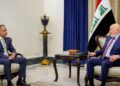


Iran US tensions escalated Monday as Tehran warned Washington that any military strike even if limited would be treated as an act of aggression requiring a forceful response.
The statements came as indirect talks between the two countries are expected to resume in Switzerland later this week amid a significant US military buildup in the region.
The renewed confrontational rhetoric coincided with fresh student protests inside Iran and rising international concerns that a miscalculation could trigger a wider conflict.
Iran reiterates stance on US threats and military pressure
Tehran: No such thing as a “limited strike”
Foreign ministry spokesman Esmaeil Baqaei said at a Tehran briefing attended by AFP that any US strike would be considered a direct attack on Iranian sovereignty. He said an act of aggression would be met “ferociously” under Iran’s inherent right to self-defense.
President Donald Trump had stated he was considering a limited strike if Iran did not agree to a deal within 15 days.
Nuclear file at center of ongoing indirect talks
Iran says it is preparing a draft proposal on its nuclear program for mediators and insists discussions with the United States remain limited to the nuclear issue. Washington however seeks to include Iran’s missile program and its support for regional armed groups.
Oman is mediating between the two sides and both Tehran and Muscat confirmed talks would resume Thursday though the United States has not yet publicly confirmed the schedule.
Internal pressure rises as student protests intensify
Demonstrations challenge Iran’s clerical leadership
Videos verified by AFP showed students at a Tehran university burning the Iranian flag adopted after the 1979 revolution while chanting slogans against the Islamic republic.
The new academic semester has revived protest chants recalling the nationwide unrest that peaked in early January and was met with a violent crackdown that killed thousands.
The US-based Human Rights Activists News Agency (HRANA) reports more than 7,000 people were killed mostly protesters although rights groups say total casualties are likely higher. Iranian authorities acknowledge more than 3,000 deaths including civilians and security personnel and accuse foreign enemies particularly the United States and Israel of exploiting economic grievances.
Clashes with Basij members reported on campuses
The Norway-based Iran Human Rights NGO said student gatherings occurred nationwide and involved confrontations with plainclothes Basij members affiliated with the IRGC.
Both pro-government and anti-government groups held rallies in memory of those killed during the January unrest and some participants burned Israeli and US flags.
International reaction and rising concern
India urges its citizens to leave Iran
India’s foreign ministry advised all Indian nationals in Iran to depart “by available means of transport” citing the evolving security situation. India estimates around 10,000 of its citizens are typically in Iran.
The warning was issued days before Indian Prime Minister Narendra Modi’s scheduled visit to Israel where Israeli Prime Minister Benjamin Netanyahu said the meeting would strengthen a joint effort against shared adversaries.
EU calls for diplomacy not escalation
EU foreign policy chief Kaja Kallas warned that the region “does not need another war” and urged all sides to use the current moment to push for a diplomatic solution. The EU is not currently involved in mediation.
Conclusion:
With military threats escalating political talks approaching and internal protests continuing Iran US tensions remain high. Regional and international actors warn the situation could deteriorate quickly without substantive diplomatic progress.