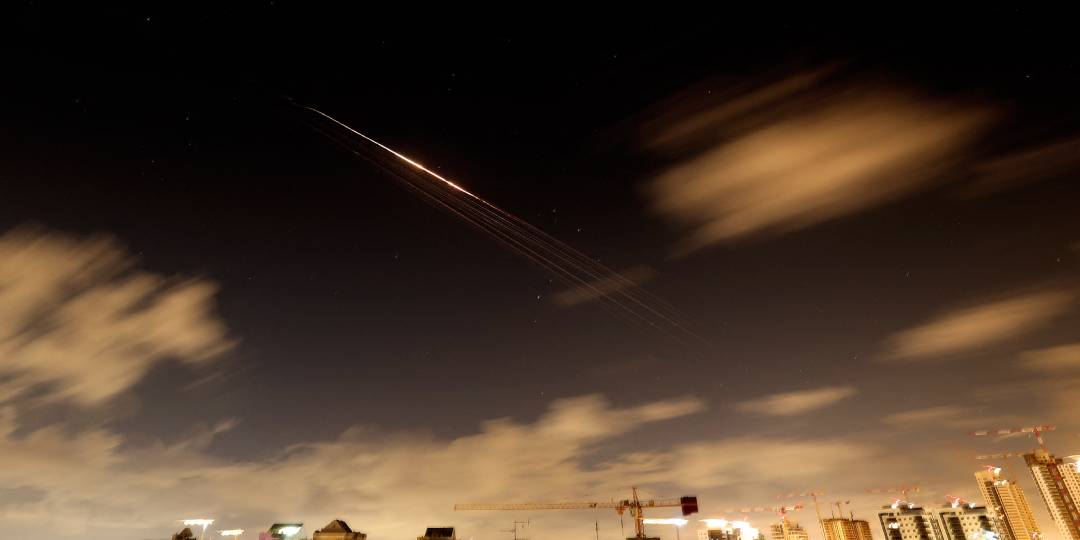

Iran escalated threats against American forces in the Middle East Friday, with the Islamic Revolutionary Guards calling on civilians to evacuate areas hosting U.S. military personnel while warning of targeting hotels used by American officers. The heightened rhetoric comes as the conflict enters its first full month, with regional tensions mounting and prospects for broader direct confrontation intensifying. Simultaneously, Iran’s Revolutionary Guards announced they had forced three vessels attempting to transit the Hormuz Strait to reverse course, reasserting closure of the critical waterway to shipping connected to what Tehran terms “enemies.” These actions reflect a multi-faceted Iranian strategy designed to impose pressure on American forces and allied nations throughout the region.
The escalating rhetoric signals potential for further military confrontation beyond current aerial exchanges.
Revolutionary Guards Call for Civilian Evacuations
The Islamic Revolutionary Guards issued a statement warning civilians to evacuate areas hosting American forces, stating: “American-Zionist forces are attempting to use civilian locations and innocent people as human shields.”
The Guards directed an appeal to civilians: “We advise you to urgently depart locations where American forces are stationed so that you do not suffer harm.”
The evacuation call represents an Iranian attempt to frame military threats within humanitarian language, but the underlying message remains unmistakable: remaining near American military positions poses grave dangers.
Humanitarian Framing as Strategic Cover for Military Threats
This statement reflects Iranian efforts to avoid international criticism regarding civilian targeting while pursuing military escalation against American presence. By framing threats as “protecting civilians,” Tehran seeks to justify potential collateral damage while maintaining rhetorical high ground on humanitarian concerns.
Direct Warnings of Hotel Targeting
Spokesman for Iran’s Armed Forces Abolfazl Shekarchi stated bluntly: “When all American military personnel enter a hotel, from our perspective it becomes American.”
Shekarchi continued with explicit directness: “Should we stand idle and allow Americans to strike us? When we retaliate, it is natural that we target them wherever they are.”
Redefining Hotels as Legitimate Military Targets
This statement represents a shift from implicit threats to explicit targeting warnings. Iran now categorizes any hotel hosting American military personnel as a “legitimate military target,” disregarding civilian rights and international humanitarian law protections.
The threat raises serious concerns regarding safety of hotel workers and civilians who might be present in targeted facilities.
Foreign Minister’s Accusations of Human Shield Usage
Iran’s Foreign Minister Abbas Araghchi accused American forces of using civilians as human shields. Speaking via X platform: “Since the start of this war, American soldiers have fled military bases in Gulf Cooperation Council countries to hide in hotels and offices.”
Araghchi called upon hotels to refuse hosting American military personnel, attempting to mobilize private sector businesses toward Iran’s strategic position.
Efforts to Isolate U.S. Forces Through Private Sector Pressure
This statement reflects Iranian efforts to expand pressure beyond military channels into economic and civil domains. Iran seeks to isolate American forces through private sector restrictions and operational constraints, not solely military means.
Direct Warnings Delivered to Regional Hotels
Iran’s Fares news agency reported that sources indicated Iran had issued “stern warnings” to hotels throughout the region, particularly in the United Arab Emirates and Bahrain.
The agency added that Iran’s military has identified American forces utilizing similar positions in Syria, Lebanon, and Djibouti, implying threats extend far beyond the Gulf region.
Geographic Scope of Iranian Threats
These statements clarify that Iranian threats are not geographically limited to any single region but encompass all locations hosting American military personnel. This reflects Iranian ambitions to implement a “comprehensive deterrence strategy” across an expansive regional theater.
Closing the Hormuz Strait: Targeting Global Trade
Iran’s Revolutionary Guards announced they had forced three container vessels attempting to transit the Hormuz Strait to reverse course, reiterating assertions that the waterway remains “closed only to enemies.” The Guards stated: “This morning, following lies by the corrupt American president that Hormuz Strait is open, three container ships were returned to their origins after warning from Islamic Revolutionary Guards Navy forces.”
The statement emphasized that “movement of any vessel to or from ports belonging to supporters and allies of the American-Zionist enemy is prohibited.”
Economic Blockade and Maritime Stranglehold
Closure of the Hormuz Strait constitutes an extraordinarily powerful economic tool. The strait controls approximately one-third of global maritime petroleum and liquefied natural gas trade, making its control a decisive strategic factor.
Forcing Chinese vessels to reverse course indicates Iran is implementing an actual blockade without major exemptions.
Chinese Shipping Companies Trapped in the Blockade
Kpler, a company specializing in maritime analytics, reported that two vessels belonging to Chinese shipping company COSCO attempted to transit the Strait but reversed course after Iranian warnings.
The company noted both vessels have been trapped in the Gulf since the conflict began one month ago, unable to proceed or retreat effectively.
Symbolic and Practical Significance of the Incident
Rebecca Giordis, analyst at Kpler, stated: “This is the first time major shipping company vessels have attempted to transit the strait since the conflict began.”
This attempted transit reflects accumulating economic pressure on Chinese and international companies to navigate the Iranian blockade.
Iran’s Foreign Ministry Position on Hormuz Strait
Foreign Minister Araghchi affirmed Wednesday that Hormuz Strait remains “closed only to enemies.” He stated: “From our perspective, Hormuz Strait is not completely closed but closed only to enemies. There is no justification for allowing ships of our enemies and their allies to pass.”
He noted that “Iranian forces have provided safe passage to vessels belonging to countries Iran considers friendly,” reflecting Iranian efforts to divide the world into categories based on political alignment with Tehran.
Discriminatory Classification of Nations
Iran applies explicit discriminatory policy regarding vessel transit permissions. This position reflects Iranian pressure to impose political criteria on global maritime commerce, potentially violating international maritime law norms and raising international criticism regarding freedom of navigation principles.
Trump’s Response: Claiming Iranian Concessions
President Donald Trump stated Thursday that Tehran “allowed ten oil tankers to transit Hormuz Strait,” characterizing this as a “gift” demonstrating Iran’s seriousness about negotiations to end the conflict.
Trump’s framing attempts to portray the Iranian blockade as a friendly concession, though in reality represents an extremely limited exception that may reflect internal Iranian economic pressures.
Diplomatic Dynamics and Economic Pressures
Iran’s permission for ten tankers to pass may reflect indirect negotiation attempts or responses to internal economic pressures. However, the fundamental policy remained clear: Strait closure and effective blockade implementation.
Strategic Implications of Multi-Front Iranian Pressure
Iran’s actions represent coordinated pressure across multiple domains simultaneously:
Military escalation through targeting warnings and threatening civilian infrastructure
Economic coercion via maritime blockade of global energy supplies
Diplomatic isolation through attempts to mobilize private sector opposition to U.S. presence
Regional signaling to allied and neutral nations regarding costs of American alignment
Calculated Risk Assessment in Iranian Strategy
These actions suggest Iranian calculations that multi-front pressure might achieve objectives short of full-scale warfare. The strategy aims to raise costs of American presence while testing international resolve and seeking negotiated off-ramps.
Conclusion:
Iran’s Friday escalations reflect comprehensive multi-faceted strategy seeking to impose economic, military, and diplomatic costs on American regional presence and allied nations. From direct threats targeting hotels to maritime blockade of critical global energy supply routes, Tehran seeks to force concessions through sustained pressure. However, these actions carry grave risks for regional stability and global commerce. The Iranian message appears clear: continued military operations will face responses spanning every aspect of regional economic and security infrastructure. As the conflict enters its second month, the trajectory of escalation remains concerning, with potential for broader confrontation that could significantly impact global energy markets and international security architecture. The coming weeks will indicate whether current pressure tactics generate negotiated resolution or precipitate further dangerous escalation.