
The United Nations High Commissioner for Refugees has warned that Lebanon faces an escalating humanitarian crisis in Lebanon that risks spiraling into a full-scale disaster. The warning comes approximately one month after war erupted between Israel and Hezbollah on March 2, 2026.
According to the refugee agency, more than one million people have been forced to flee their homes, representing one in five Lebanese residents. Carolina Lindholm Billing, UNHCR representative in Lebanon, stated: “The situation is deeply concerning and there is a real danger of a humanitarian disaster.”
Scale of Displacement and Compounding Economic Crisis
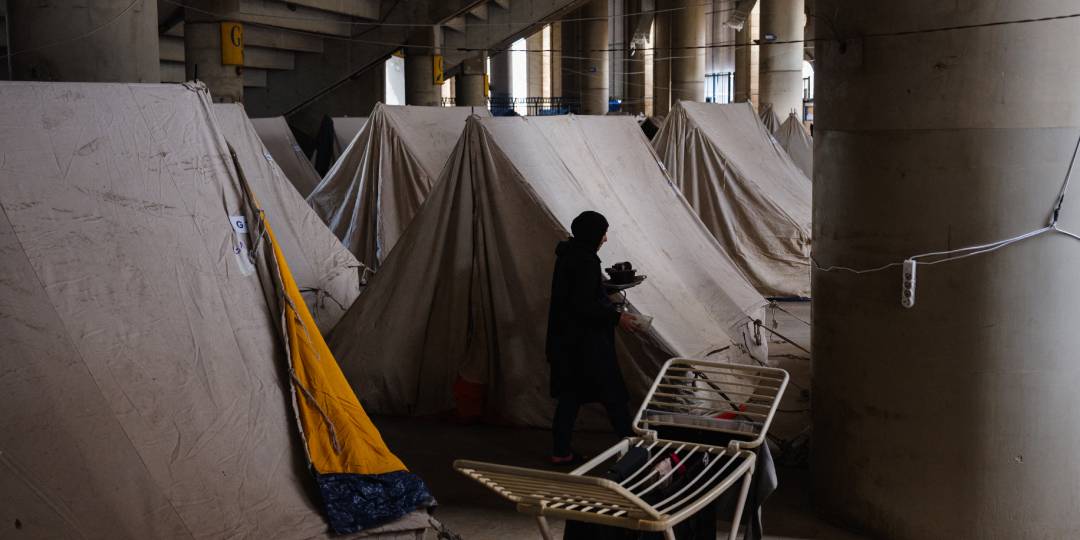
The UNHCR highlighted that Lebanon’s already fragile economy is deteriorating at an alarming pace. More than 136,000 displaced persons are sheltering in 660 collective facilities, mostly overcrowded schools. Lindholm Billing emphasized: “Even if these families are evacuated, they do not feel safe.”
Lebanon was already grappling with multiple economic crises before the outbreak of hostilities. The unprecedented scale of displacement is placing extreme additional pressure on families and an already strained public service infrastructure. The combination of political instability, economic collapse, and mass displacement has created a perfect storm of humanitarian need.
Deep Psychological Toll on the Population
Persistent Fear and Mental Exhaustion
Lebanese families are living in constant fear due to ongoing airstrikes and bombardment. Lindholm Billing stated: “There is no doubt that the psychological consequences, particularly on children, will persist long after the current conflict ends.”
More than 370,000 displaced children have no “safe place” to shelter, according to UNICEF. Marcoluigi Corsi, UNICEF representative in Lebanon, said: “This is a sudden, chaotic displacement that tears families apart and empties entire towns, with consequences that will last well beyond the end of violence. The psychological and emotional exhaustion of Lebanese children is heartbreaking.”
Pregnant Women and Mothers Under Siege
Pregnant women face desperate conditions with minimal access to healthcare. Expectant mothers are forced to give birth in makeshift shelters that lack basic medical facilities, such as overcrowded school classrooms. Jilan El Masri, UN Women representative in Lebanon, stated: “Women face constant fear, sleepless nights, and complete exhaustion while trying to reassure terrified children.”
Origins of the War and Iranian Dimension
How the War Began
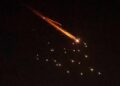
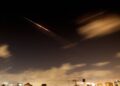
Hostilities erupted on March 2 when Hezbollah launched a retaliatory missile barrage against Israel. The attacks came in response to the assassination of Iran’s supreme leader, Ayatollah Ali Khamenei, in coordinated Israeli-American strikes. Israel responded with intensive airstrikes across Lebanon and ground incursions into the south.
Human Cost and Structural Destruction
The war has killed over 1,000 people to date. Israel has deliberately destroyed strategic bridges in southern Lebanon, isolating more than 150,000 residents from essential services. The destruction of critical infrastructure severely hampers the delivery of humanitarian aid, according to the UNHCR.
Ongoing Military Operations and Escalation
Israeli Strikes on Beirut’s Southern Suburbs
Israel renewed airstrikes Friday on Beirut’s southern suburbs, a Hezbollah stronghold. The Israeli military launched strikes on what it described as “infrastructure” belonging to the militant group and ordered residents of seven major neighborhoods to evacuate immediately.
A strike on the town of Siksikiyeh in Sidon district killed four civilians and wounded eight others, according to the Ministry of Health. In the Bekaa region, a strike on the village of Bzaliye killed a pregnant woman carrying twins and wounded seven others.
Direct Combat Clashes in South Lebanon
Hezbollah announced direct clashes with Israeli forces in the border villages of Al-Biyadah and Shim’a. In a statement, the group said: “Our fighters engaged Israeli army forces with light and medium weapons at point-blank range.”
Israeli forces are advancing into multiple towns in southern Lebanon, with Israeli officials announcing plans to establish a security buffer zone extending to the Litani River, approximately 30 kilometers from the border.
Israeli Military’s Position and Threats
Israeli Army spokesperson Avi Dafrin stated: “Hezbollah continues to operate and launch attacks from southern Lebanon,” contradicting earlier Lebanese government assertions about disarming the group. He added: “If the Lebanese government does not disarm Hezbollah, the Israeli army will do so.”
The Israeli military reported finding “combat equipment,” including anti-tank missiles and mortar shells, inside a school in the border town of Al-Khiyam, one of the first areas Israeli forces entered after the war began.
Humanitarian Response and Critical Resource Gap
UN Emergency Appeal for Funds
The UNHCR has launched an urgent appeal for over $60 million to expand its humanitarian response operations. The agency warned that humanitarian needs are increasing faster than available resources.
Lindholm Billing remarked: “People tell me repeatedly that all they want is to return home.” However, reconstruction and rehabilitation will require massive resources and a sustainable peace process.
Efforts by Humanitarian Organizations
The World Health Organization announced the delivery of the first batch of humanitarian aid by land to Lebanon after facing difficulties with maritime and air transport from its logistics hub in Dubai.
The Lebanese Red Crescent is distributing aid, including blankets, mattresses, food parcels, bread, and drinking water. Between March 2 and 23, Lebanese Red Crescent teams conducted 2,754 ambulance missions and 11 search-and-rescue operations in urban areas.
Tomazzo Della Lunga, spokesperson for the International Federation of Red Cross and Red Crescent Societies, stated: “Volunteers and staff members are working under enormous pressure to ensure both their safety and that of the wounded they are evacuating,” noting the death of one volunteer and injuries to several others while performing their duties.
Timeline of War and Crisis
| Date | Event |
| March 2, 2026 | Iran’s Supreme Leader Ayatollah Ali Khamenei killed in Israeli-American strikes |
| March 2, 2026 | Hezbollah launches retaliatory missile attacks on Israel |
| March 2–27, 2026 | Over 1 million people displaced from their homes |
| Ongoing | Intensive Israeli airstrikes and ground operations in southern Lebanon |
| Through March 27 | Over 1,000 deaths and destruction of critical infrastructure |
Conclusion:
Lebanon faces a genuine humanitarian catastrophe in the aftermath of one month of intensive warfare. Over one million people have been displaced, the economic crisis has deepened, and health and education services are on the brink of collapse. Children, women, and entire families are suffering severe psychological trauma and terror. Despite the efforts of humanitarian organizations and the United Nations, available resources fall far short of meeting escalating needs. What the situation demands now is an immediate cessation of military operations and an effective international humanitarian mechanism for Lebanon’s rehabilitation and reconstruction.