
Houthi attacks on Saudi Arabia escalated sharply over a 48-hour window, as Yemeni Ansar Allah forces launched ballistic missiles and armed drones against multiple strategic locations across the Kingdom. The operations targeted key military, transport, and energy facilities in the capital Riyadh, the Eastern Province city of Dammam, the southern hub of Abha, and the Red Sea industrial port of Yanbu.
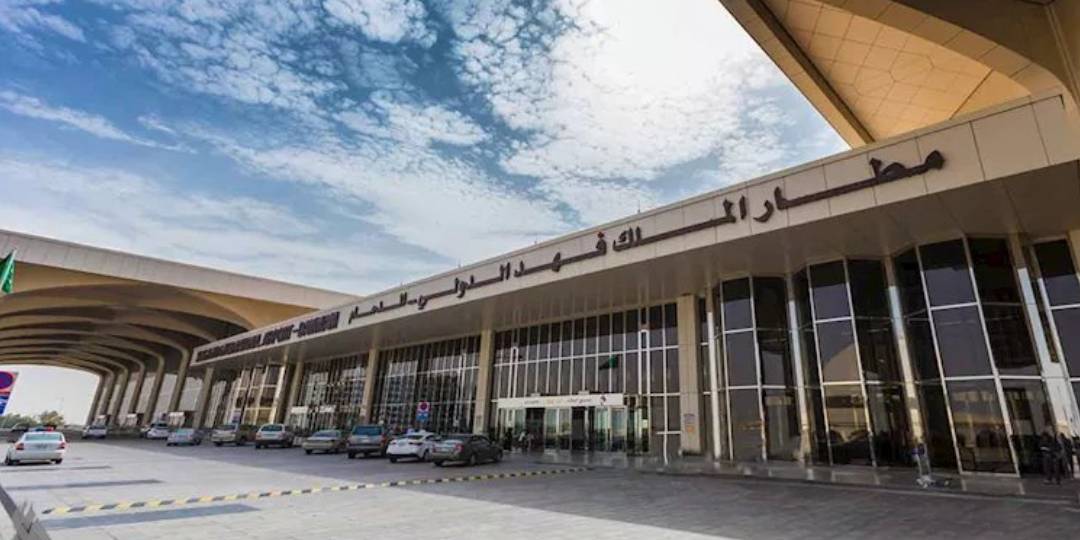
The assault caused fatal casualties at King Fahd International Airport in Dammam, where Saudi aviation authorities confirmed that two people were killed and eight others sustained injuries of varying severity. The attack disrupted operations at the primary international transit facility serving the oil-rich Eastern Province before emergency responders stabilized the scene.
Concurrently, military communiques released by Ansar Allah claimed direct impacts on the Ministry of Defense headquarters in Riyadh, fuel storage sites belonging to the Saudi national oil company Aramco in Yanbu, and runway installations at Abha International Airport. The coordinated barrage represents a significant expansion in the scope and geographic distribution of cross-border strikes against vital infrastructure in the Arabian Peninsula.
Casualties and Disruption Caused by Houthi Attacks on Saudi Arabia
The Saudi General Authority of Civil Aviation (GACA) issued official casualty updates following the strike on King Fahd International Airport in Dammam. The authority initially reported one death before confirming a second fatality as medical personnel treated trauma victims in regional hospitals. The victims were identified as a Saudi national and an Indian expatriate resident.
Eight other individuals suffered injuries ranging from minor lacerations to critical trauma, including one Saudi citizen, two Indian nationals, two Yemeni residents, two Bangladeshi citizens, and one Nepali resident. Civil aviation teams and emergency rescue squads deployed immediately across terminal annexes and passenger concourses to treat the wounded, transfer severe cases to specialized medical facilities, and clear operational areas.
Following technical reviews conducted in coordination with state security commands, GACA announced that technical teams repaired minor structural damage and declared runways safe, allowing flight departures and landings to resume on a normalized schedule.
Official Casualty and Nationality Data from Dammam
– Fatalities: Two confirmed dead, comprising one Saudi citizen and one Indian resident worker.
– Injured Personnel: Eight individuals receiving hospital treatment across regional medical centers.
– Nationalities of Injured: One Saudi, two Indians, two Yemenis, two Bangladeshis, and one Nepali resident.
– Facility Status: Commercial flight operations resumed following comprehensive safety and debris inspections.
Ansar Allah Claims Four Large-Scale Military Operations
In a televised military communique, Ansar Allah spokespersons detailed four distinct operations conducted over the preceding 48 hours. The group asserted that the strikes utilized a combined salvo of long-range ballistic missiles and coordinated drone swarms, characterizing the operations as retaliation for ongoing Coalition military engagements in Yemen.
The movement claimed that its primary strike achieved a direct hit on the Ministry of Defense complex in Riyadh. A second operation targeted King Fahd International Airport in Dammam, aiming to shut down regional air corridors. A third operation struck an Aramco industrial facility in the Red Sea coastal city of Yanbu, which allegedly ignited a fire within the perimeter. The fourth strike targeted Abha International Airport in the southwestern Asir province, asserting an accurate impact on aviation facilities.
Strategic Targets Outlined in Yemeni Military Statements
– Ministry of Defense Building (Riyadh): Targeted with precision ballistic missiles in the central administrative district.
– King Fahd International Airport (Dammam): Struck with drones to disrupt aviation in the Eastern Province.
– Aramco Industrial Complex (Yanbu): Long-range strike reported to have triggered an industrial blaze on the Red Sea coast.
– Abha International Airport (Asir): Targeted with suicide drones to impede southern operational air movements.
Broader Repercussions for Aviation Security and Global Energy Markets
The targeting of civilian aviation hubs and petrochemical refining installations carries serious implications for international commerce and regional transport stability. Commercial airports are protected civilian entities under international humanitarian law, and repeated aerial assaults endanger multinational transit passengers, flight crews, and ground logistics workers.
Furthermore, strikes reaching as far as Yanbu on the western coast and Dammam on the eastern coast demonstrate the expansive reach of regional drone and missile arsenals. The geographic spread heightens war-risk insurance premiums for commercial cargo shipping and international passenger airlines operating across the Middle East, while introducing supply disruption anxieties into international crude oil markets.
Security analysts emphasize that preventing further civilian harm requires credible political de-escalation alongside verified international safeguards. As regional defense commands reinforce air defense perimeters around critical industrial and aviation hubs, the persistence of cross-border operations underscores the urgent necessity of reaching a durable political resolution to the conflict in Yemen.
Conclusion:
The renewed Houthi attacks on Saudi Arabia have demonstrated severe human and operational costs, claiming two civilian lives at Dammam’s international airport and testing defense readiness across four major metropolitan and industrial centers. As Saudi authorities work to maintain aviation security and commercial flight continuity, the widening arc of strikes highlights the precarious balance of regional security and the persistent vulnerability of critical civilian infrastructure to cross-border confrontations.